Ukraine recently launched drone attacks on multiple logistics facilities of Wildberries, Russia's largest online retailer. Five warehouses have been hit within a week, killing at least nine people and destroying a large amount of inventory. The latest attack occurred in the morning of July 24, when a Wildberries warehouse caught fire in Leningrad Region near St. Petersburg. The governor of the state confirmed the attack and said that three people were injured.
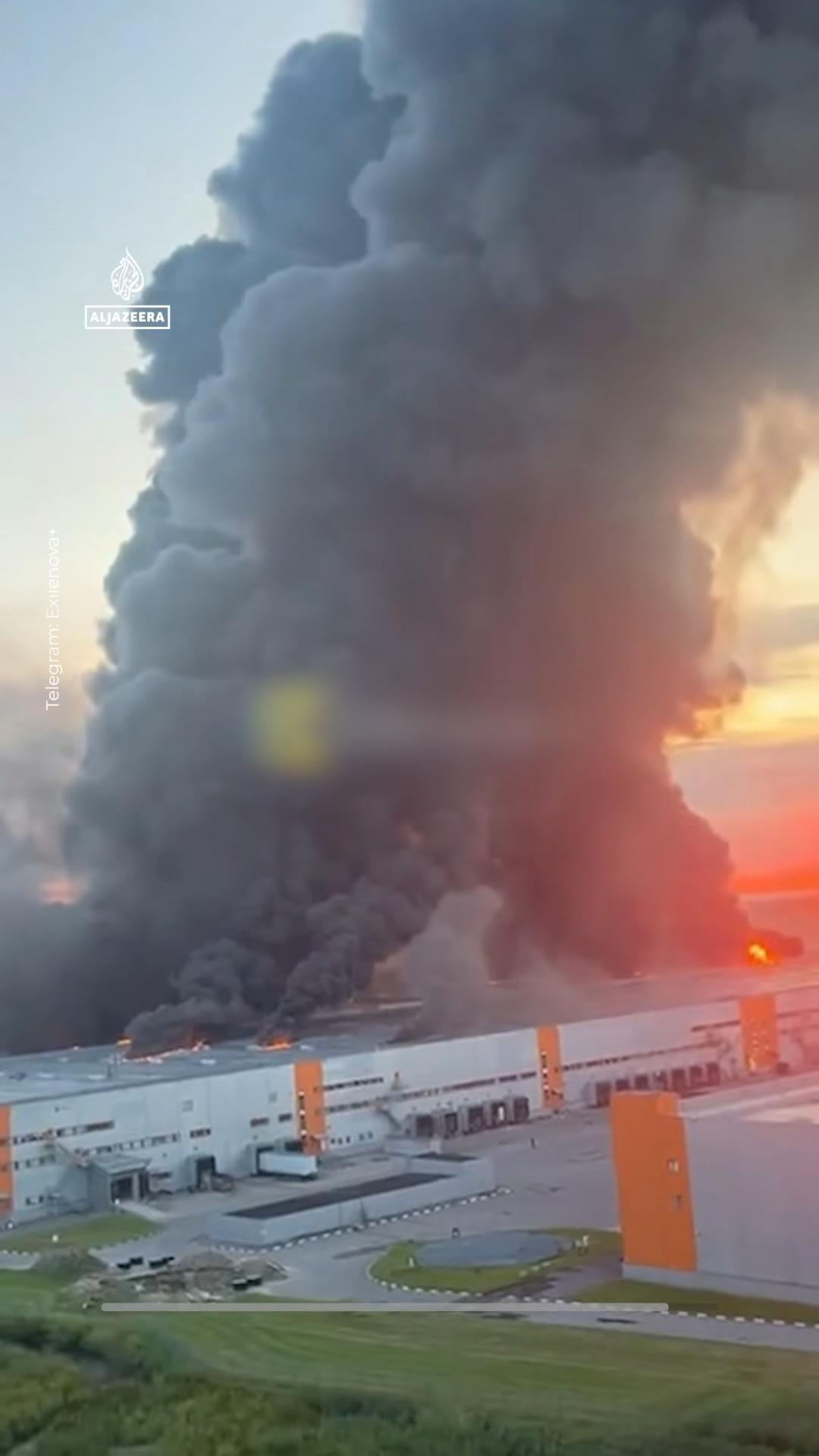
Wildberries is an important enterprise in the Russian e-commerce market, with a turnover of 6.1 trillion rubles (approximately US$78 billion) last year, accounting for nearly half of the country's e-commerce market share. The platform is mainly targeted at low-income people outside Moscow and St. Petersburg. Its network of pickup points extends to towns and villages, becoming an important node in local life. Last year, the company proposed a global expansion plan to Russian President Vladimir Putin with the goal of challenging the U.S.-dominated payment system.
According to reports, the first four attacks have destroyed approximately 444,000 square meters of storage area, accounting for 8% of the company's total storage space, and the reconstruction cost may be as high as 36 billion rubles (approximately US$460 million). "Forbes" Russia reported that the first round of attacks on two warehouses in Elektrostal near Moscow and Kotovsk in the south alone is estimated to have caused inventory losses of 150 billion to 235 billion rubles, which is close to Wildberries' net profit of 175 billion rubles in 2025.
Ukraine said the attack was retaliation for Russia's previous attack on the warehouse of Ukraine's private postal company Nova Poshta, and said that Wildberries' logistics network was used to supply drone parts, navigation equipment and other equipment to the Russian military. The press secretary of the Russian President denied the above statement, but there are indeed merchants on the Wildberries platform selling materials that can be used to manufacture combat drones, as well as front-line supplies such as body armor and helmets.
The attack caused heavy losses to a large number of small and medium-sized merchants who relied on the Wildberries platform for sales. Many sellers posted videos on social media saying their inventory was destroyed overnight. According to reports, sellers complained in social platform groups that Wildberries only offered minimal compensation. A seller who lost 1.5 million rubles of goods in the Elektrostar fire received only 37,000 rubles in compensation.
Less than two weeks before the first round of attacks, Wildberries revised its terms to classify drone attacks as force majeure, exempting the company from liability for merchants’ loss of goods. As public dissatisfaction grew, the company's co-founder and CEO said insurance companies were unwilling to cover losses from drone strikes and pledged to compensate 88,000 of the "smallest and least protected" sellers based on pre-attack sales velocity and prices. Some analysts pointed out that the loss of goods will put thousands of businesses out of business, leading to reduced tax revenue and loan defaults, and the government will lose tens of billions of rubles in tax revenue.