Multiple officials familiar with the matter revealed that Trump's special plane was temporarily changed when he ended his trip to Turkey this month - U.S. intelligence agencies determined that Iranian proxy forces posed a credible threat to target the president and Air Force One. Trump was attending a NATO summit when the threat intelligence surfaced. The New York Times previously reported that during this trip to Ankara, Trump flew a Boeing 747-8 passenger plane donated by Qatar. The aircraft's protective equipment was not as complete as the old Air Force One.
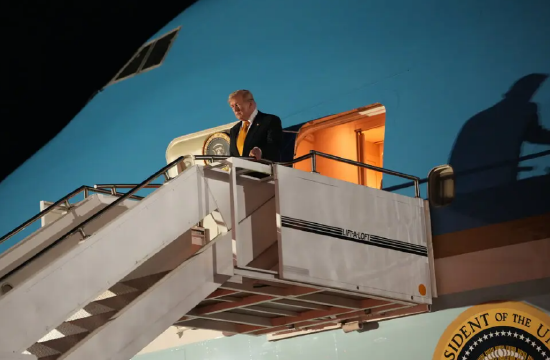
After the U.S. government intercepted relevant threat intelligence, the Secret Service strongly recommended that the president change his plane. Trump then announced that he would leave Türkiye on the old-fashioned Air Force One.
The details of this threat, which have never been disclosed to the outside world before, explain why the White House quickly replaced the special plane, and also exposed the United States' concerns about the security performance of the donated special plane. Trump has been urging the aircraft to be used as soon as possible for his own travel.
The intelligence obtained by the United States does not show that the armed forces specifically targeted this new aircraft. The target of the attack was Trump himself, no matter which special plane he took.
People familiar with the matter disclosed the relevant information to the media.
The White House did not respond to requests for comment. When questioned, a senior government official quoted Trump's previous public remarks about Iran's attempt to assassinate him, saying that the authorities had taken adequate security measures to ensure the safety of the president and the accompanying delegation and were confident in this.
The threat intelligence was not widely circulated within the government; some officials were told only that the replacement of the plane was a routine precautionary measure in response to the situation in Iran. Core members of Congress also did not receive this special threat briefing.
Trump initially claimed that the replacement of the special plane was just to allow US military personnel stationed in the UK to visit the new aircraft, and denied that the move was for safety reasons. However, the media had previously reported that the Secret Service had strongly recommended that he change planes.
After the media revealed this month that federal officials had major concerns about the protective capabilities of the new plane, the U.S. government immediately launched a leak investigation and subpoenaed grand jury testimony and call records from several newspaper reporters and their relatives. (The U.S. Department of Justice withdrew all subpoenas on Thursday.)
On Sunday, Trump indirectly acknowledged that the Qatari-donated plane lacked some of the protective equipment found on older Air Force Ones. A reporter pointed out that the aircraft did not have an anti-missile system, and Trump responded that all relevant equipment would be available soon. This 14-year-old passenger plane was hastily completed a costly modification and temporarily served as the presidential plane.
Before and after the plane swap incident, there were reports that Israel provided intelligence to the United States, pointing out that Iran was planning to assassinate Trump. Some U.S. officials are skeptical of Israeli intelligence and believe its purpose is to encourage Trump to intensify its attack on Iran.
Multiple people familiar with the matter confirmed that the threat of attack in Türkiye, which forced the United States to change its special plane, and the intelligence provided by Israel were two separate incidents.
During Trump's stay in Ankara, the U.S. military restarted its strikes against Iran. The incident took place about 1,000 miles away from Tehran, the capital of Iran. At the summit, when asked why he abandoned the special plane donated by Qatar and replaced it with the old-fashioned Air Force One, Trump publicly talked about Iran's assassination plot against him.
"They want to get rid of the leader of the United States, which is me," he said. "My name is on all the assassination lists. I also saw this morning that I was listed as a target on every list. So far, I have been lucky, but my good luck may not last forever."
As early as Trump's first presidential term, after the US military killed Iranian senior general Soleimani, Iran-related armed forces have been plotting to assassinate Trump for a long time.
For years, Trump has complained that the two active Air Force Ones, which were put into service in 1990, did not look impressive enough and would damage his image when traveling. Military officials have other concerns: the service life of the two presidential planes has long exceeded their design life.
Last year, Qatar announced that it would donate a Boeing 747-8 passenger plane to Trump, and Trump said that he would place the aircraft in his presidential library for permanent storage after leaving office.
Officials said the new aircraft is just a transitional model, pending the arrival of a new generation of Boeing presidential planes purchased and delayed by the Air Force.
After Trump returned to the United States from Türkiye, White House officials said that the new special plane would be grounded for about a month this fall to undergo additional upgrades.
White House Press Secretary Carolyn Leavitt issued a statement: "This new Air Force One can fully ensure the safety of the President's travel, but it will undergo an in-depth upgrade and optimization for about a month this fall. During the renovation period, the President will travel on the old Air Force One."
It's unclear what upgrades can be completed in just one month.
The White House Correspondents' Association dinner was postponed to Wednesday for some reason (an unexpected situation occurred in April when a gunman broke through the security checkpoint). At the briefing before the dinner, U.S. Secret Service officials stated that the current threat level faced by protected personnel has reached a record high.
Secret Service Director Sean Curran told reporters: "In my 24 years of working in the industry, I have never seen such severe security threat data. The risk index completely exceeds the standard. The current overall social environment is extremely turbulent. It is not only key protection objects such as the president who are threatened. Local officials at all levels also face huge risks, and various threats emerge in an endless stream."
Curran served as head of Trump's personal security detail during his previous term as president. When Trump suffered an attempted shooting at a campaign rally in Butler, Pennsylvania, in July 2024, Curran was also one of the security personnel accompanying him.