
Abstract:
September 16, 2026. Hundreds of netizens were watching the computers, staring at the constantly beating task numbers. They come from all over the world and may not know each other. But the collective is carrying out the largest rescue operation on the Chinese Internet in 2026. Some people named this operation: Sina Cloud Completion Plan.

The cause of everything was that Sina Cloud announced that it would go offline and permanently terminate its service at 24:00 on September 16. The user's stored data will be permanently deleted after shutdown.
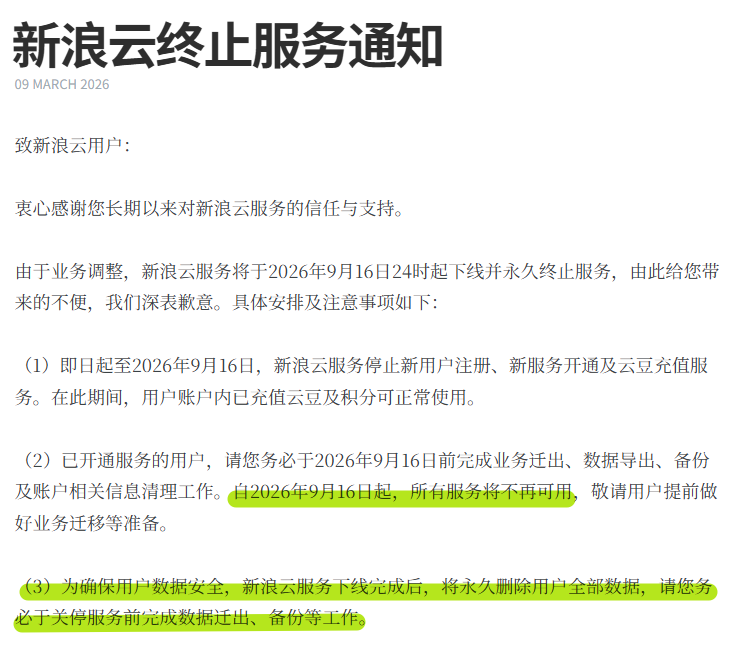
One month before the shutdown, Save The Web Project, an organization specializing in Chinese data rescue, quickly took notice and launched a data rescue plan and recruitment.

Later, the international organization ArchiveTeam also listed the rescue of Sina videos as a key urgent project and recruited volunteers to continuously rescue video data.

Within two months, the news spread to Tieba and other places, and more and more people joined.
As long as netizens saw the news, they tacitly joined in the rescue effort.
Some people have made great contributions, and some people have begun to delete their own things to make way for videos left by strange netizens more than ten years ago in order to make room for them.
I emphasize again that the current rescue plan has been completed in stages, and blind participation will interfere with subsequent progress



Why are so many people willing to join a small cloud service after it is taken off the shelves? What will be the consequences if he cannot be rescued?
Many readers may only know Alibaba Cloud and Huawei Cloud. But in fact, Sina Cloud is China’s first public PaaS (
Platform as a Service
) cloud computing platform, which has been online since 2009.If you have learned PHP and made Weibo applications around 2010, your DNA will probably move when you see the domain name sinaapp.com below.
In its early years, Sina Cloud became the first choice of many small developers due to its low cost and free operation and maintenance. At one time, it gathered millions of developers and hosted nearly 10 million applications.
At that time, many people used Sina Cloud to build personal websites, develop small games, etc.
The mini-game "Micro Three Kingdoms" was launched based on Sina Cloud in the early years

But if it only affects these people, the impact is actually not that big. More importantly, Sina, as one of the four early portals, stores a huge amount of Chinese Internet content.
Some netizens made a very vivid meme. Sina is a more mysterious place than the dark web.

Many of Sina Video’s old services and data are still retained on Sina Cloud.
If this part of the data is lost one after another as the server is shut down, we will not be able to log in to retrieve it. People born in the 1990s and 2000s will collectively lose a piece of memory.
Countless dusty ancient TV programs, instructional videos, etc. on the Chinese Internet have become invalid links that cannot be loaded.
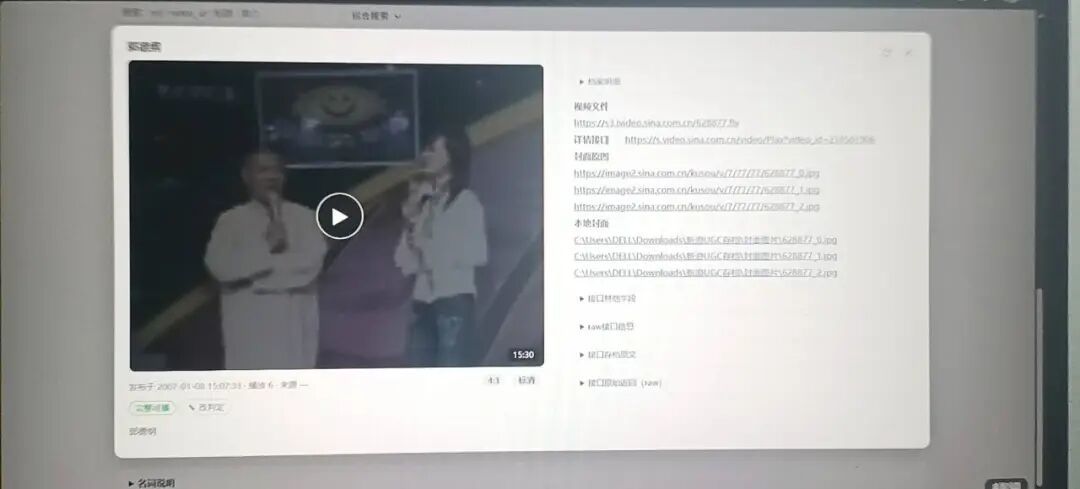
How serious could it be?
I'll tell you what's inside
,
You will know.
In the early days, many TV stations, news portals and netizens gave priority to uploading videos and programs to Sina. For example, Shichao loved to watch "The More Policy the Happier" when he was a child, some abstract programs from local stations, video materials such as Deyun Club, etc.

CCTV is a resource-rich area, offering everything from news broadcasts to major documentaries, operas, investigative programs, celebrity interviews, music awards and more.
You can't find early programs like "News Investigation" on CCTV's own official website. You can only find them on Sina.com.

There are even many mysterious ancient news program clips on Sina that cannot be identified by country or language. These videos may not be found in local TV stations’ libraries, but Sina still has archives.

And
, it’s not just TV shows that are affected.
A lot of ancient out-of-print games, software patches, as well as many schools’ early courseware, experimental teaching videos, interactive teaching courseware, and even school homepages are stored on it.
Sina PS teaching area of the year
A classic series of videos

We, the second-largest thorn salamanders, will be hit even more severely.
The video sources of a series of Bilibili's ancient masterpieces such as Jin Gaola and Lan Lan Lu that we are familiar with may disappear when the server stops.
Because Station B and Station A did not have their own video storage servers, many videos were hosted on Sina before 2015, and the source videos were stored in Sina Cloud.
Although Bilibili migrated its data immediately after it made money. However, many old videos from Station B have gradually become invalid due to various reasons.
In the past, you could go to Sina to find sources, but now you can never go back.

As prosperous as it was in the past, its decline will mean a wider scope of influence.
After 2015, cloud computing has slowly become the world of IaaS (Infrastructure as a Service). Alibaba Cloud and Huawei Cloud dominate the market, while Sina Cloud has gradually become a popular choice.
When news of the service suspension came out in March, many people didn’t even notice it.
Fortunately, there was a professional team who quickly started rescue operations.
Chinese data rescue organization Save The Web Project officially started an archive project called Sina Video on August 14 and published the task on GitHub.
Netizens acted very quickly, and it took only 12 days to rescue nearly 942,000 early Bilibili-related videos, totaling 28.9 TiB.

But the videos related to station B are only a small part of the data in Sina videos. Later, when SWTP was preparing to continue saving, a netizen hw contacted the Archive Team and launched a special Sina project to speed up the rescue plan.
Archive Team is a global private data rescue organization founded in 2009, specializing in rescuing endangered data around the world.
A large number of abandoned products such as Yahoo Answers and Vine were eventually captured by the Archive Team bit by bit.

They are not for profit and survive on volunteers and donations from around the world. Although there is no strict organization, there is a mature process.
Data that may be deleted from all over the world will be sorted out according to priority and published on their official website.
As you can see, Sina is in the first line of emergency tasks. Alongside it are Korean video site Naver TV and free website tool Weebly.

In other projects, the advertising libraries of Voice of America, Radio Free Asia, GitHub, YouTube, and Meta are all being crawled one after another.
Even some personal websites that the deceased could not afford to operate would be backed up.
As their slogan says, we are going to rescue your shit. Everything that is to be given up must be protected.
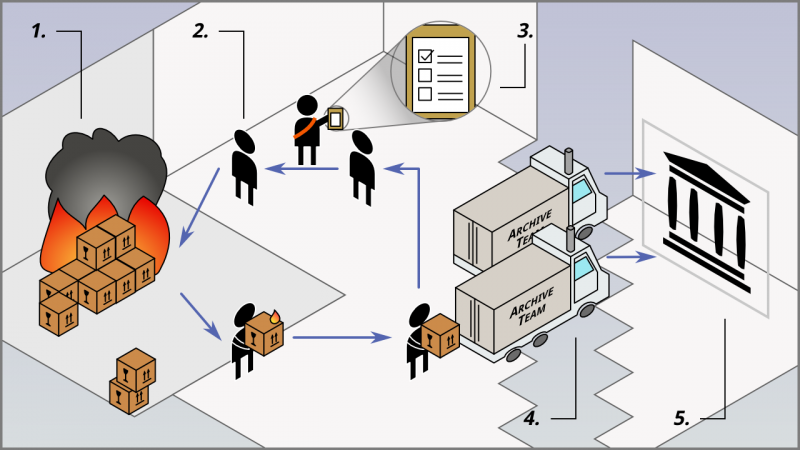
After the project is released, everyone can participate, and the method is relatively simple. Just run their Warrior program to receive the task.
For example, this time they split the huge Sina Cloud into countless small packages, and the system distributed them one by one to volunteers around the world. Utilize volunteers' computers and bandwidth to download and upload to the transfer server.
In this way, everyone moves a little, and slowly moves hundreds of terabytes of data.
Finally, the data will be packaged and stored in the Internet Archive next door for everyone to review.
The archive is our old friend, and it is also a non-profit digital library. It contains hundreds of millions of web pages and tens of millions of videos and pictures.
Before the closure, some rescuers tried to post a message on Tieba, which attracted a large number of people to watch, and even became a hot search topic, further expanding the number of people in the team.
Many of these people who come here are not experts. Some of them are friends of [Lost Media Bar], and some of them just accidentally came across this message.
Countless different people have formed a team of [Cyber Historians] through the Internet.
According to the project status announced by Archive Team, Sina Project has rescued more than 622 TiB of data and has officially entered the stage of data integration and sorting.
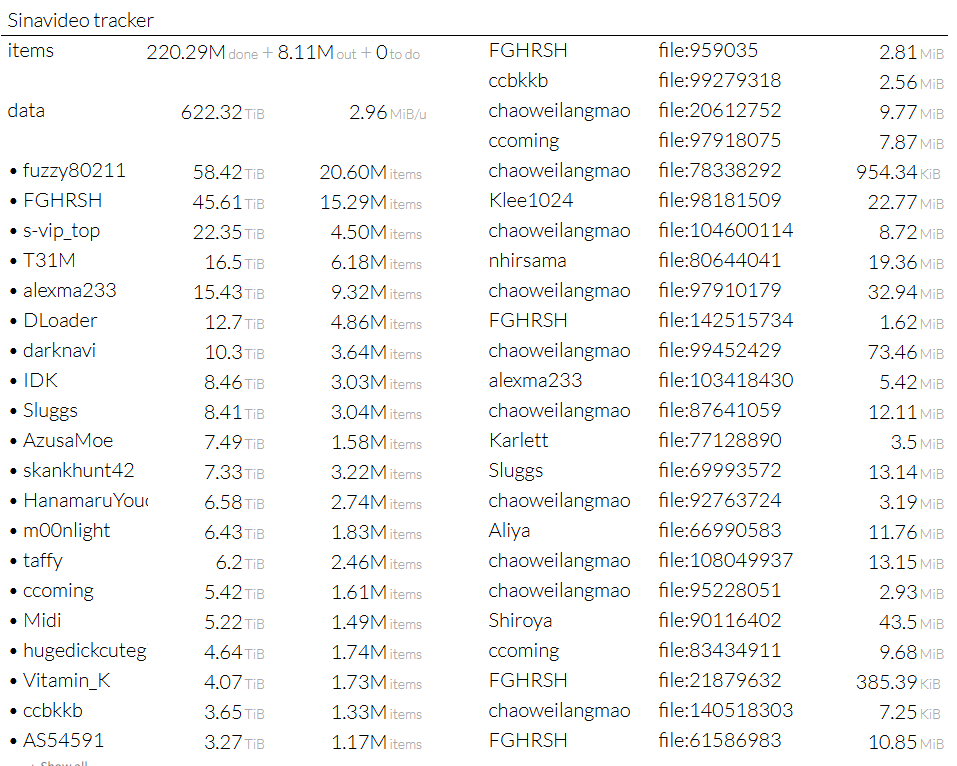
When some people see this, they may think: Do we really want to go to war in such a big way? Since they are all about to be lost, it means no one pays attention to them anymore. Why go to such trouble to save it.
When the fire is truly extinguished, we lose the right to remember.
We always like to say that the Internet has memory.
But in fact, we have lost a lot of things one after another. A cartoon that I loved watching when I was a kid, a certain flash game, or even an entire movie that was once popular.
With the closure of a certain website or the collapse of a company, those once vivid images evaporated and became vague fragments in memory.

Sometimes, it’s not up to us whether to shut it down or not.
In 2009, Yahoo shut down GeoCities despite user objections.
This is a tool for building websites that many foreigners should be familiar with. It allows many ordinary people to have their own personal websites for the first time.
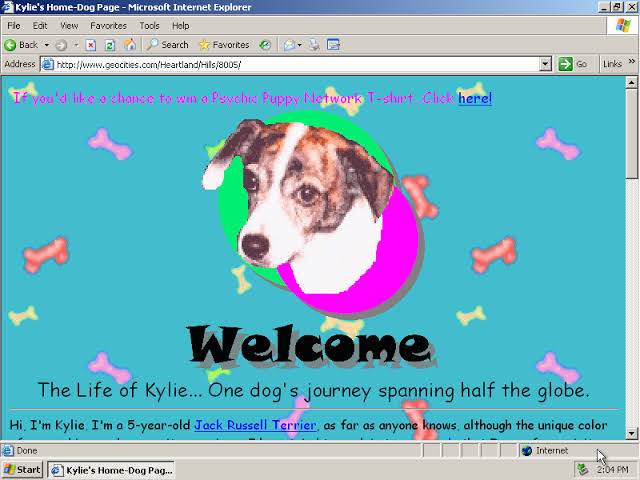
Later, when many people were still using it, Yahoo chose to forcibly shut down the server, which directly caused the disappearance of more than 7 million early Internet websites.
In the end, Archive Team and some other rescue teams tried their best and spent several months to barely rescue 1TB and more than 1 million accounts.
So many times, what really helps the Internet remember the past may never be the Internet.
It’s the group of people who are reluctant to delete it.
Comments