
Abstract:
As the popularity of many classic IPs declines and it is difficult for new IPs to become popular, Hollywood has turned its attention to video games in an attempt to create box office hits. Among them are cases such as "Minecraft" that were huge box office successes, and "Borderlands" which was a box-office failure with both word-of-mouth and box office success. However, there are still many top game IPs that have not yet landed on the big screen, and "Grand Theft Auto" is the most representative one. Will this situation change?
This week, a report by Hollywood industry media The Ankler gave a negative answer. Multiple sources told the media that Rockstar Games has no interest in a film adaptation of "GTA". To a certain extent, this makes sense - the core direction of the "GTA" series is to integrate movie-level narrative into the open-world system gameplay. If you do the opposite and change the core of this game into a movie, it would be like changing the game version of "Indiana Jones" back into a live-action movie. It is completely unnecessary.
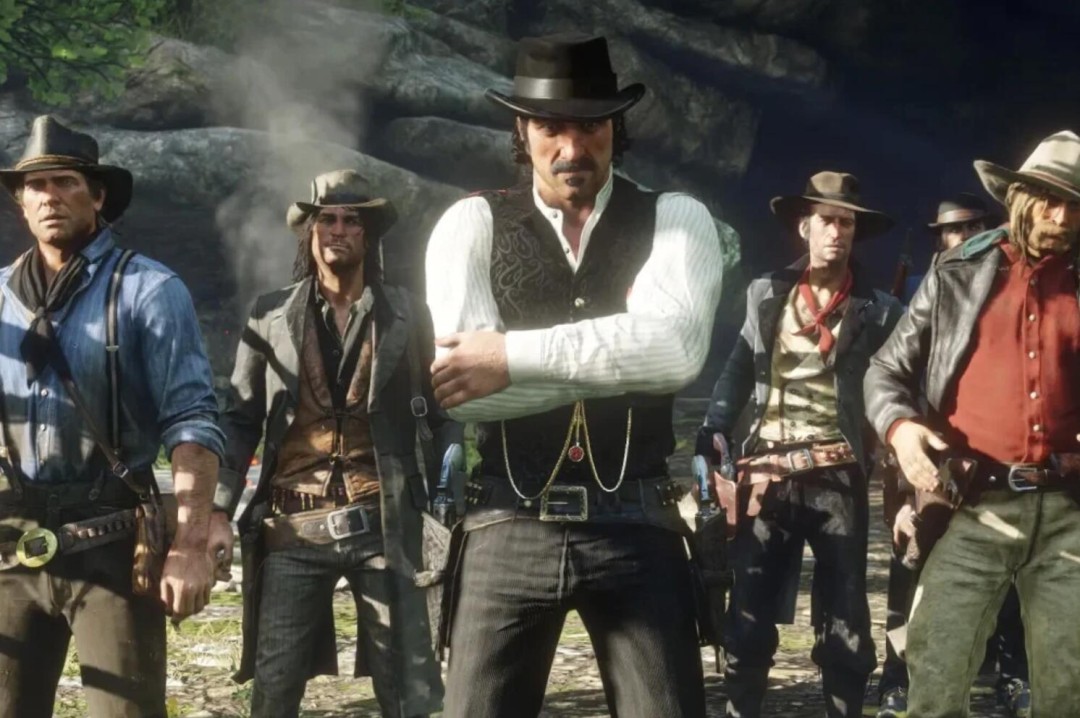
But Rockstar, owned by Take-Two, seems to be interested in selling the film and television adaptation rights to its western open world IP "Red Dead Redemption". The Ankler further revealed that the previous licensing bid for "Red Dead Redemption" was once as high as $100 million. The report also added that Amazon spent US$250 million to acquire the rights to adapt the TV series "The Lord of the Rings".
The positioning of "Red Dead Redemption" is quite similar to that of "The Last of Us" - HBO successfully adapted the latter into a high-quality series that received both word-of-mouth and popularity, and it also did not disappoint game fans. It is not difficult to imagine that there is a high probability that leading streaming media platforms will also be interested in Rockstar's IP. The platform's internal executives must have been preparing related planning plans with reference to the successful word-of-mouth experience of "Deadwood" and the commercial popularity of "Yellowstone".
Take-Two CEO Strauss Zelnick, who once served as COO of Twentieth Century Fox, said in an interview on "The David Rubinstein Show" on November 12: "We are very cautious about the derivative expansion of IP, because we are essentially a creative company, and our goal is to create the highest quality entertainment content in the world. To create a work that we can always be proud of. Only when the creative team is passionate about the adaptation and believes that the adaptation can impress and please the players, the threshold is very high. Of course, the risk of failure is always there, but our choice is very, very careful."
As early as 2023 during the "Barbenheimer" craze in Hollywood, he explained this decision-making logic to shareholders in detail.
"The success rate of the movie industry is far lower than that of the interactive entertainment industry. The success rate of our console games can reach 80% to 90%. The success rate of well-run movie companies is only about 30% - that is to say, there is a 70% probability that the movies we authorize to adapt will fail. Even if the adaptation is successful, the increase in our net profit... is not zero, but it is insignificant to our core business. But once the adaptation fails, we will bear the risk of damaging the value of the IP itself."
At present, the competition among major manufacturers to adapt popular game IPs has become fierce. According to The Ankler, Amazon, Netflix, and FX TV are creating adapted series of "Tomb Raider", "Assassin's Creed" and "Far Cry". The production cost of a single episode is between 15 million and 25 million US dollars, basically reaching the budget level of Hollywood's medium-cost movies.
But Take-Two is not in a hurry to stream its IP. Especially after the "Borderlands" movie's reputation and box office crashed, the official's caution has good reason - the production of this movie started before Take-Two acquired the series developer Gearbox Entertainment. After all, the sales and revenue records of the game itself are already at a height that is difficult for Hollywood to reach (the first-day revenue of "GTA6" exceeded that of "Avengers 4: Endgame"). Why take the risk of damaging the core IP for a marginal business income? A high-quality "Red Dead" episode may help the game sell 10 million more copies, but a bad movie may seriously drag down the IP's reputation among audiences outside of traditional gamers.
Last year, Rockstar co-founder Dan Houser, who has resigned to establish his own entertainment company, said when talking about past negotiations for film and television adaptations: "They thought we would be dazzled by fame and fortune, but that was not the case. We have IP worth billions of dollars, and the benefits of film and television adaptations are not proportional at all, and the risks are completely unequal. At that time, it was generally believed that movies adapted from games were shoddy and bad movies."
In 2008, "Max Payne" developed by Remedy and distributed by Rockstar launched a live-action movie starring Mark Wahlberg. The film's box office performance was average, but its reputation was abysmal, with a Rotten Tomatoes rating of only 15%. This failure did not end the entire series - "Max Payne 3" was subsequently launched, and remakes of the first two films are currently in development. But clearly, neither Rockstar nor Take-Two want to make the same mistake again. This is especially true now that traditional movie studios are declining and game companies have become new giants in the entertainment industry.
Comments