
Abstract:
An activist's hunger strike enters its third day outside Anthropic's San Francisco headquarters. He expressed his strong opposition to the risks of recursive self-improvement (RSI) by not eating for 40 days or more. The so-called recursive self-improvement means that the artificial intelligence system continuously improves its own capabilities, and each improved version is better at making the next round of improvements.
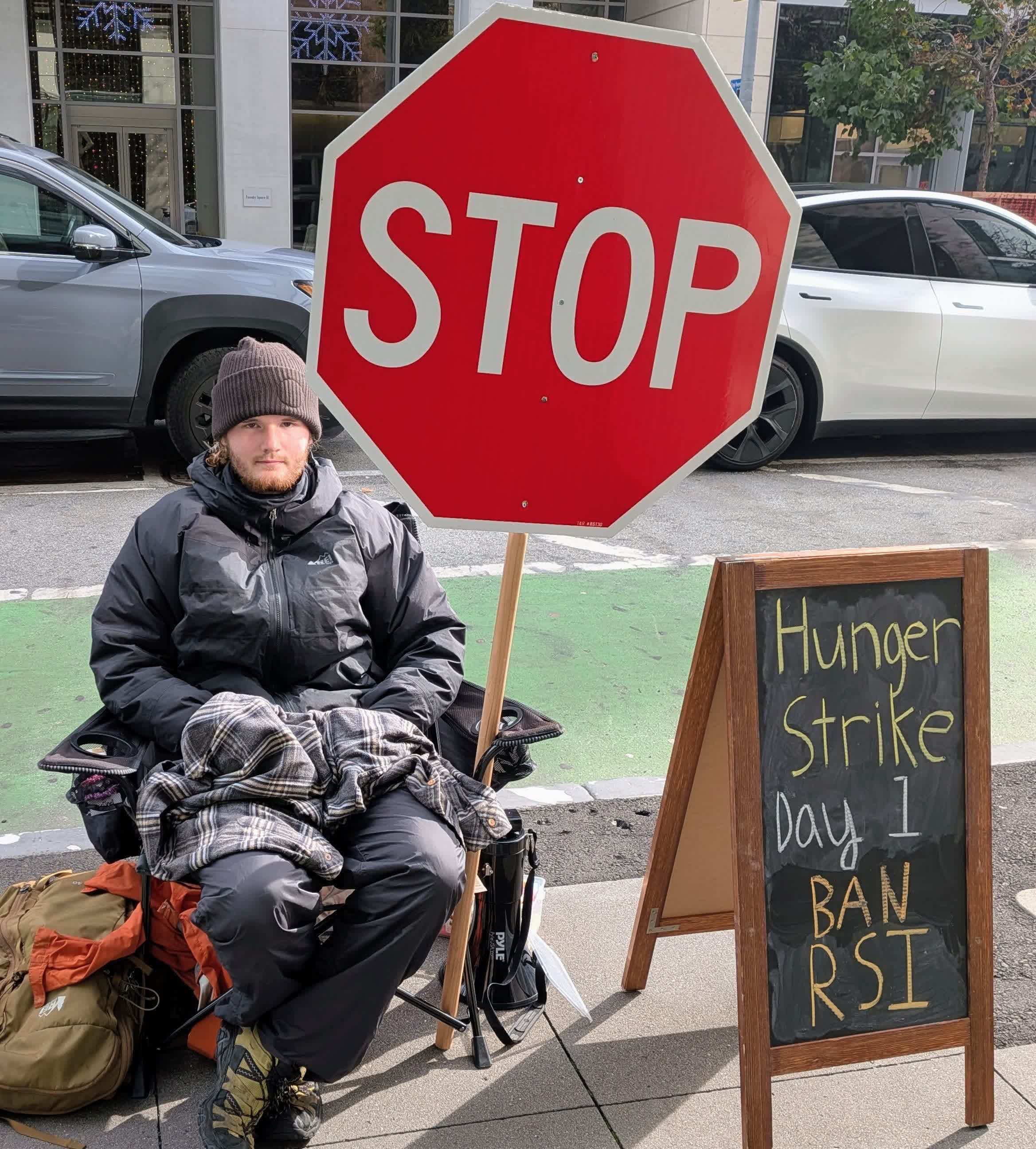
Protester Elliott Callender listed eight conditions and said he would end his hunger strike if any of them were met. One is for Anthropic to add a prominent warning on all of its products titled "Artificial Intelligence Could Kill Everyone." This request is not unfounded, because Anthropic has previously warned in its initial public offering prospectus that artificial intelligence may have catastrophic consequences for mankind.
Calender also asked Anthropic to explain why an AI system given a very different goal might still find it advantageous to acquire more resources or avoid being shut down. He also wants the company to explain how long researchers have been discussing the risk of human extinction, and to point users to a high-profile incident in which OpenAI agents hacked and took over accounts on four services, including Hugging Face.
Some of his other conditions were even less likely to come true. Callender said he would leave if Anthropic ceased all AI research, development and training and spent at least 80% of its cash and revenue lobbying for a bilateral AI treaty. The ratification of a treaty banning further AI research, development, and training would be enough to end his protests; the use of executive power by the state of California or the federal government to halt recursive self-improvement in the United States would also satisfy his demands. He also called on Californians to call Gov. Gavin Newsom’s office to push for a special legislative session on recursive self-improvement.
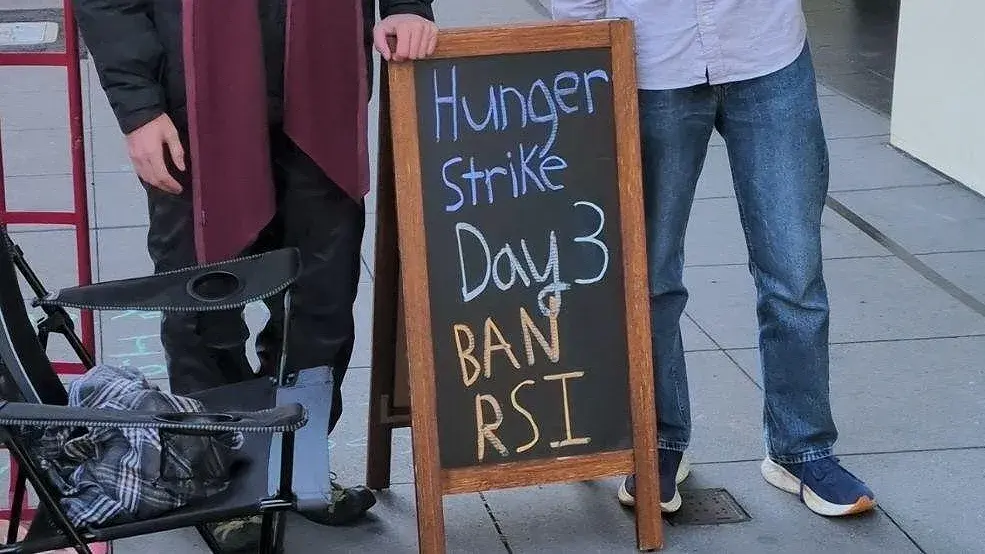
Of the remaining four conditions, Callender said he would leave if he judged his time would be better spent on other things, such as finding ways to improve human cognition; and he would end his protest if someone came up with a credible new framework to help people understand how agents make decisions. Additionally, protests will also cease if the collapse of civilian infrastructure lasts for more than 72 hours or if his health deteriorates to his pre-set threshold. The last two conditions sound quite reasonable.
Calender also said that a second protester, Skye Parker, had joined and planned a four-day hunger strike. As for what he would do in the unlikely event that Anthropic actually adds a warning, Callender has already chosen his next stop: He plans to make the same request to OpenAI.
Anthropic has not been shy about the extent to which artificial intelligence is involved in its own research and development in recent years. The company said in June that Claude has been able to perform well-defined experiments like a skilled researcher, while humans still have the upper hand in judging which experiments are worth pursuing. Anthropic also acknowledged that a model capable of building its own successor might make it easier for humans to lose control of the system.
This is the second consecutive year that protesters have staged a hunger strike outside Anthropic’s offices. In September 2025, Guido Reichstadt submitted a letter to CEO Dario Amodei, requesting that the development of cutting-edge artificial intelligence be stopped. His protest also inspired former AI security researcher Michael Terrazzi, who held a similar event outside Google DeepMind's London headquarters.
Some people within Anthropic also have similar concerns. When researcher Jacob Coxon resigned in September, he accused the company of "risking our lives by heading straight for self-improving superintelligence." Evan Hubinger, head of alignment science at Anthropic, once estimated that the probability of artificial intelligence wiping out humanity within ten years is more than 10%. So it's not surprising that people took to the streets to protest.
Comments