
Abstract:
The wireless signals around us today, whether Wi-Fi or 5G, may be blocked by thick enough walls or metal boxes. But gravity is different, and there is currently no known material that can shield or block gravity. Australian physicists exploited this property to get a brief message through a brick wall. Surprisingly, the launcher turned out to be an old elevator in their building.
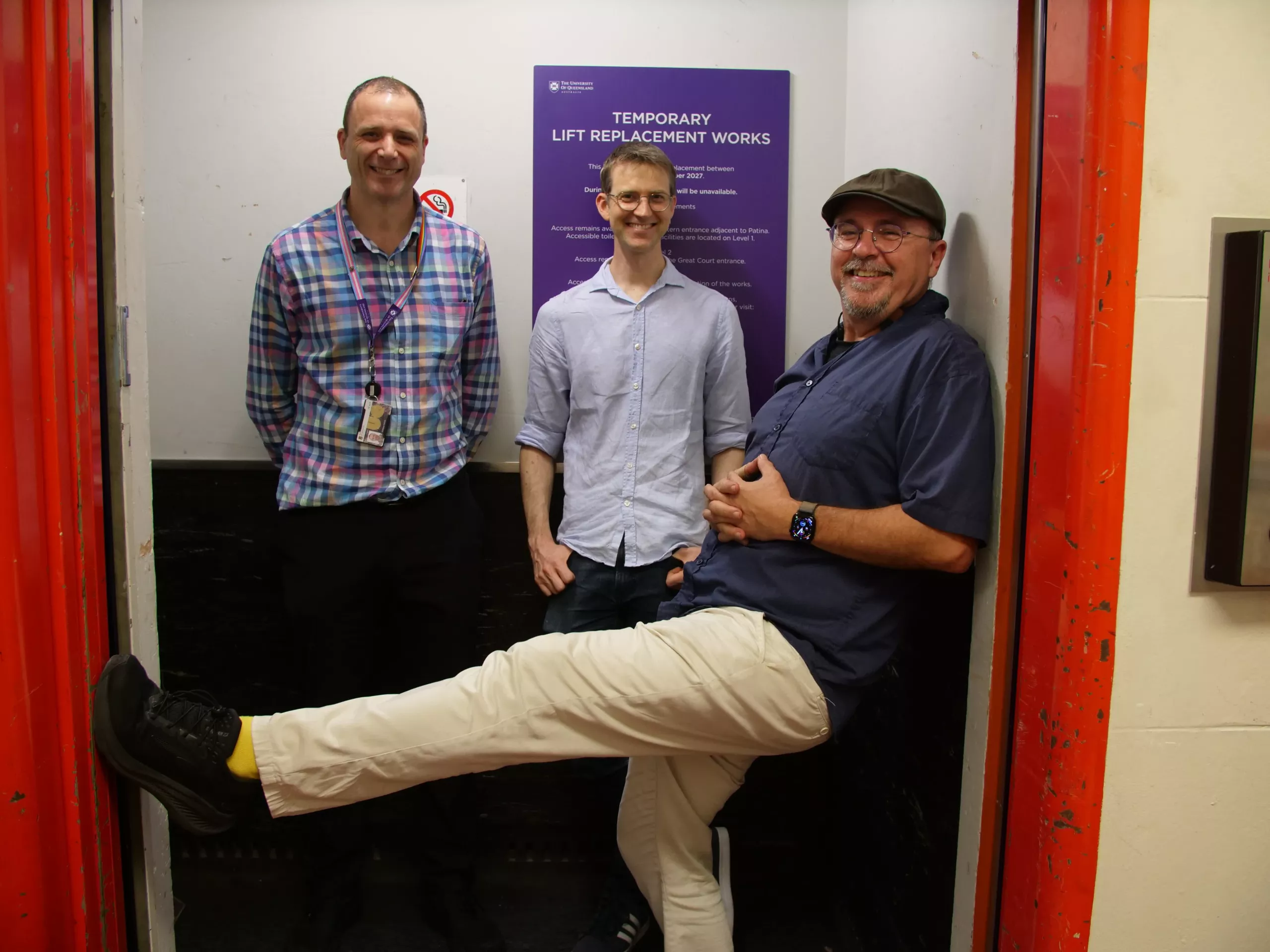
This elevator is located in the Parnell Building at the University of Queensland and dates back to the 1950s. The elevator is equipped with a 1.8-ton counterweight that moves in the opposite direction as the car moves between floors. The research team defined one position of the counterweight block as 0 and the other position as 1, and then let the elevator run up and down to spell out a piece of binary information.
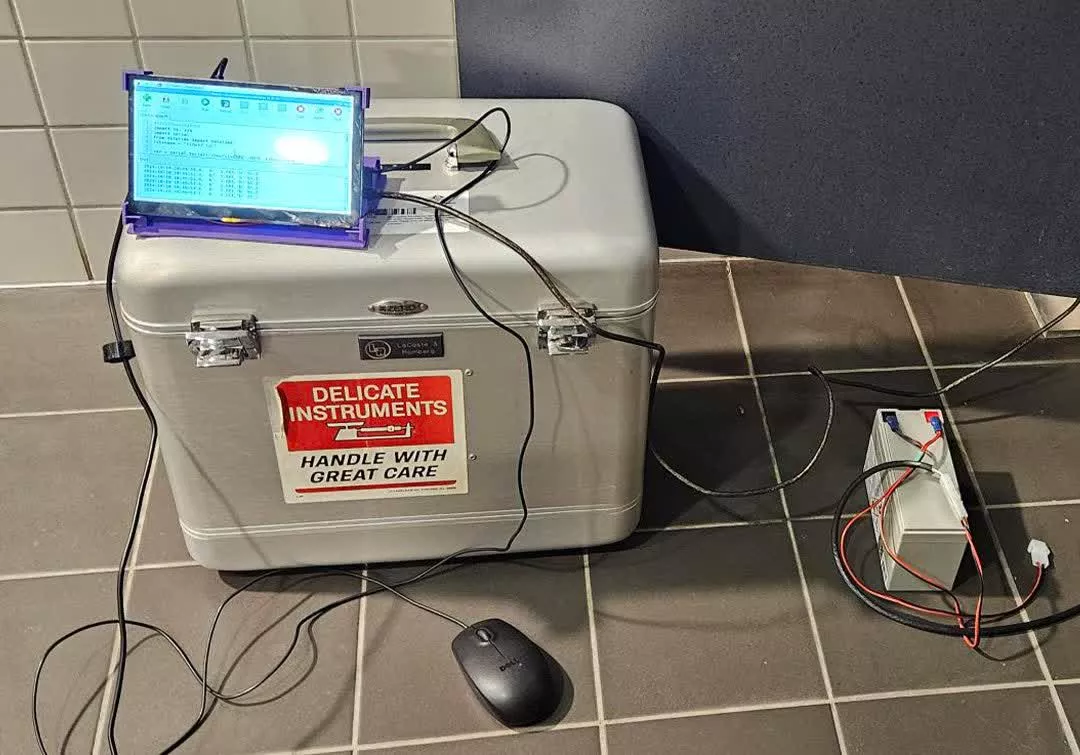
The receiving end is a commercially available gravimeter, which is placed in a bathroom next to the elevator shaft, separated from the elevator by a brick wall. Each time the weight moves, the force of gravity at the sensor only changes about one part in five billion, but that's enough for the team to decode a rather fitting word: "Gravity."
The problem is that the old elevator takes about 25 seconds just to move the weights, so the whole thing can only transmit one bit per minute. It takes 49 bits to spell out "Gravity" using seven-digit ASCII encoding, which is nearly an hour for the elevator to run up and down. Audiences familiar with the movie "Interstellar" may recall the plot of Cooper using gravity to transmit Morse code to his daughter's watch. However, the information in the movie crosses dimensions, but this time the information only passed through the brick wall and entered the next bathroom about 70 centimeters away.
Still, a metal plate or rock can block radio waves and light, but nothing can stop a moving mass from tugging on a nearby sensor. That's why the research team's paper published in Science Advances proposes some unusual application scenarios, one of which is getting information in and out of a closed nuclear bunker.
The team also simulated the possible effects of more advanced hardware. One option they're investigating is using quantum sensors, devices that use clouds of atoms to more accurately measure gravity, the same technology researchers are developing for GPS-less navigation. If coupled with a heavier mass, the communication distance may be extended to about 500 meters. However, the team also admitted that this number is based on quite bold assumptions.
Physicists have previously attempted to achieve nearly unblockable communications. In 2012, a team at Fermilab teleported the word "neutrino" about a kilometer. But that demonstration required a particle accelerator to produce the neutrinos, and the detector at the other end weighed several tons. In contrast, this gravity communication only used a decades-old elevator and an instrument small enough to fit on the bathroom floor.
Comments