
Abstract:
Google researchers recently announced that the company’s experimental quantum computer surpassed the best strategy achieved by classical computers in a logic puzzle called the Rubik’s Cube Game. The research, published in the journal Science, provides physicists with an opportunity to verify quantum "contextual" phenomena on real hardware. Researchers believe this phenomenon could be a key source of future capabilities of quantum computers.
The Rubik's Cube game requires two teammates to jointly fill in a three-by-three number grid without being allowed to communicate with each other, so that it meets a series of mathematical conditions, and is similar in form to a variation of Sudoku. Under classical rules, even with the most ideal strategy, the two of them could only achieve a limited number of victories; Google's quantum machine performed better.
This advantage stems from the way qubits encode information. Bits in traditional computers are already determined to be 0 or 1 before they are read, and the reading process only reveals the existing result. Qubits are different: the measurement results are not predetermined but depend on other consistent measurements being made at the same time. In a Rubik's Cube game, two teammates, although unable to communicate, can use this dependency to coordinate answers more frequently, leading to more wins.
Shashwat Kumar, a Google researcher and one of the authors of the paper, used a coin toss as an analogy. He said that a coin caught and covered by a hand has actually landed on heads or tails, and opening the palm only reveals the result. But in a situational quantum system, if other properties such as the size of the coin are measured at the same time, the result itself may change whether it is heads or tails.
Kumar told the New York Times in an interview that the results of quantum measurements are not predetermined or can be read directly from a list. They are created during the measurement process and are affected by other measurements around them.
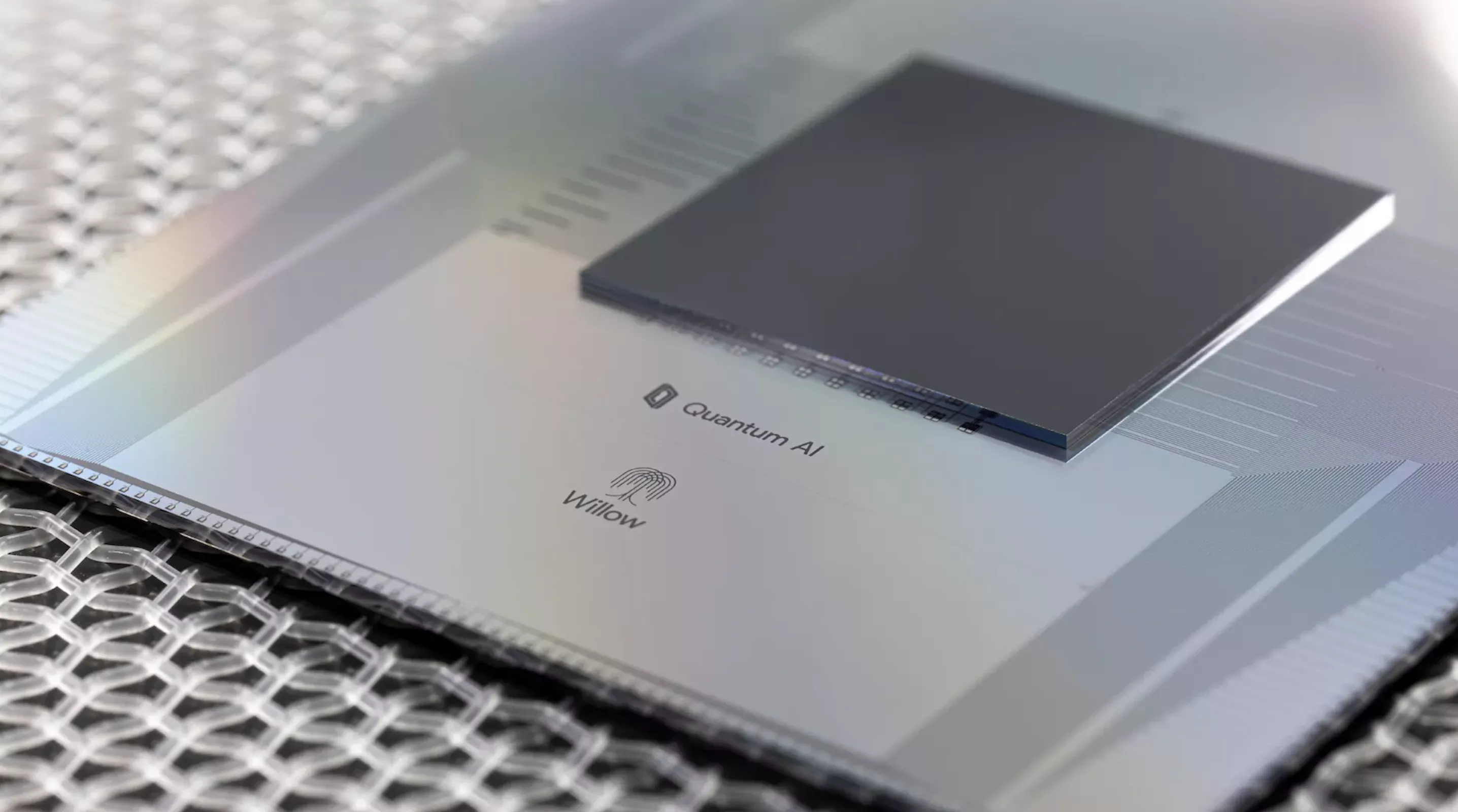
The experiment was conducted on Google's quantum computer in Santa Barbara, California. The machine is built using superconducting qubits, metal circuits that are cooled to near absolute zero.
Michel Devore, a Google researcher who won the Nobel Prize for quantum mechanics research, believes that contextuality is the core source of advantage in the field of quantum computing. He said that quantum contextuality can be described as the "superpower" of quantum mechanics.
The research team admitted that the Rubik's Cube game itself has no practical application value. It is a “toy problem” deliberately designed not to solve a specific real-world challenge but to demonstrate what quantum hardware can do.
Google and many companies, academic laboratories, and government agencies have continued to invest in quantum computer research and development for many years, hoping to accelerate drug discovery, design new materials, and promote the development of artificial intelligence in the future. However, this experiment did not achieve any of these goals. The researchers' more limited claim is that machines capable of solving problems like the Rubik's Cube might pave the way for more meaningful computations.
Mark Howard, a physicist at the University of Galway in Ireland who was not involved in the research, said the significance of this research is that quantum computers can operate in ways that classical computers cannot. If scientists could harness this behavior, they might be able to perform calculations that elude even the most powerful conventional supercomputers.
The dream is for contextuality to be the fuel that enables quantum computers to achieve extraordinary capabilities, Howard said.
Currently, the Google team is more focused on where this effect occurs than on what mystery they have solved. They emphasize that all this strange quantum behavior can be packed into a chip, and that's exactly what they are building. Google researcher Rodrigo Cortinhas said: "All those weirdness can be packed into a chip, and that's what we are building."
Comments