
Abstract:
Although quantum computers have long had amazing computing potential, they have always faced challenges in information storage. Now, a research team from the Swiss Federal Institute of Technology in Zurich (ETH Zurich) has proposed a new quantum computing architecture that stores information by causing mechanical vibrations in microstructures, significantly reducing the size of quantum memory and is expected to lay the foundation for future programmable universal quantum computers.
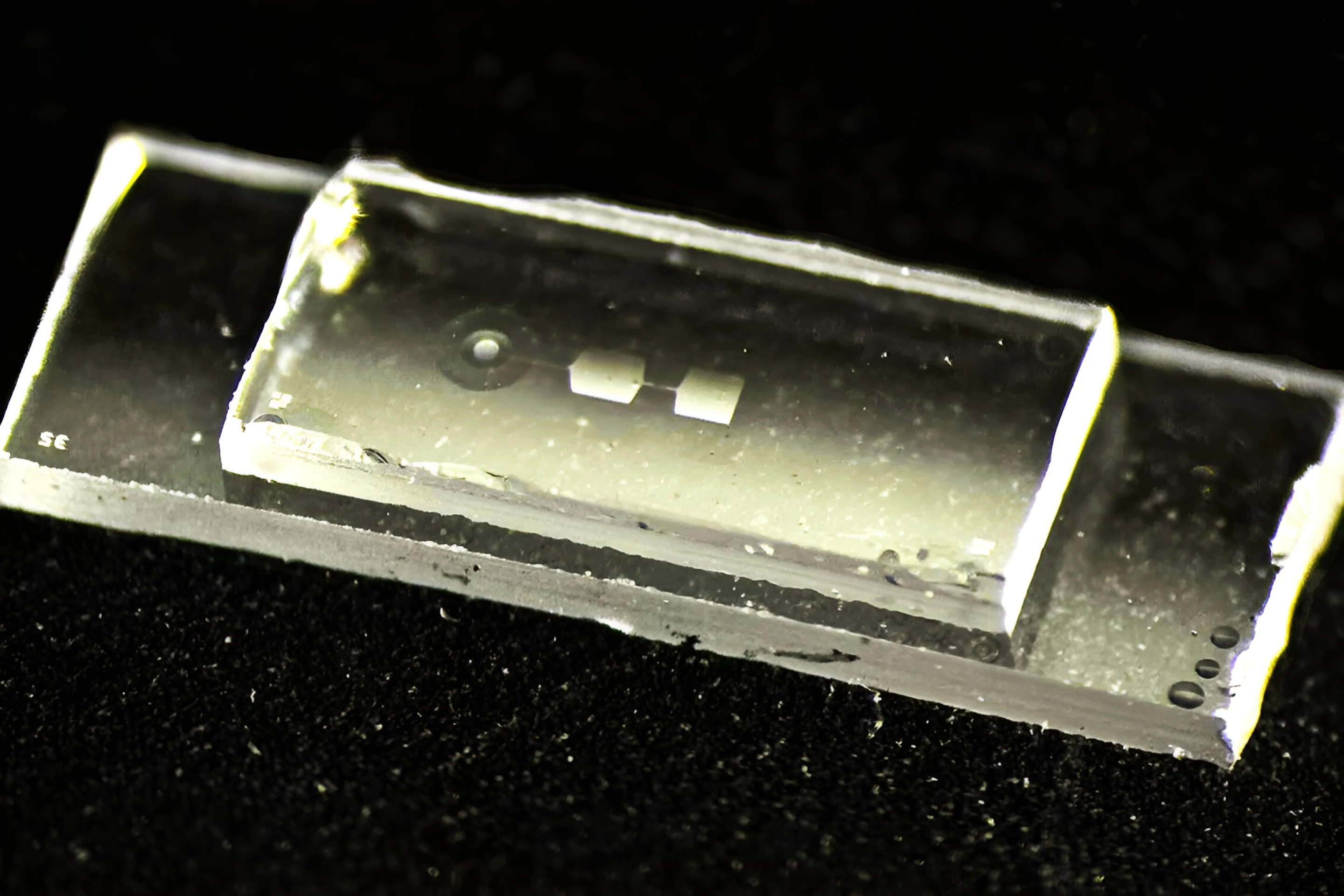
The new quantum chip developed by the research team uses a tiny component called a "mechanical resonator." When a system needs to preserve quantum information, these structures begin to vibrate at extremely high frequencies, and the information is stored in these vibrational states. The entire chip is about 7.5 mm in length, 2.5 mm in width, and 1 mm in height, and is only the size of a small fingernail.
The system works in a way similar to a guitar, says project leader Yiwen Chu, a quantum physicist at ETH Zurich. Guitar strings vibrate to produce musical notes, and new quantum chips use microscopic mechanical vibrations far beyond the range of human hearing to preserve and process quantum information. However, these vibrations are not sounds, but a quantum state carrier.
Currently mainstream superconducting quantum computers usually adopt a highly integrated design, with qubits responsible for both computing tasks and information storage. Although this method has a simple structure, the time that qubits store information is relatively short, and data is easily lost when performing complex and long-term operations. In order to solve this problem, existing systems generally connect additional electromagnetic resonators to be used as memory. These resonators are able to temporarily preserve quantum states, allowing the qubits to reread them when needed. However, these structures often rely on microwave resonant cavities, and microwave wavelengths are often in the centimeter range, so the associated component sizes are also large.
For quantum computers, which must operate at temperatures close to absolute zero, space is an extremely precious resource. The entire system needs to be placed in a large cryogenic cooling device, and the bulky electromagnetic memory module will significantly limit the system expansion capabilities. The ETH Zurich team chose a completely different approach.
They store quantum information not in electromagnetic waves in the form of photons, but in mechanical vibrations called "phonons." Since the propagation speed of sound waves in solids is much lower than the speed of light, their corresponding wavelengths are also greatly shortened. This means that more information storage units can be accommodated in the same space. The research team said that this new architecture clearly distinguishes the responsibilities of the quantum processor and quantum working memory for the first time, similar to the relationship between the CPU and RAM in modern digital computers. Superconducting qubits are responsible for calculation and control, while mechanical resonators serve as working memory and save temporary data during operations.
Researchers believe that this design not only improves storage density, but also improves system organization efficiency. Because quantum processing and quantum storage are repartitioned, each component can focus on the tasks it is best at, thereby improving overall performance.
During the experiment, the team has successfully used this architecture to complete basic quantum logic operations and more complex quantum computing tasks, and verified the feasibility of this design in actual systems. Researchers believe this marks an important step towards truly programmable systems in quantum computing architecture.
Chu Yiwen said that efficient collaboration between quantum processors and quantum memories is an important foundation for future quantum computers to be able to solve problems that traditional computers cannot handle. She believes that only by establishing an architecture with a clear division of labor similar to that of modern computers can quantum computers achieve larger-scale development.
Currently, this achievement is still in the experimental research stage and is still far away from commercial quantum computers. However, industry insiders believe that as the scale of quantum hardware continues to expand, how to efficiently store and recall quantum information will become an important factor in determining future quantum computing capabilities. This new idea of using mechanical vibration to build quantum memory may provide a key technical path for the next generation of quantum computing platforms.
Comments