
Abstract:
The British company BAE Systems is adding a new wireless power supply capability to its PHASA-35 high-altitude solar drone, which uses a ground station to directionally emit microwave energy to the flying drone to supplement its power. The project received contract support of 15.7 million pounds and approximately US$21 million from the British Advanced Research and Invention Agency (ARIA), with the goal of completing technology development and flight verification within the next three and a half years. If the test is successful, this method is expected to solve the problem of solar-powered high-altitude drones having difficulty maintaining flight at night and when there is a lack of sunlight in winter.
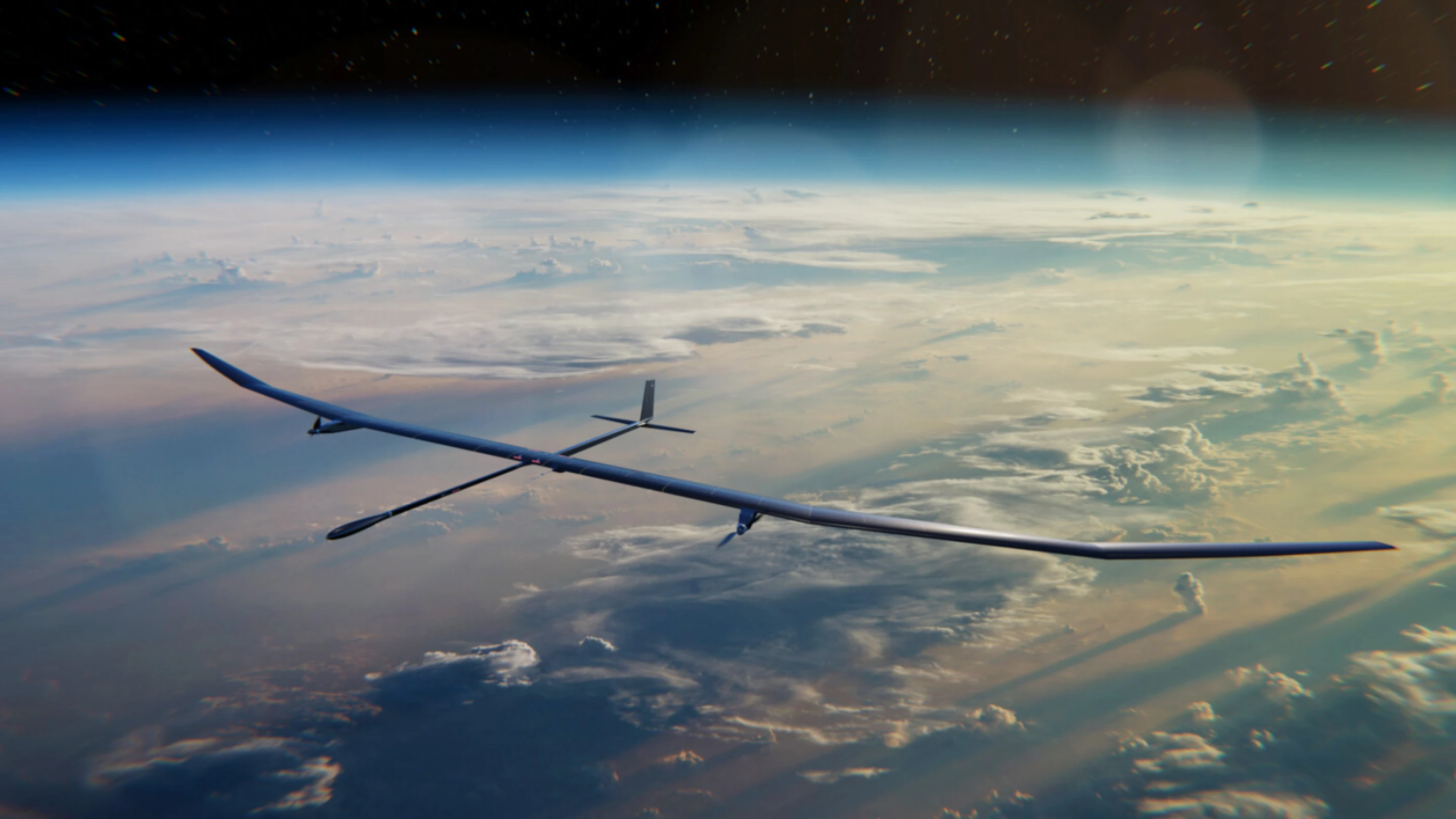
PHASA-35 is a high-altitude long-endurance solar-powered UAV, also classified as a "High Altitude Pseudolite" (HAPS). It is designed to operate in the stratosphere above about 20,000 meters. It can avoid most weather systems and traditional air traffic and continue to cruise at a speed of about 90 kilometers per hour. The aircraft has a 35-meter-long carbon fiber composite wing. The fuselage is very light. Solar cells are arranged on the surface of the wings to provide energy for electric motors and on-board equipment.
The biggest advantage of this type of aircraft is that it can stay over designated areas for a long time to perform missions. High-altitude solar-powered drones are cheaper to deploy than traditional satellites that need to be launched into space and can change mission areas like regular aircraft. In the future, PHASA-35 can undertake communications relay, earth observation, surveillance and other tasks that require long-term continuous operation.
Theoretically, PHASA-35 can rely on solar energy to generate electricity during the day, while storing excess power in the battery for maintaining flight at night. BAE Systems has previously set a goal of up to one year of continuous flight for this aircraft. However, this ability is highly dependent on local sunlight conditions.
Near the equator, since the length of day and night changes less throughout the year, it is easier for solar-powered drones to get enough sunlight. But in high latitudes such as the UK, the situation is completely different. In winter, the days shorten significantly and the nights become longer. In some periods, there may even be a lack of effective sunlight for a long time. For aircraft that need to maintain altitude at all times, battery capacity ultimately becomes a critical limitation in determining flight time.
If a large number of batteries are added to cope with the long winter nights, the weight of the aircraft will be further increased. For an extremely lightweight solar-powered aircraft like the PHASA-35, the increase in weight will directly affect flight efficiency, while also occupying weight space that could otherwise be used for communications equipment, sensors and other mission loads.
ARIA therefore launched the "Persistent Atmospheric Platform" project, hoping to develop a new energy system that would allow high-altitude solar platforms to escape day, night and seasonal restrictions. Prismatic, a subsidiary of BAE Systems, will use PHASA-35 as an actual flight verification platform to develop and test ground wireless power supply technology in phases over the next three and a half years.
The basic principle is to build a dedicated energy transmitting station from the ground to convert electrical energy into directional microwave beams and accurately send the energy to PHASA-35 located at high altitude. A special receiving device will be integrated inside the aircraft wing to convert the received microwave energy into electrical energy and then supply it to the aircraft's motor and battery system.
This solution is obviously different from wireless charging in the traditional sense. The drone does not land on the ground or come into contact with any charging equipment. Instead, it continues to fly at an altitude of tens of thousands of meters while receiving energy from long-distance ground equipment. Therefore, as long as the ground station can continue to provide energy to the aircraft's location, the PHASA-35 can continue to fly even if the sun has set.
For high-altitude solar-powered drones, the biggest significance of this technology is not just extending night flight time, but the possibility of reallocating the aircraft's limited weight budget. If aircraft no longer need to carry large-capacity batteries that can handle long winter nights, the weight of the batteries can be reduced, and the freed weight can be used to add communications equipment, radar, electro-optical sensors or other mission payloads.
BAE Systems stated that the PHASA-35 has previously proven itself as a low-cost alternative satellite platform, and this project will further explore how to make this aircraft have a stronger continuous working capability. The ultimate goal is for solar high-altitude platforms to no longer be limited by seasonal sunlight, thereby truly achieving long-term aerial deployment throughout the year.
PHASA-35 has previously completed multiple flight and durability tests. The aircraft completed its first flight in 2020, and has since undergone dozens of hours of endurance testing and comprehensive verification of the sensors it carries. It is designed to operate in the stratosphere for long periods of time and undertake tasks that are difficult for traditional satellites and some manned aircraft to perform economically.
If ground-based microwave energy supply technology is finally proven, the application scope of this aircraft may be further expanded. For communication missions, the high-altitude platform can hover over the target area for a long time to provide communication relay for remote areas; for surveillance and earth observation missions, it can remain near a fixed area for a long time without the need to land and recharge as frequently as ordinary drones.
However, wireless power supply from the ground to high-altitude aircraft still faces many technical problems, including microwave energy transmission efficiency, long-distance beam control, aircraft receiving equipment weight, energy transmission under complex weather conditions, and flight safety. One of the core points of this project is to verify whether this technology can work stably in a real atmospheric environment through actual flight demonstrations.
ARIA’s contract will be advanced in three phases, with the ultimate goal of PHASA-35 carrying a complete system for a comprehensive flight demonstration. If ultimately successful, solar-powered high-altitude drones may shift from an operating mode of "relying on the sun during the day and relying on batteries at night" to an all-weather energy system that "combines solar energy with ground-based wireless energy supply."
For PHASA-35, this means that its original biggest weakness - lack of sunlight at night and in winter - is expected to be solved through energy supply from the ground. For the entire HAPS field, this technology may allow high-altitude solar aircraft to truly have the ability to remain in the air all year round, forming a new platform between traditional aircraft and satellites in certain communications, surveillance and earth observation missions.
Comments