
Abstract:
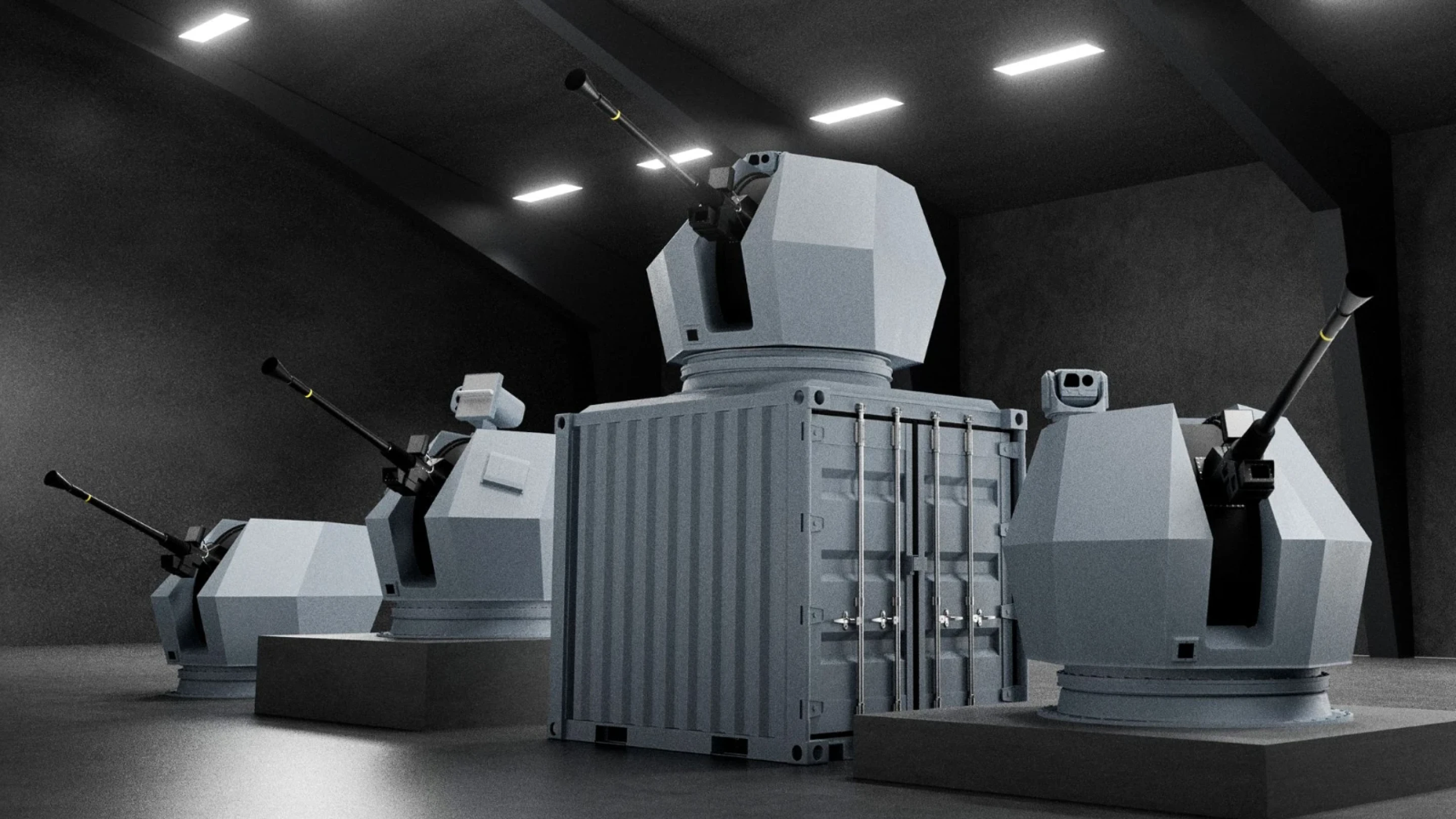
British defense contractor BAE Systems recently demonstrated its new Sea Tridon series 40mm naval gun system at the Euronaval 2026 naval defense exhibition in Paris. The biggest feature of this set of weapons is its modular design, some of which can even be installed directly on standard container-sized modules. This means that additional maritime defense capabilities can be quickly obtained without the need for large-scale modifications to the ship.
As drone swarms, loitering missiles and low-cost unmanned combat platforms continue to change the shape of modern warfare, traditional shipborne weapon systems are facing new challenges. Although large missiles have powerful strike capabilities, the cost of each missile is relatively high. If expensive anti-aircraft missiles are used to intercept a large number of cheap drones, it can easily cause a serious cost imbalance. Therefore, how to deal with a large number of air threats at a relatively low cost has become a key research direction for navies of various countries.
The Sea Tridon series is based on the Swedish Bofors 40mm L/70 medium-caliber rapid-fire gun. The gun's technical origins can be traced back to the 1930s. After nearly a century of continuous improvement, it now incorporates modern technologies such as new materials, pre-fragmentation ammunition, programmable fuses and digital fire control systems.
The development process of this set of weapons is also quite interesting. Its technical basis was originally designed for naval ships, but BAE Systems will transform the relevant system into a land-based version in 2023 to deal with threats such as drones and loitering missiles. Now, after further development, this series of weapons has returned to the sea as the Sea Tridon ship-based defense system.
According to information released by BAE Systems, the Sea Tridon series currently includes four configurations, which can adapt to different levels of ships and combat needs.
The basic model is the Bofors 40 Mk 4 naval gun. This is a set of lightweight, fully automated ship-borne artillery that can be directly connected to the existing integrated combat system of the warship and controlled by the ship's own command and fire control system.
The standard Sea Tridon has higher independence and is equipped with an integrated electro-optical fire control system, so even if the ship does not have a complex integrated combat command system, it can install and use this set of weapons.
Sea Trinity further enhances the degree of automation and is a complete close-in defense weapon system (CIWS). Not only is it equipped with programmable ammunition, it also has its own radar system and can independently undertake close-range defense tasks. In principle, the captain only needs to give the order to fire, and the system can rely on its own sensors and fire control equipment to complete subsequent work.
The most eye-catching one in the entire series is Sea Tridon C. It looks like an automated turret mounted on top of a small shipping container, and that's exactly what it is. The weapon system is integrated on a modular platform that is easy to transport and install, and can be quickly deployed to auxiliary ships, patrol ships and even merchant ships according to mission needs.
The significance of this design is that traditional shipborne weapons usually require specially designed deck structures, power supply systems, fire control equipment and internal space of the ship. The installation process is complicated and the modification cost is also high. Sea Tridon C attempts to integrate these equipment into a relatively independent module, allowing the ship to gain additional firepower without undergoing large-scale structural modifications.
For example, in waters with high risks of piracy such as the Gulf of Aden and the Strait of Malacca, if an ordinary cargo ship is suddenly attacked by an armed speedboat, it may lack effective means of self-defense under traditional circumstances. The adoption of this containerized weapons module will give commercial ships the opportunity to temporarily increase shipboard defense capabilities on high-risk routes.
Of course, this does not mean that ordinary merchant ships can install and use naval guns at will. Under the current legal and regulatory environment, the weaponization of private commercial vessels involves complex international maritime regulations and national jurisdictional issues. BAE Systems envisages use where Navy or Coast Guard personnel are deployed on board ships during high-threat periods and are responsible for operating these weapons systems, rather than leaving them to ordinary merchant ship crews.
Lena Gillström, President of BAE Systems Bofors, said that the maritime threat environment is changing rapidly, and navies and maritime operators increasingly require flexible and effective protection solutions. The Sea Tridon series allows users to choose different levels of defense capabilities based on actual missions, while sharing a mature technology platform and advanced programmable ammunition system.
From the perspective of technological development direction, Sea Tridon embodies the trend of modularization, low cost and rapid deployment of modern naval weapons and equipment. Faced with drone swarms and low-cost cruise missiles, large warships do not necessarily need to be equipped with expensive missile systems for every threat. By deploying automated medium-caliber naval guns, a relatively economical layer of short-range defense can be added to the ship.
However, whether the container-type design can truly adapt to the complex maritime environment of commercial ships still depends on factors such as power supply, stability, sensor integration, personnel operation and actual combat testing. Sea Tridon currently displays a modular weapons product system, and its actual deployment scale and future user situations remain to be further observed.
Comments