
Abstract:
A new performance switch in Windows 11 called "Advanced Performance Extensions" (APX, Advanced Performance Extensions) recently appeared in preview build 29695. This version was pushed to the Windows Insider "Experimental (Future Platforms)" test channel on October 23; Microsoft's official update instructions did not mention APX, so the switch currently disclosed is still an early test discovery, and it is unclear when or whether it will be launched to ordinary users.
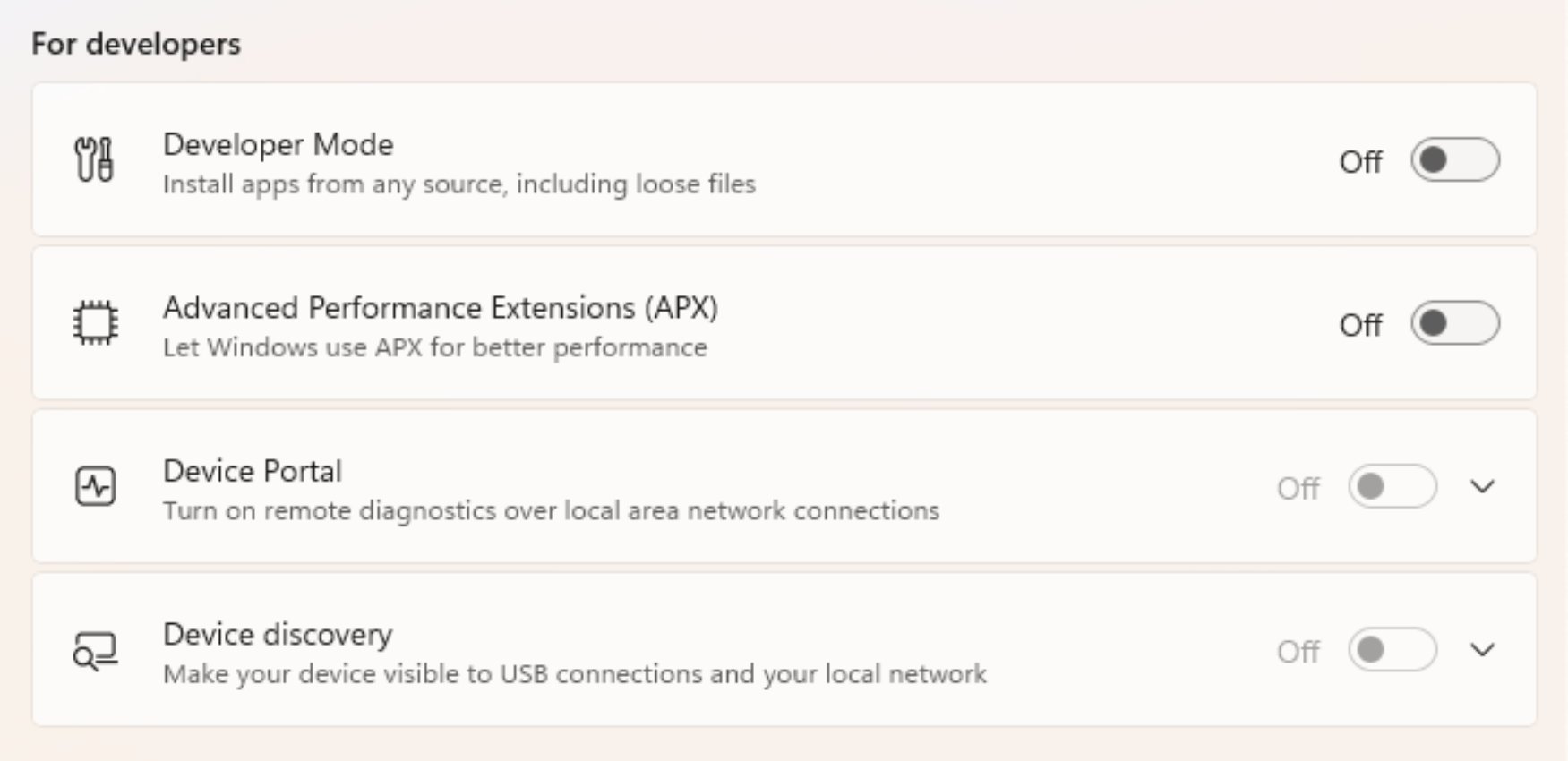
APX is an instruction set extension designed by Intel for x86 processors. One of the core changes is to increase the number of general-purpose registers from 16 to 32, allowing the processor to retain more data in high-speed registers and reduce reads and writes to memory. It also adds new conditional execution instructions designed to reduce branch mispredictions and extra instructions in some programs.
Intel said that in the prototype simulation of the SPEC CPU 2017 integer test, the code compiled with APX enabled reduced load operations by approximately 10%, storage operations by more than 20%, and the number of instructions by approximately 10% compared to the baseline version. These numbers are from prototype simulations and do not mean that Windows or all applications will actually run 10% or 20% faster; the final effect will depend on the processor, software and specific workloads.
APX requires support from the processor itself, and existing CPUs cannot obtain this new set of instructions simply by installing Windows updates. Multi-generation Intel Core processors currently on sale do not support APX; whether future consumer-grade platforms support it should still be based on specific product specifications. Even if the hardware has APX, the application and operating environment need to be compiled or updated accordingly to use it. Intel said that developers can usually adapt by recompiling and do not necessarily need to modify the source code.
Windows 11 currently also has a Low Latency Profile (low latency configuration) for existing computers, which improves the waiting time of some operations by briefly increasing the CPU response speed when starting an application or system interface. It is not the same technology as APX, and does not require the processor to add a new instruction set.
Related articles:
Intel and Microsoft cooperate to promote APX technology Windows 11 is expected to gain 64-bit performance improvements in the future
Comments