
Abstract:
As artificial intelligence programming tools continue to become more powerful, game enthusiasts are trying to port more and more console-exclusive games to PCs. In the past, such projects usually required developers to invest a lot of time in reverse engineering, analyzing game code, and reimplementing underlying functions. Today, AI programming agents are significantly lowering the technical threshold for related work. Nintendo Switch games have also begun to become a new target of this trend. Among them, the Switch remake of "The Legend of Zelda: Dreamweaver Island" has already seen a PC porting project that can be publicly experienced, and some people have also begun to try to port "Super Mario: Odyssey" and "Super Mario Bros.: Surprise".
A PC port version of "The Legend of Zelda: Dreamweaver Island" developed by players has recently entered the public beta stage. The project was developed almost entirely with artificial intelligence, primarily using Anthropic’s Claude and its programming tool Claude Code. This is believed to be one of the first projects to enter the public release stage to perform such recompilation and porting of Nintendo Switch games.
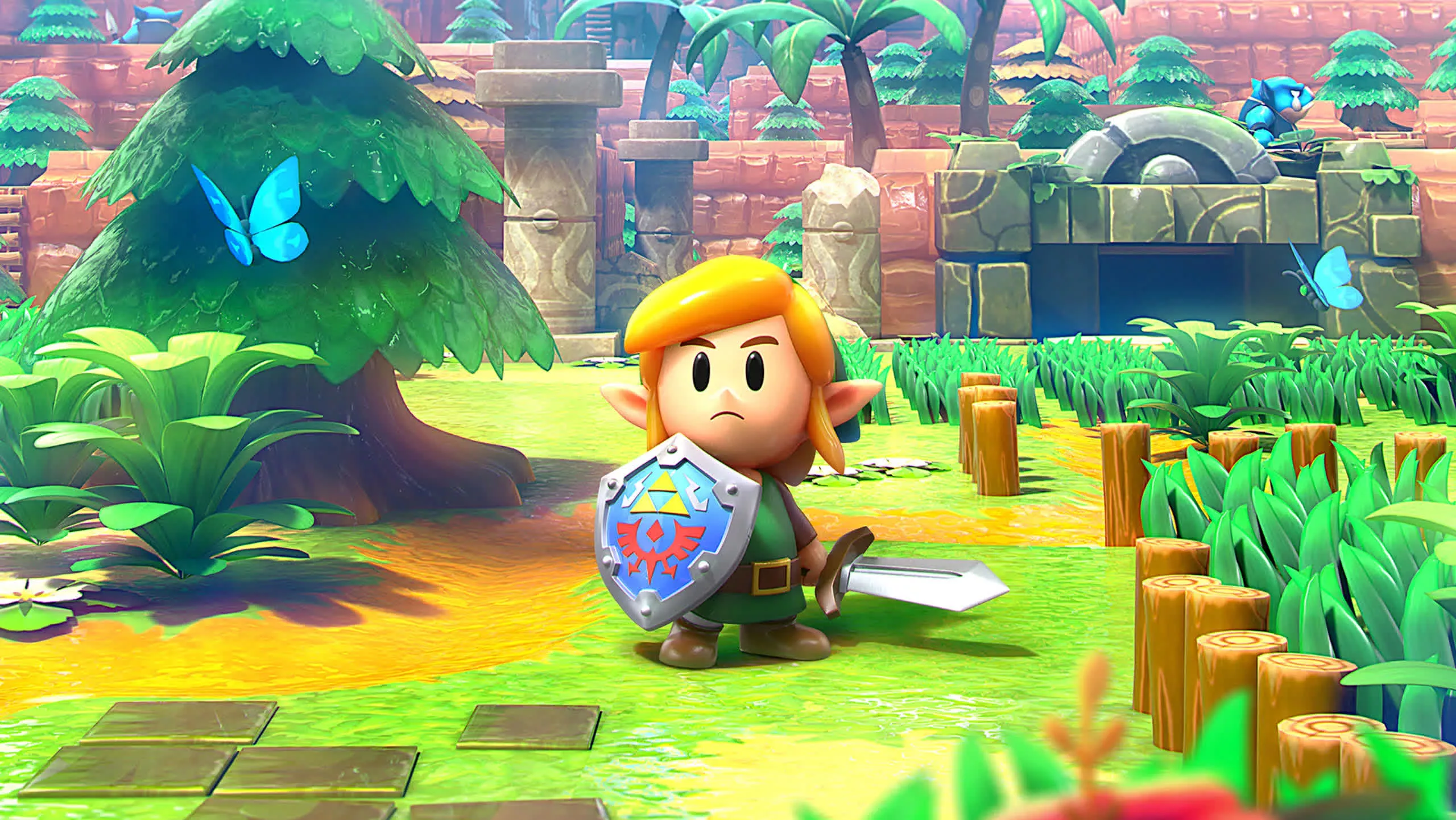
This work is not a PC version officially launched by Nintendo, but an unofficial porting project created by enthusiasts through reverse analysis and static recompilation technology. Developer peiikai publicly stated that AI participated in the reverse engineering of the game, code writing and the generation of GitHub project documents, covering almost the entire development process.
The project currently runs natively on Windows, macOS and Linux systems, and there is also an experimental Arm Linux version. Unlike traditional game emulators, the native ported version will try to convert the program logic of the original game into code that can run directly on modern PC hardware, rather than completely simulating the hardware environment of the original console.
However, users still need to prepare the original resource files required for the game. In other words, the publicly released porting project does not mean that developers can directly obtain the complete game content for free.
In terms of functionality, this PC port offers many options that the original game does not have or is limited by, including support for multiple screen aspect ratios, lifting internal rendering resolution and display resolution restrictions, displaying corresponding key prompts for different controllers, and using the keyboard for operations. The project also adds optional 360-degree movement functionality and a randomization mode.
Randomization mode allows players to rearrange the distribution of items and tasks, and create independent archives for different random seeds. This type of function can change the original game flow and provide a new experience for players who are already familiar with the original game.
"The Legend of Zelda: Dreamweaver Island" was originally launched on the Game Boy platform in 1993, and Nintendo subsequently produced a fully remastered version for Switch in 2019. Compared with the original work, the Switch version adopts a more modern visual performance while retaining the core gameplay and level design of the original work. This PC port is for the 2019 Switch remake, not the earlier Game Boy version.
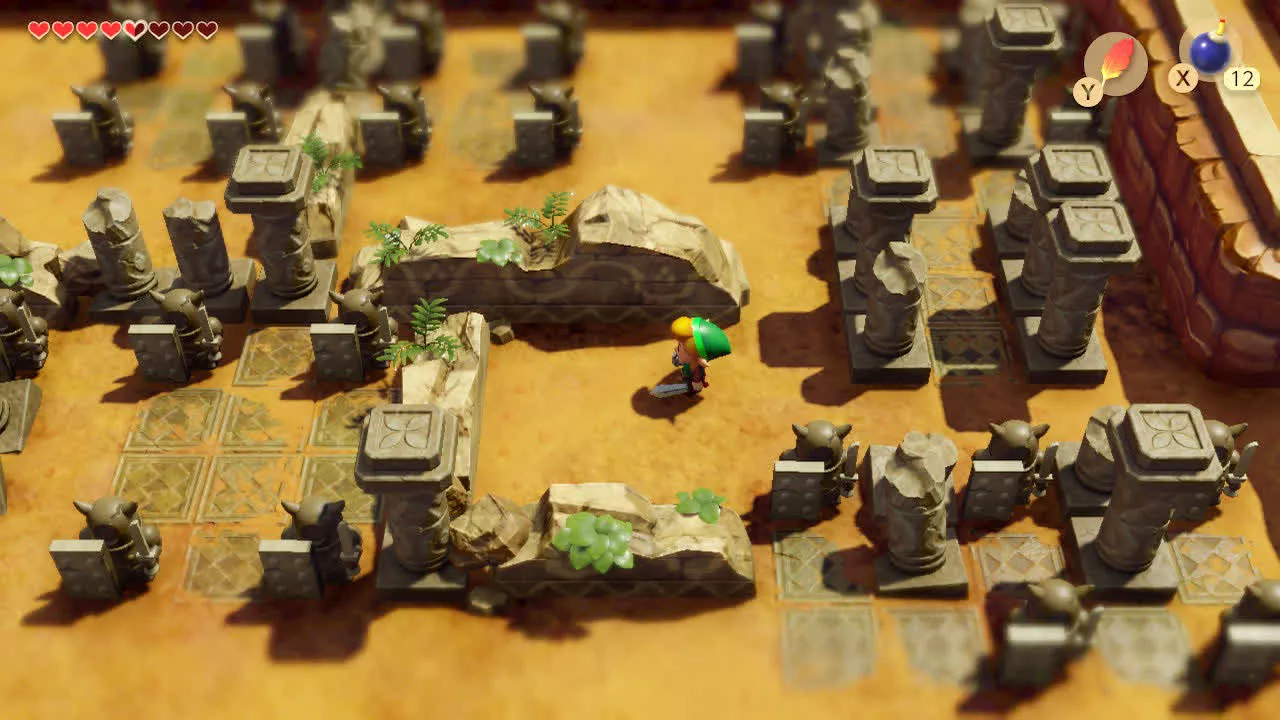
Native PC porting has some potential advantages over traditional emulators. Since there is no need to completely simulate the hardware operating environment of the original host, a well-optimized ported version may reduce some performance overhead and can more easily support high-resolution displays, performance optimization, and player-made modules.
But to realize these functions, developers must accurately understand the original game's operating logic, data structure and hardware calling methods. This is often a difficult task for commercial games that don't have open source code.
In the past, many enthusiasts tried to recreate the program logic of classic games through reverse engineering, but the projects often stalled at certain complex links. AI programming agents can assist in analyzing code, identifying program structures and generating large amounts of implementation code, making progress on some projects that would otherwise be difficult to complete.
However, AI cannot guarantee that the automatically generated code is completely correct. For projects involving complex game logic, physics operations, archive systems, and graphics rendering, even if the code can be compiled and run, it does not mean that the game behavior is necessarily consistent with the original version. Developers still need to go through a lot of testing to confirm whether the operating results in different scenarios meet expectations.
The developer of the PC porting project of "Dream Weaver Island" also admitted that the current version is still in the testing stage and there are some known serious problems. This means that although the project has been able to run, there is still a certain distance from reproducing the original game experience stably and completely.
It is worth noting that the games targeted by this project are not old works from decades ago, but modern remakes of games launched in 2019 and developed for the Switch platform. Compared with past projects that were mainly reverse engineering projects for old platforms such as Nintendo 64 and Game Boy, Switch games are more technically complex and have been developed more recently.
In recent years, the number of game reverse engineering and recompiling projects has increased significantly. In addition to "Dreamweaver Island", other fan projects have also begun to try to convert more classic console games into versions that can run natively on PC. AI programming tools play an increasingly important role in this, but this approach has also caused controversy among developers and player groups.
Some players believe that AI tools can help independent developers break through the limitations of personal technical capabilities and enable projects that originally lack resources to be realized. Others worry that over-reliance on AI-generated code will lead to unstable project quality, or cause developers to neglect understanding and verification of underlying principles.
Currently, the wave of PC porting of Nintendo Switch games is still in its early stages, but several projects have begun to emerge.
Among them, the porting work of "Super Mario: Odyssey" and "Super Mario Bros.: Surprise" has entered the preliminary development stage. The former was launched in 2017 and is one of the important works on the Switch platform; the latter will be launched in 2023. Relevant developers have publicly displayed some running screens, but the project files have not yet been officially provided for download, and the game's running performance is still unstable.
Judging from the currently public videos, these two projects have been able to run at close to 60 frames per second on laptops equipped with NVIDIA GeForce RTX 3050 graphics cards. However, these pictures can only prove that the project has made initial progress, and do not mean that the game has been ported, nor can it be used to judge the performance and stability of the final version.
Unlike "Dream Island", "Super Mario: Odyssey" and "Super Mario Bros.: Surprise" are still in the early stages of development. Developers also need to continue to solve problems such as program compatibility, graphics rendering, game logic and performance optimization to make the game run stably on different PC configurations.
From a technical perspective, AI programming agents are gradually transforming game reverse engineering from being highly dependent on the work of a few professional developers to a project that more technology enthusiasts can participate in. The program structure that used to need to be analyzed piece by piece can now be understood and reconstructed using AI to speed up the process, and developers can devote more energy to testing, repairing and improving functions.
But this does not mean that AI can easily crack all games. Complex software systems often contain a large number of implicit assumptions, special hardware behaviors and boundary conditions, and errors may still occur in AI-generated code. For large-scale games, reverse analysis, verifying program behavior and troubleshooting compatibility issues still require considerable technical investment.
Legal issues cannot be ignored either. Unofficial porting projects involve game copyright, program reverse engineering, and the use of original resource files. Whether it is legal or not needs to be judged based on the laws of the relevant jurisdictions and the actual situation of the project. Just because developers require users to provide their own game resources does not mean that the entire project is necessarily legal, nor does it mean that Nintendo will not take action.
Nintendo has long taken a tough stance against unauthorized game copying, emulator-related projects, and copyright infringement. Therefore, even if the PC port version of "Dream Weaver Island" has entered the public beta stage, there is still uncertainty about whether it can maintain public release in the long term.
Overall, the PC porting project of the Switch remake of "The Legend of Zelda: Dreamweaver Island" demonstrates the practical potential of AI programming tools in the field of game reverse engineering. AI can not only assist in writing routine programs, but also begin to participate in complex tasks such as understanding existing software, reconstructing program logic, and generating complete project documentation.
As projects such as "Super Mario: Odyssey" and "Super Mario Bros.: Marvel" continue to advance, Nintendo Switch games may become an important target for the next wave of AI-assisted PC ports. However, there are still multiple technical and legal obstacles to getting from a working experimental version to a stable, complete, and legally sustainable official product.
Comments