
Abstract:
Jeff Bezos made a bold bet in 2017. Bezos, a fan of science fiction and robotics, is convinced that consumers will have home robots in the near future. The founder and then-CEO of Amazon told a group of the company's top device executives to start building a robot. Within a few years, the team had built the $1,450 Astro.
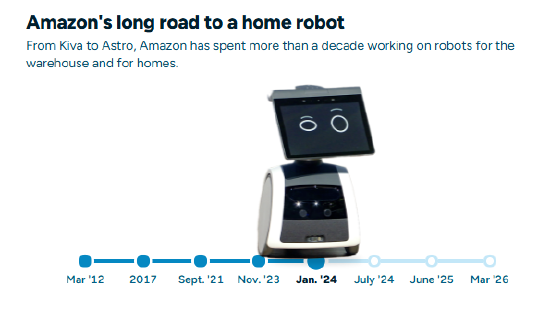
The public first saw Astro at Amazon’s 2021 fall event. Astro is essentially a wheeled tablet equipped with Alexa that can autonomously navigate your home, recognize faces, and act as a mobile security monitor.
But it never got beyond the invitation-only product stage. Astro has only shipped to a few thousand customers, some of whom now believe the robot's days are numbered. The company also launched Astro for enterprises in 2023, but discontinued the product less than a year later.
Despite Astro’s repeated setbacks, Amazon has not given up on Bezos’ dream of home robots.
Over the past few months, the company has formed a new team that is developing a "world-first robotic product."
"Robots are coming out of the movies and into our homes," read a recent, now-deleted engineering job posting. The post detailed a product that could navigate "dynamic home environments" and "operate autonomously with family members."
Amazon is known for making long-term bets, even if they may be "misunderstood" in the short term, as long as it gives the company an early advantage in a new market, as it did with its Alexa voice assistant or Kindle e-reader.
CEO Andy Jassy reminded investors in his latest annual shareholder letter that artificial intelligence and robotics are "one of the biggest inflection points in our lifetimes."
"We strive to anticipate what will make our customers' lives easier and better every day and invent the next turning point," Jassy wrote.
Analysts also expect the market for humanoid robots to surge in the coming years. Barclays predicted in a January report that the global market, currently valued at $2 billion to $3 billion, could reach about $40 billion by 2035, and could be as high as $200 billion under a "most optimistic scenario."
Comments