
Abstract:
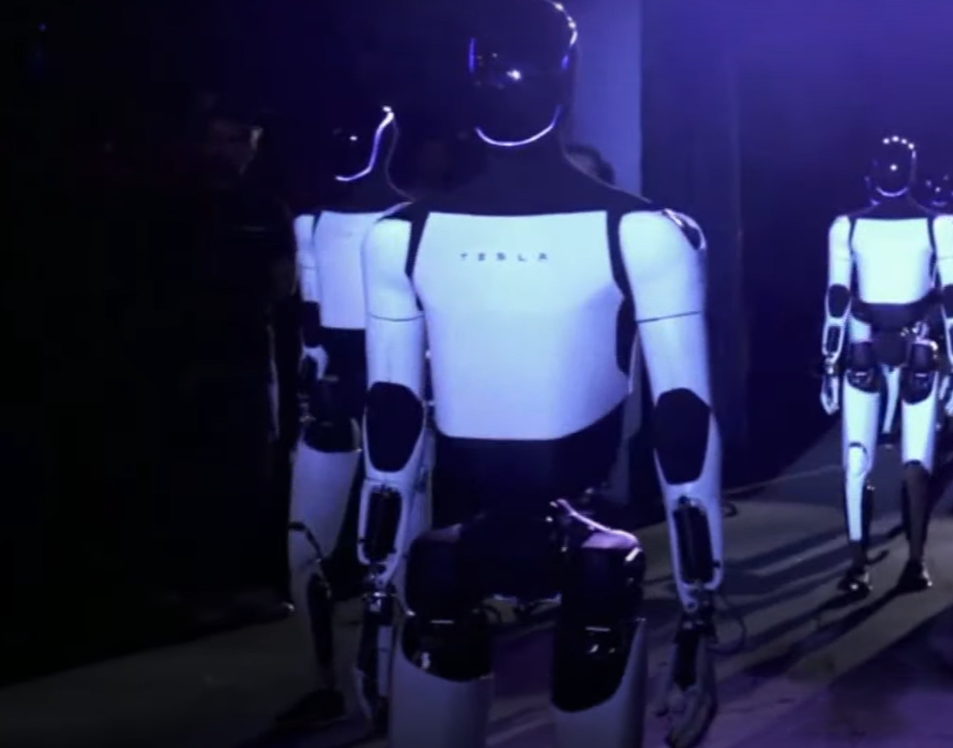
Tesla CEO Elon Musk recently disclosed in detail for the first time the company’s long-term plans in the field of humanoid robot training. He said that in order to promote the large-scale commercial production of Optimus robots, Tesla plans to build a specialized training facility that can accommodate about 10,000 robots, allowing robots to continuously learn and accumulate experience by simulating real-world environments.
Musk talked about the idea during Tesla's third-quarter earnings call. He believes that in addition to hardware manufacturing capabilities, training data and learning environment will become key factors in determining the large-scale development of the robot industry. In the future, a large number of Optimus robots will need to continuously perform tasks, correct errors and learn new skills on a unified platform, which is the core purpose of establishing a large-scale robot training center.
According to Musk's vision, this facility, known as the "Robot School" or "Optimus Academy" by the outside world, will undertake real-life scenario training tasks, allowing thousands of robots to learn various workflows and action skills at the same time, thereby continuously improving the capabilities of the artificial intelligence system and accelerating product iteration.
In addition to the robot plan, Musk also disclosed the latest progress of the much-watched Terafab chip manufacturing project. The project, located near Austin, Texas, is seen as an important step for Tesla and SpaceX to create an independent semiconductor supply chain. It is also a core infrastructure for future robotics and artificial intelligence strategies.
Musk said Terafab expects to begin installing and commissioning major equipment in the first half of next year. If all goes well, the factory is expected to produce the first batch of test chips between May and June next year. At that time, the team's initial important goal is not mass production, but to verify whether the factory can successfully complete the chip manufacturing process.
According to the plan, Terafab will gradually expand production capacity in the future. The project initially plans to achieve a production capacity of 100,000 wafers per month, and the long-term goal is to increase the production capacity to 1 million wafers per month. Musk has previously said that the factory may only produce a few thousand wafers in the early stages, with the focus being on validating new technologies and testing various innovative solutions.
Musk has shown great confidence in the future development prospects of the project. He said that if Terafab achieves large-scale production as expected, the economic value it creates may even reach the level of the top 20 economies in the world. He believes that this project is expected to become one of the most valuable industrial facilities in the world in the future.
Musk also revealed that one of Terafab’s important partners is Intel. The two parties will cooperate on Intel's next-generation 14A process technology. According to Intel's previously announced plans, the 14A process is expected to enter mass production in the first quarter of 2028. However, Musk did not elaborate on the specific role this advanced process will play in Terafab's future mass production plans.
The importance of Terafab to Tesla is not only reflected in the chip manufacturing itself. According to Musk's artificial intelligence strategy, this factory will also be responsible for the production of AI5 chips in the future, and AI5 is regarded as an important computing platform that drives the next generation of intelligent capabilities of the Optimus robot.
When talking about the goal of mass production of robots, Musk admitted that this is not an easy task. He said that from supply chain construction to parts acquisition, to model training and production organization, there are "tens of thousands of things" that must be progressed smoothly at the same time, and problems in any link may affect the overall progress.
Musk also emphasized that compared with automobile manufacturing, the humanoid robot industry faces more challenges. Robots not only require reliable hardware, but also huge training data, complex software systems, and continuous learning capabilities. Therefore, it is not enough to just complete the hardware production, but it is equally important to build a high-quality training system.
In recent years, Musk has continued to promote Tesla's transformation from a pure electric vehicle manufacturer to an artificial intelligence and robotics company. As the Optimus robot project continues to expand and the Terafab chip factory is gradually established, Tesla's future development focus is increasingly turning to the fields of robotics and artificial intelligence.
If the relevant plans are finally realized successfully, Tesla not only hopes to become one of the world's largest manufacturers of humanoid robots, but also attempts to master the complete industrial chain from chip production, artificial intelligence training to robot manufacturing. The "10,000 robot schools" that Musk calls may be a key component of this grand idea.
Comments