
Abstract:
With the rapid development of generative artificial intelligence, Texas, USA, is ushering in a boom in large-scale data center construction. However, a new research report warns that if a large number of data centers rely on the existing power grid and fossil fuels to meet power needs in the future, the results achieved in air pollution control in Texas over the past two decades may be significantly offset, and some pollutant emission levels may even return to the levels of the early 21st century.
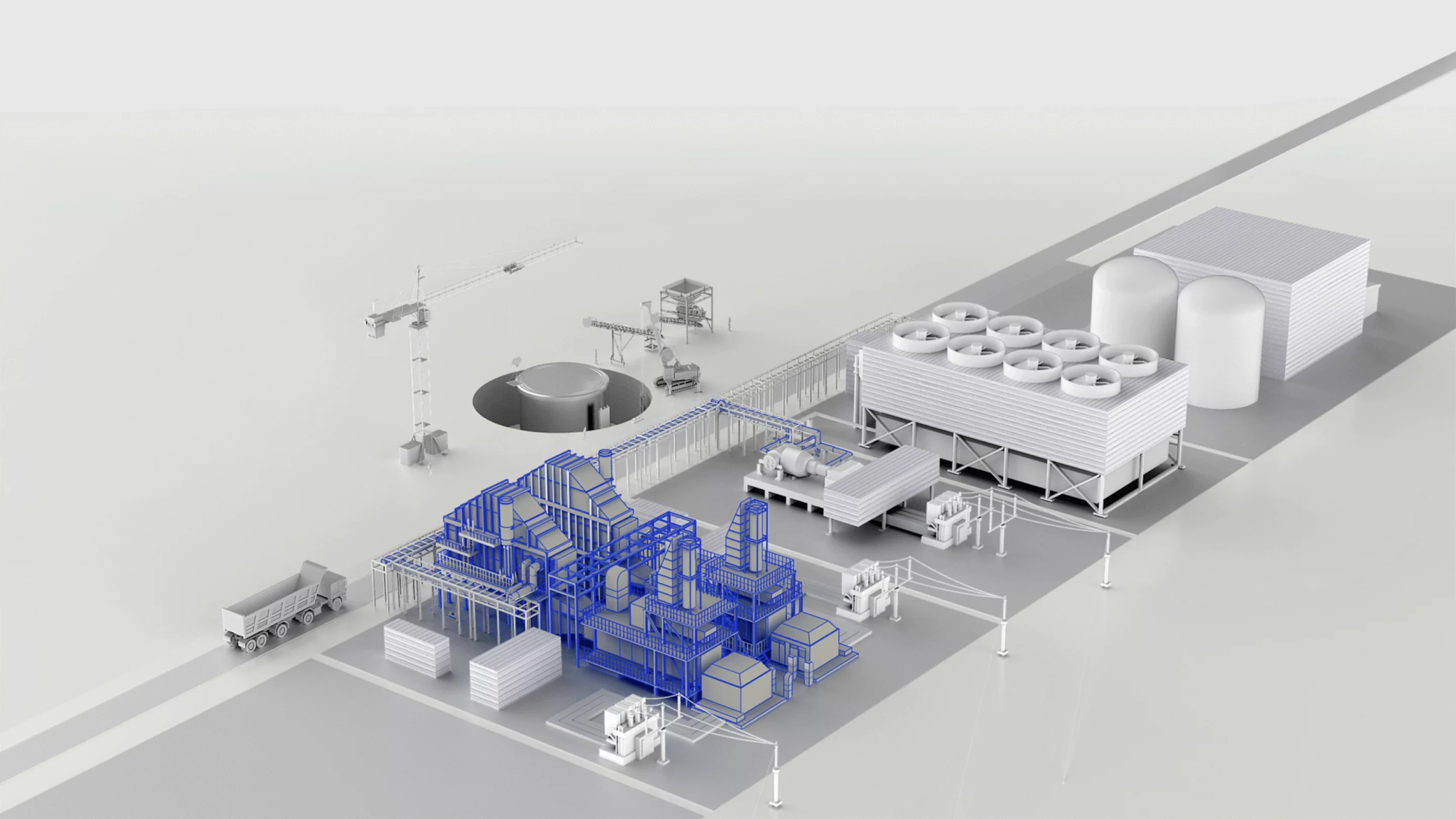
This report, released by the Houston Advanced Research Center (HARC), focuses on analyzing the possible air quality impacts caused by the expansion of data centers in Texas. Researchers note that data centers need to continuously power large numbers of servers and must also run cooling systems to prevent high-performance computing equipment from overheating. As the power consumption and cooling requirements of artificial intelligence chips continue to rise, the power requirements of data centers are also growing rapidly.
The crux of the matter is not just how much electricity is needed, but also how that electricity will be produced. If all planned data center projects were connected to the Texas grid as expected and powered by the projected future power mix, associated pollutant emissions could increase significantly. The study concluded that under this scenario, decades of air quality improvement in Texas could be undone in just five years.
The report predicts that if the above scenario develops, the fine particulate matter pollution produced by the Texas power sector, commonly known as soot, may increase to more than three times the current level, reaching the highest level since 2006. Emissions of smog-forming nitrogen oxides could rise by 136%, approaching 2004 levels. At the same time, carbon dioxide emissions related to climate warming may increase by 90% compared with 2025.
However, these figures do not mean that pollution will necessarily rise by the same amount. The research team modeled future emissions based on three different data center power demand forecasts. Some proposed projects are still in the planning stages and may not ultimately be implemented; data center developers can also reduce their reliance on fossil fuels by building solar and wind power facilities. Therefore, the final environmental impact still depends on the actual construction scale of the project, power source and relevant policy arrangements.
The report specifically noted that the way data centers are powered can make a huge difference in pollution. If grid power is used and renewable energy facilities are built on-site, nitrogen oxide emissions may be reduced by up to about 90% compared to a solution that relies entirely on combustion power generation. On the contrary, if developers choose to deploy natural gas engines or gas turbines directly in the park in order to bypass the waiting time for grid connection, pollution emissions may further increase.
Currently, Texas has become one of the largest major data center markets in the United States. In terms of data center capacity, the total existing and under-construction capacity in the state is approximately 26 GW. In addition, Texas has a large number of planned on-site power projects. Previous reports released by market research institutions show that the capacity of data centers proposed to be built in Texas using on-site power generation is much higher than that of other states.
The reason why data center developers are increasingly considering generating their own electricity is closely related to the long waiting time for grid connection. Large data centers require stable and continuous power supply, but new grid connections often involve the construction of power facilities, transmission capacity assessment and approval processes, and the waiting time may be several years. For companies that want to put into operation as soon as possible, building their own power generation facilities has become an option to shorten the project construction cycle.
However, on-site power generation is not necessarily more environmentally friendly. Researchers pointed out that in order to obtain power as quickly as possible, some developers tend to use natural gas engines or gas turbines that can be built faster, rather than waiting for the expansion of the grid or investing in supporting renewable energy facilities. Although this option may speed up the operation of the data center, it may lead to higher pollution emissions.
Carlos Gamarra, vice president of energy, air quality and information technology at HARC, said that the real problem faced by data center developers is that waiting for grid connection may take three to five years, and companies are usually unwilling to wait for such a long time, so they will consider building power generation systems on site. But under time pressure, developers don't always choose less polluting options.
The study also found that the rapid expansion of the data center industry itself may still drive up emissions, even with relatively clean power supplies. The report predicts that under a cleaner scenario dominated by grid power and combined with on-site wind and solar energy, Texas' statewide nitrogen oxide emissions may still increase by 35% by 2031. If the new data center relies mainly on on-site natural gas to generate electricity, the increase in nitrogen oxide emissions may be close to 400%.
Nitrogen oxides are important precursor pollutants that form ground-level ozone and photochemical smog. Long-term exposure may damage the human respiratory system and increase the risk of chronic respiratory diseases. Fine particulate matter can penetrate deep into the lungs, and some particles can even enter the blood circulation and are associated with asthma attacks, cardiovascular problems and other health risks.
Texas itself already faces some air quality pressures. Major cities such as Houston, Dallas-Fort Worth, San Antonio and Austin often have to deal with challenges posed by federal air pollution standards. Traffic emissions, high summer temperatures, and industrial activity are all significant contributors to local air quality issues. If new data centers further increase power generation emissions, relevant regions may face greater pressure on environmental governance.
Researchers believe that Texas' ability to reduce a variety of major air pollutants over the past two decades is closely related to changes in the power mix, the development of wind and solar energy, the retirement of coal-fired power generation facilities, and the implementation of pollution control measures in the industry, transportation and power generation sectors. Now, the new power demands brought by data centers may pose new challenges to these achievements.
HARC CEO John Hall said that over the past few decades, transportation departments, state governments and other relevant parties have continued to work hard to reduce pollution emissions, but the current data center construction boom may put these achievements at risk. He warned that if trends are not controlled, future generations may need to breathe polluted air than the current generation.
As to how to reduce risks, the researchers recommend treating data centers as industrial facilities with significant energy and environmental impacts and requiring them to comply with corresponding power generation and industrial emission standards. Developers should choose clean energy wherever possible, meet existing pollution control requirements, and publicly disclose data center power consumption, power supply sources, and pollution emissions to enable local communities to assess potential impacts before projects are approved or constructed.
At the same time, power supply planning also needs to pay more attention to the long-term needs brought about by data center expansion. Although relying solely on natural gas to generate electricity may meet the immediate electricity needs of some projects more quickly, if a large number of projects adopt the same approach, cumulative emissions may have a significant impact. By expanding the supply of renewable energy, improving grid access capabilities, and implementing effective supervision of on-site power generation facilities, it may be possible to reduce air pollution risks while meeting the development needs of the artificial intelligence industry.
This report does not assert that Texas air quality will inevitably regress to the levels of the early 2000s, but shows possible future results through different power supply scenarios. The researchers emphasized that the final direction still depends on whether the data center project is actually implemented and how developers, energy companies and governments make choices.
As the demand for artificial intelligence computing power continues to grow, data centers are no longer just back-end facilities in the Internet industry, but are becoming an important factor affecting energy systems, industrial emissions, and local environment. How to control pollution while building artificial intelligence infrastructure will become a long-term challenge that Texas and other regions with rapid data center expansion must face.
Comments