
Abstract:
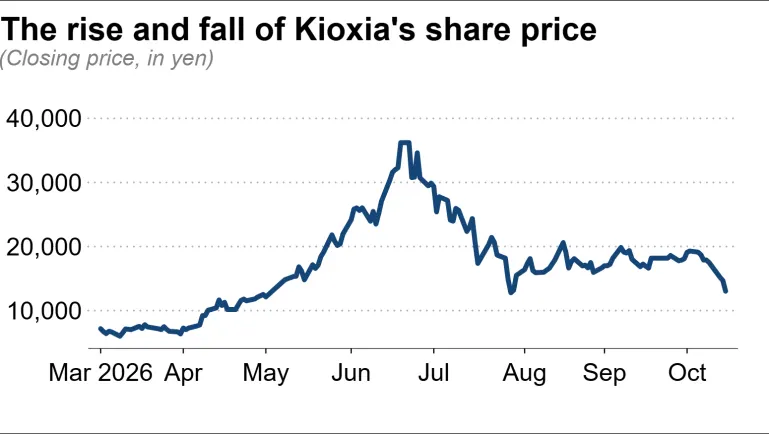
The market value of Japanese memory chip manufacturer Kioxia Holdings dropped from a high of about 60 trillion yen in June this year to about 21 trillion yen in mid-October, evaporating about 65%. On October 15, Kioxia's stock price fell by about 14% during the session, and closed down by about 12.3%; it closed at 13,375 yen the next day. On a split-adjusted basis, the stock is down about 64% from its June 22 high of about 37,565 yen. Kioxia implemented a 3-for-1 stock split on October 1, so the adjusted caliber needs to be used when comparing historical per-share prices.
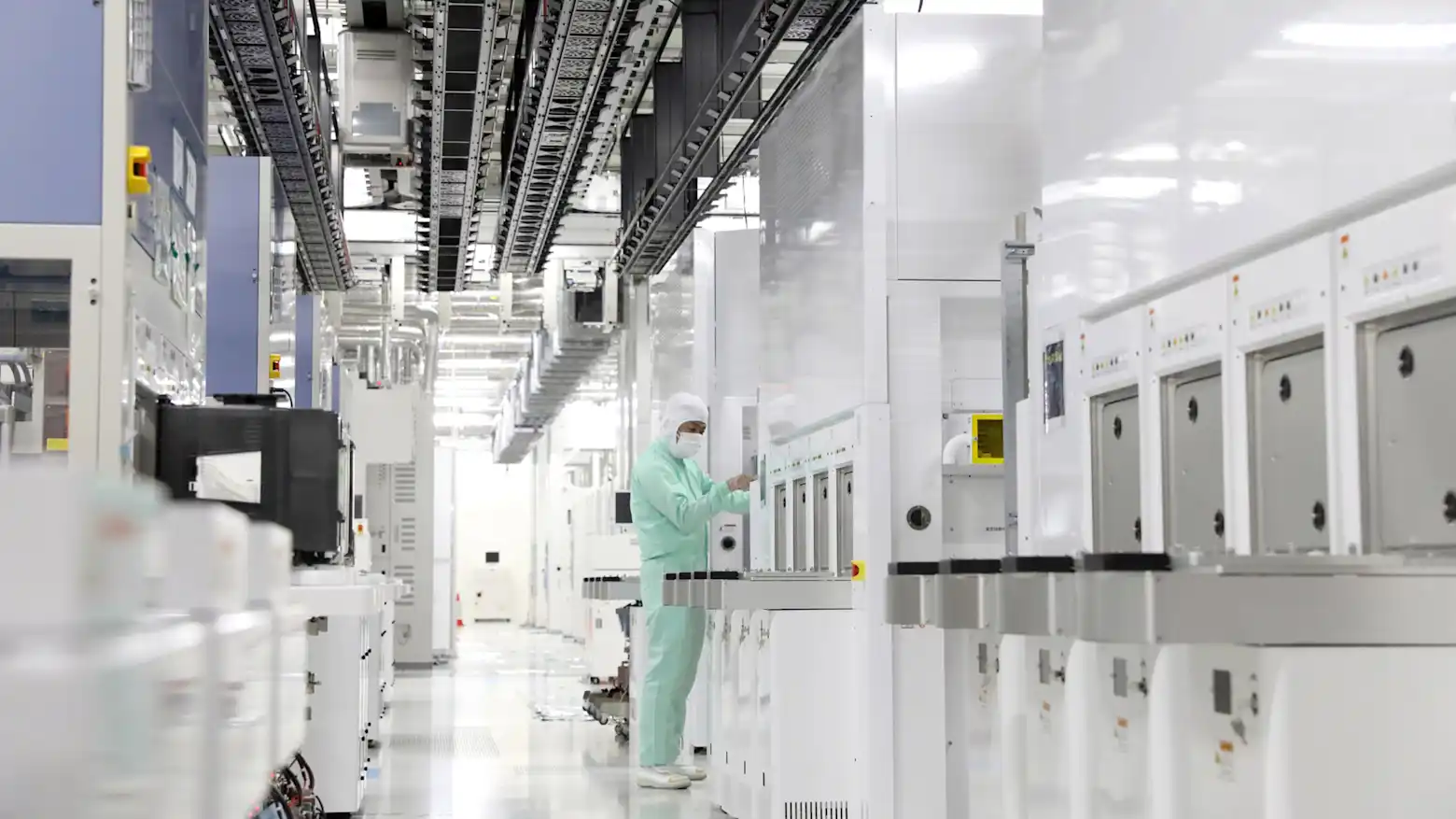
KioXia’s stock price previously benefited from the increase in NAND flash memory demand and prices brought about by the expansion of artificial intelligence data centers. The company's revenue in the first quarter of fiscal year 2026 as of June reached 1.767 trillion yen, operating profit was 1.27 trillion yen, and net profit was approximately 842.2 billion yen. At that time, the company expected revenue in the July-September quarter to reach 2.39 trillion yen, and operating profit was approximately 1.89 trillion yen, and said that data center demand is expected to remain strong. Kioxia's second-quarter financial report is scheduled to be released on October 30, and the market is paying attention to whether strong demand can continue to be transformed into profit growth.
However, the AI infrastructure investment that supports this round of valuation increases is also facing the test of rising financing costs. Higher interest rates will drive up the cost of borrowing and building data centers, and investors are beginning to demand that companies prove that expected revenue is enough to cover computing power, energy and debt expenses. Recently, the market has become more cautious about the financing plans and valuations of some AI data center companies. If construction projects are delayed, financing becomes more expensive, or returns are less than expected, cloud service providers may adjust capital expenditures, which will affect demand for servers and enterprise-grade solid-state drives. This is currently an industry risk and does not mean that Kioxia orders have declined.
The increasing competitiveness of China Yangtze Storage Storage (YMTC) has added another variable to the market. Counterpoint Research's October update stated that YMTC rose to third place in the world in terms of NAND bit shipments in the second quarter of 2026, with a share of approximately 16.5%, ranking behind Samsung and SK Hynix and ahead of Kioxia and Micron. Research institutions have previously pointed out that YMTC's shipment ranking has not yet been fully converted into revenue advantages, and its product portfolio is still biased towards the consumer market, with a low proportion of enterprise-level data center SSDs; however, the company is promoting product expansion for the AI server market. Counterpoint estimates that enterprise-grade SSD revenue may account for nearly 39% of YMTC's total revenue by 2028, which means that its future competition will not only depend on shipments, but also on whether it can enter the higher value-added data center supply chain.
Therefore, the fall in the market value of Kioxia is not caused by a single factor: investors are not only re-evaluating the financing and returns of AI data center investments, but are also observing the pressure on prices and market share after Chinese manufacturers expand NAND shipments. At the same time, Kioxia's recent strong financial data and the company's optimistic forecast of short-term demand still show that the storage market is relatively optimistic; subsequent financial reports and actual purchases by data center customers will test whether this round of AI storage boom can support current industry profits.
Comments