
Abstract:
According to Business Insider, Microsoft co-founder and billionaire philanthropist Bill Gates said in the latest episode of the "Decoder" podcast that artificial intelligence will create "real abundance," but the 20 years before abundance "will be a period as turbulent as any period in human history."
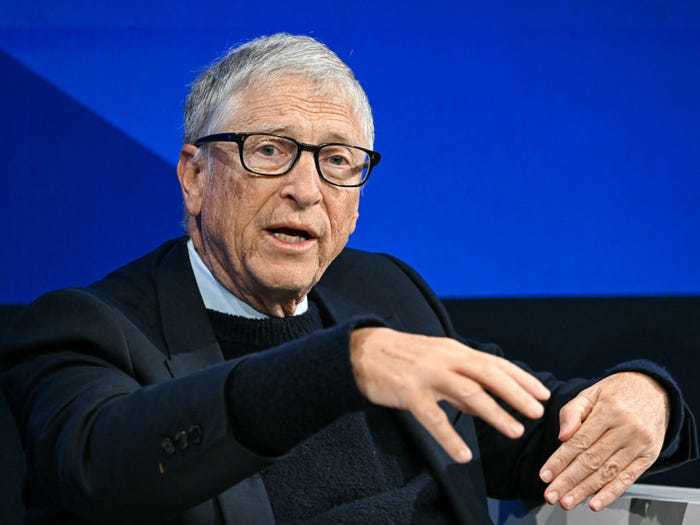
Gates said his biggest concern is that during the 20-year transition period, "there will be winners and losers, and there will be a lot of chaos." He echoed widespread concerns about the loss of white-collar jobs, saying that positions such as telesales, telephone customer service and accounting will disappear because AI can complete these tasks "far cheaper, far faster, and even more accurately"; as for blue-collar jobs, they will be taken over by humanoid robots.
Gates said: "If we don't choose to slow down or stop on a large scale, then we will have robots that can build houses, grow food, and perform surgeries. Everything that human labor provides to the economy will no longer be necessary for most goods and services."
He also emphasized that this change is enough to shock someone like him, who has strong resources and has long taken the lead in promoting malaria eradication and responding to humanitarian crises. "When the AI says to me, 'No, I'm better than you, you go play pickleball and I'll come back and take care of it' — it's kind of funny, but it's not ridiculous."
Gates reiterated his long-held belief that work is essential for people, providing a sense of purpose, an income, a reason to show up every day, a channel to build relationships with colleagues, and a way to create and solve problems. He suggested that activities such as art, sports, cooking and childcare could be reserved for humans in the future, "even if AI can do it better." He also mentioned that measures such as early retirement and limiting working hours may help maintain a certain level of human employment.
Gates envisions a future where someone says, "Let's be like the Amish and only use AI for certain things." That way there's no need to give up "helping each other or coming up with unique ideas."
The report mentioned that Amazon founder Jeff Bezos and JPMorgan CEO Jamie Dimon have both proposed shortening the working week as a less painful alternative to unemployment caused by AI.
Gates is one of the tech leaders who has warned of the impact of AI on jobs. Elon Musk predicts the transition will be "bumpy" and proposes government checks to everyone as the best solution to AI-induced job losses. Musk once said that technology will push production costs to extremely low levels, allowing everyone to have "anything they want", and that work will become "optional" and that it will not be worth saving for retirement in 10 or 20 years because money will no longer be important.
Dario Amodei of Anthropic has also said that AI is expected to "improve everyone's quality of life" but "the scale of the short-term impact will be unprecedented."
However, OpenAI's Sam Altman said in May this year that AI has not eliminated as many white-collar jobs as he expected, and he no longer expects a "job apocalypse."
The report also pointed out that despite widespread concerns about AI replacing corporate jobs and high-profile layoffs at large companies such as Amazon and Meta, the U.S. unemployment rate did not rise substantially during the AI boom.
Comments