
Abstract:
Artificial intelligence company Anthropic announced that Claude for Government, built for U.S. federal and state government agencies, has officially ended its public testing phase and is fully operational. Since the platform launched public beta in July this year, it has gradually provided Claude's code development, intelligent agents and office automation capabilities to the public sector, and has now officially entered the full commercial stage.
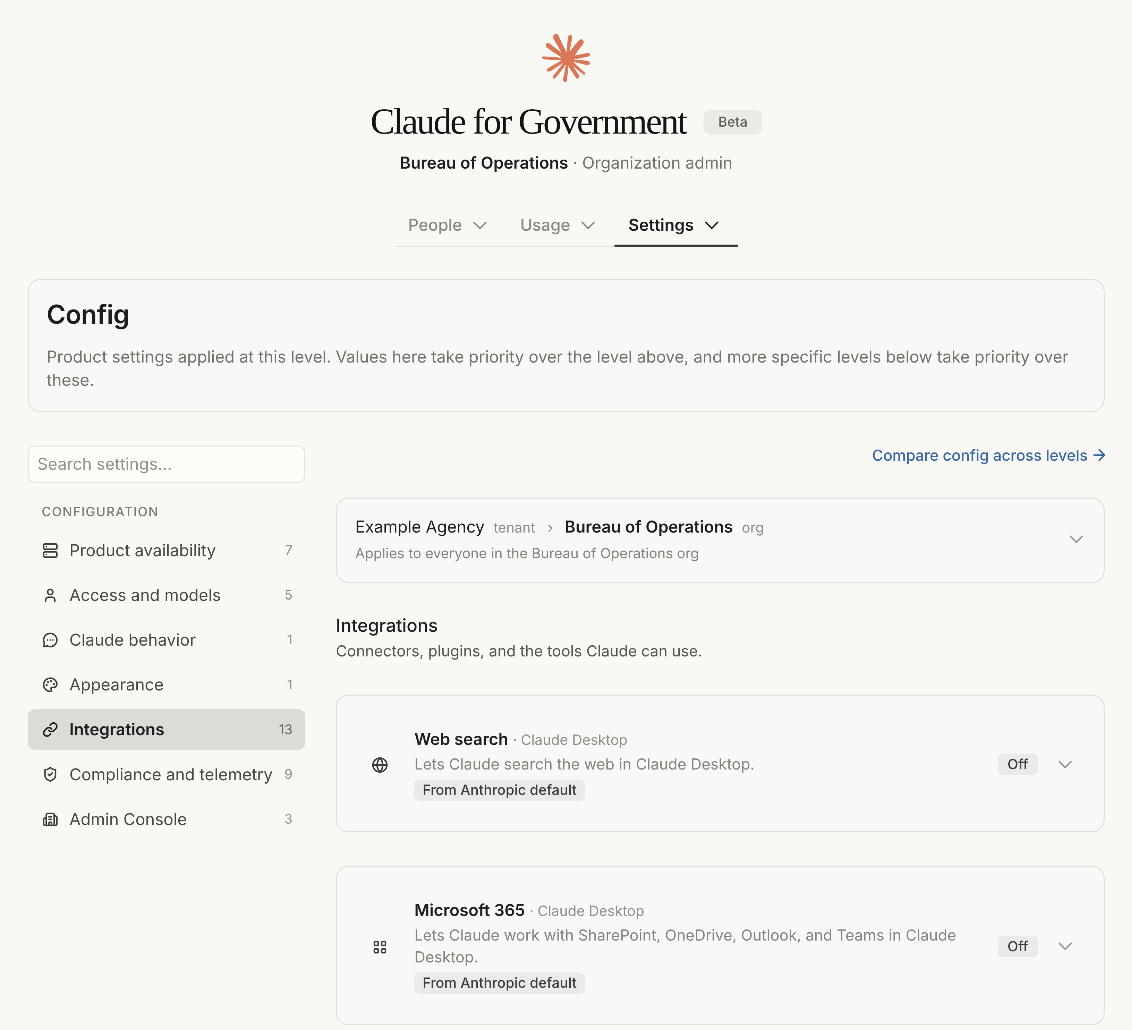
Claude for Government runs in a FedRAMP High-authorized environment and can provide model capabilities and feature update rhythms close to those of Anthropic's commercial customers while meeting the compliance and security requirements of government agencies. Anthropic said new features will typically be made available to government customers in line with the release cycle of commercial products.
According to the official introduction, the platform allows staff to directly process local files and use skills, plug-ins and project functions to complete memo writing, bidding document review, case processing and other daily office work. Claude Code also enables government software teams to develop, maintain and modernize core systems that support public services.
With the official launch, Anthropic also launched management and governance functions specifically for the public sector. Administrators can set organizational-level configuration rules, allocate and manage budgets for different departments, and limit model usage scope and access rights based on actual needs. Security teams and auditors will have access to audit logs and related documentation to support the organization's internal authorization and compliance review processes.
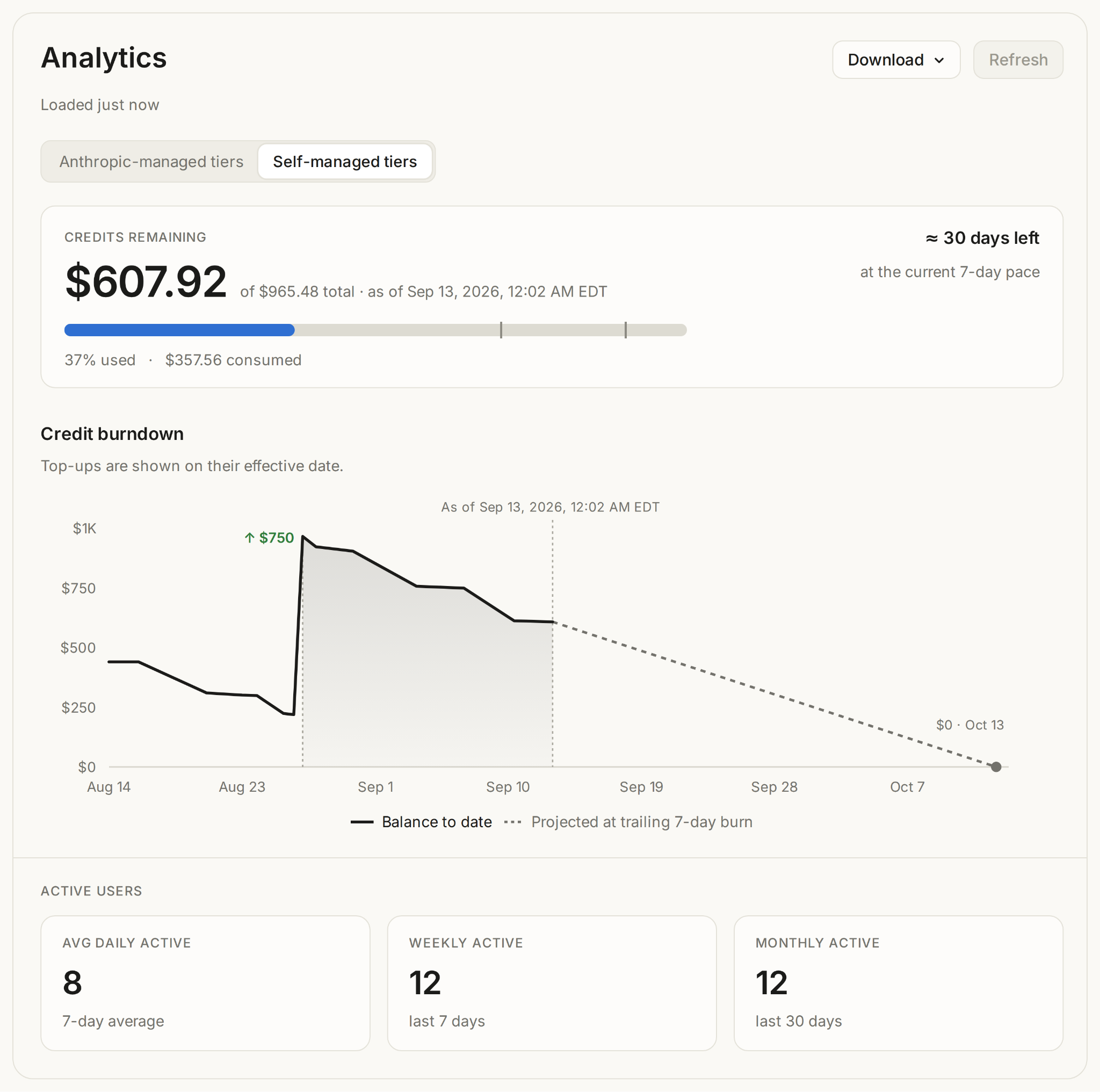
In terms of fee model, Claude for Government does not adopt the traditional per-seat charging mechanism. Government agencies can prepay usage fees according to a fixed amount and set clear spending caps to ensure that actual expenditures do not exceed budget authorizations. The system is able to track usage by user and model and issue alerts when balances are approaching depletion.
Anthropic stated that the platform allows competent authorities to allocate quotas to subordinate organizations, and units at all levels can independently manage their own user systems. Government agencies can also access their own identity authentication systems to achieve single sign-on, and set access rights, model selection and usage quotas corresponding to user groups through SCIM mapping.
To meet auditing and regulatory requirements, all administrator actions are recorded in audit logs. Anthropic also said that internal processes involving sensitive operations require a two-person approval mechanism. At the same time, the usage data generated by the platform only contains measurement information and does not contain sensitive business content, making it easier for institutions to respond to audits or regulatory inspections. User conversation history is retained on the terminal device managed by the organization.
Anthropic also announced that the Claude Code command line tool and Claude for Microsoft 365 are now available in early testing to select customers through the same government environment. This means that government users can extend Claude's capabilities to code development and the Microsoft 365 office ecosystem in the future while maintaining the same security and management framework.
Anthropic stated that Claude for Government is now fully open to U.S. federal and state government agencies. The company believes that as governments at all levels continue to grow in demand for artificial intelligence in document processing, software modernization, administrative management and public services, secure, compliant and advanced AI platforms will become an important infrastructure for the digital transformation of the public sector.
Comments