
Abstract:
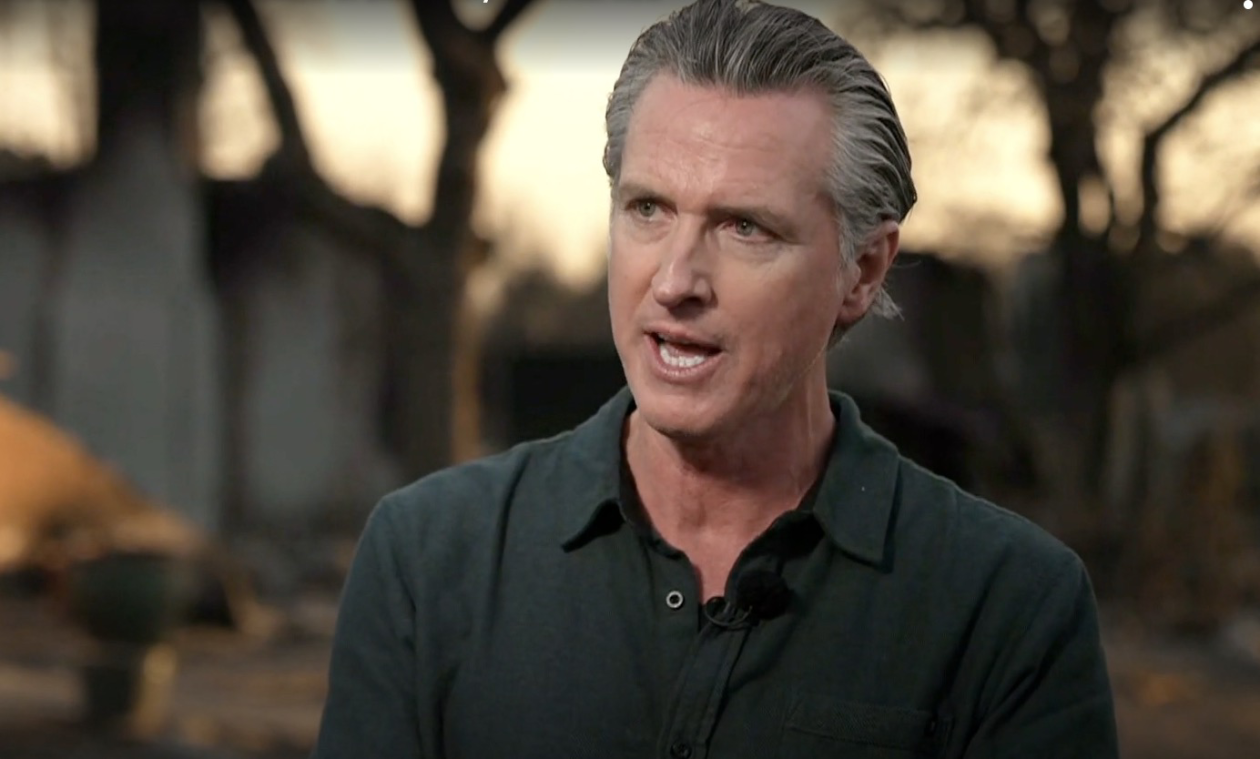
California Governor Gavin Newsom signed the No Robot Bosses Act (SB 947), restricting employers from relying on artificial intelligence when firing or disciplining employees. The new law prohibits companies from making such decisions solely based on automated decision-making systems, and also restricts the use of AI as a primary decision-making tool. If the employer relies primarily on AI output to make dismissal or disciplinary decisions, it must be verified by a human reviewer in conjunction with other information such as management evaluations, colleague evaluations, and personnel files. Affected employees must also receive written notice that the AI played a major role in the decision, what employee data was used by the system, and a human contact who can further explain the decision.
The author of the bill, California Democratic State Senator Jerry McNerney, said that workers should not be fired or punished by machines or AI; artificial intelligence is expected to increase productivity, but it can also make mistakes, misjudgements and show bias, so humans should control AI tools, not the other way around. Lorena Gonzalez, president of the California Federation of Labor and a major supporter of the bill, said that unions and California workers pushed the state to take the lead in regulating AI in the workplace and changed the discussion about how the American public should respond to AI entering the workplace.
McNerney first introduced the bill in 2025. Although the bill passed both houses of California with an overwhelming majority that year, it was still vetoed by Newsom. Newsom acknowledged at the time that unregulated automated decision-making could harm employees, but opposed requiring companies to notify employees in advance of any AI systems that might affect working conditions, arguing that the original bill set an overly broad notification obligation for all companies and harmless tools. When McEnany re-introduced the bill in February this year, he deleted the advance notification requirement and also removed a provision extending protection to gig workers; the latter had been strongly opposed by ride-hailing companies such as Uber and Lyft. The changes eased lobbying pressure from tech and business groups, but California business continued to oppose the bill before it was signed.
Robert Singleton, senior director of policy and public affairs for California and the Western U.S. at the Progressive Chamber of Commerce, said in a letter to Newsom that the bill requires employers to fulfill obligations when they "primarily rely" on automated decision-making systems, but does not define this key concept, making it difficult for companies to judge when technology changes from assisting decision-making to becoming the main basis. He warned that without clarity on whether common tools are regulated, employers may be reluctant to use technology that can help improve consistency in decision-making, identify safety risks or help managers make better judgments.
Newsom has recently taken a series of AI-related actions. Earlier this month, he signed an executive order to address the existential risks that AI models may pose "before it's too late" and pushed for the establishment of a state-level framework to independently evaluate and audit AI models. He also criticized the federal government for abandoning its responsibility to protect Americans. A survey released by the OECD last year showed that the United States leads the world in the application of automated management software. 90% of American managers said that their companies use at least one tool for commanding, monitoring or evaluating employees. Former Meta employees filed a lawsuit in July this year, alleging that the company had used AI-assisted systems to sort and screen employees for layoffs, and disproportionately affected employees who had taken medical leave or family leave; Meta denied the relevant accusations. A survey released in May by United for Respect, a non-profit organization related to the U.S. retail industry, showed that Amazon and Walmart employees are also increasingly worried about the automation of personnel decisions. The group unsuccessfully pushed Walmart shareholders last summer to require management to disclose the use of AI in employee management.
The new law comes as public concerns about AI continue to rise in the United States. A July Gallup poll showed that 39% of Americans believed that AI would do more harm than good, up from 31% in 2025. A Pew Research Center survey in August this year found that 71% of Americans believed that AI would "take away people's jobs," an increase of about 7 percentage points from about two years ago. Newsom is considering running for president in 2028, and AI policy is expected to be an important issue for Democratic candidates. California Republican gubernatorial candidate Steve Hilton also publicly supports SB 947 and believes the bill is not strict enough. He said employers should not let AI determine whether employees are fired, demoted, lose regular hours, or excluded from projects they rely on to earn income.
California will become the first state to establish such a strict regulatory framework for workplace AI. Over the past five years, Illinois and other places have enacted restrictions on AI's participation in employment decisions; Illinois Public Act 103-0804, which took effect in January this year, requires employers to notify employees when AI is used in specific employment scenarios, but does not prohibit the deployment of agent-like digital systems to make employment decisions. Similar bills are still stalled in many states across the country. In June of this year, Democratic U.S. Senators Ed Markey and Brian Schatz proposed a federal bill of the same name that would prohibit employers from relying on automated decision-making systems to make work-related decisions. However, as Congress has not actively promoted AI regulatory legislation, the prospects of the bill are limited. Similar bills have been proposed in New York, Louisiana and New Jersey but have yet to be acted upon. New York became the first state in the country to ban new AI data centers earlier this year. California’s new law could push other states to accelerate workplace AI legislation.
The Electronic Frontier Foundation, a liberal-leaning civil liberties organization, said signing the bill is an important step in providing protections for workplace employees who use automated decision-making systems, and it will continue to work with labor groups to promote policies that maintain dignity in the workplace.
Comments