
Abstract:
Anthropic has established a biological "wet laboratory" in the San Francisco Bay Area to extend the application of artificial intelligence in the life sciences from literature, data and computational analysis to physical experiments. The company plans to let Claude help guide experimental robots to form a closed loop of designing experiments, performing operations and analyzing results in drug development and rare disease research.
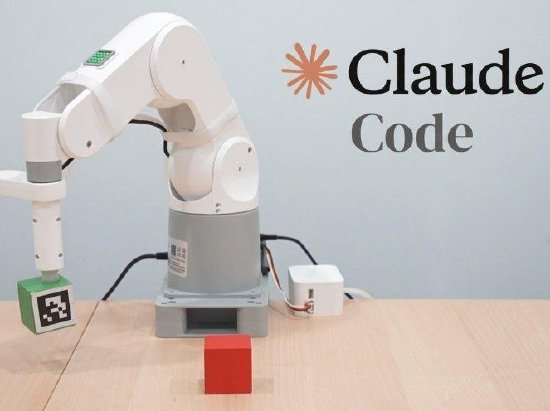
Extending from computational research to physical experiments
Wet laboratories are mainly used to process physical materials such as biological samples, chemical reagents and cells. After Anthropic establishes relevant facilities, it can hand over the research hypotheses, candidate targets or experimental plans proposed by Claude to the experimental equipment for execution, and then adjust subsequent steps based on the actual results.
Anthropic previously launched Claude Science to provide researchers with research tools covering genomics, single cell analysis, proteomics, structural biology and chemoinformatics. The platform is capable of searching specialized databases, analyzing protein structures, running computational processes, and retaining records of code, data sources, and modifications.
The physical laboratory has supplemented the verification process. Candidate molecules or biological hypotheses screened out by computational models still need to be tested with real samples and experimental data. Anthropic has not yet disclosed the laboratory’s area, number of personnel, equipment investment and specific research projects.
Claude dispatchable robotic arms and liquid handling equipment
Anthropic opened the "Model Hardware Standard" research preview in August, trying to establish a unified interface for artificial intelligence to operate physical devices. This standard can connect equipment such as microscopes, liquid handlers, robotic arms, and microplate detectors, allowing Claude to identify instrument status, arrange operation sequences, monitor experimental results, and adjust parameters.
In the published proof of concept, Claude coordinated the liquid handler, robotic arm and detection equipment through a unified interface to complete the protein concentration detection process. When tip pickup failure and liquid detection errors occur during the experiment, the system can handle some abnormalities and readjust operating parameters based on the detection results.
Current models still do not fully possess the intuition needed to handle physical, chemical and biological constraints. For example, sample foaming can affect pipetting accuracy and optical readings, and artificial intelligence can sometimes misidentify physical problems as software glitches. Therefore, Claude's position in the laboratory is still mainly to assist scientific researchers and dispatch equipment. Key experimental design, result judgment and safety control require expert supervision.
Life science business expands simultaneously
Anthropic has launched a life science validation program that allows audited research institutions to use models with greater capabilities and less restrictions on specialized biological tasks, including drug discovery, basic research, clinical development and pharmaceutical production.
Applicant institutions are subject to review of research qualifications, safety standards and ethical supervision. Projects with higher risks also need to apply for permission separately and undergo stricter usage monitoring. This set of mechanisms is designed to expand the scope of Claude’s use in drug research and development, while controlling the risks that may arise from artificial intelligence processing sensitive biological tasks.
The physical laboratory, Claude Science and experimental equipment control standards together constitute Anthropic's life science technology system. The company has not yet announced the specific drug candidates, research and development schedules or related business income promoted by itself. It remains to be seen whether the laboratory can produce commercialized drug research and development results.
Comments