
Abstract:
On September 18, the Greensand carbon dioxide storage project led by Ineos Energy was officially put into commercial operation in Denmark. The project will transport liquefied carbon dioxide to abandoned oil fields in the Danish North Sea and inject it into the formation about 1,800 meters below the seabed. It can store up to 400,000 tons per year in the first phase, and the long-term design capacity is 4 million to 8 million tons per year.
Transportation from biomethane plant to abandoned North Sea oil fields
Greensand is operated by INEOS Energy, with partners including Harbor Energy and Nordsøfonden, which represents the Danish government in underground resource projects. King Friedrich X of Denmark announced the official opening of the project at a ceremony in the port of Esbjerg.
The first phase of carbon dioxide mainly comes from biomethane production companies in Denmark. After the carbon dioxide is captured and liquefied at the production facility, it is transported by truck to a dedicated terminal in the Port of Esbjerg for temporary storage, and then sent to the North Sea via a specially built "Carbon Destroyer 1" transport ship.
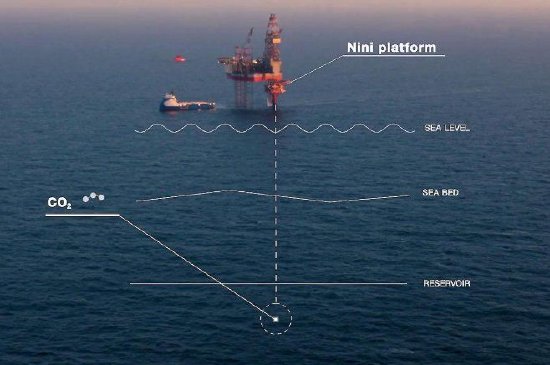
After the transport ship arrives at the Nini West oil field, about 250 kilometers off the coast of Denmark, the carbon dioxide will be injected into a closed reservoir about 1,800 meters below the seabed through existing offshore facilities. The oil field was previously used for oil extraction and was transformed into a permanent storage facility after the resources were depleted.
The project party stated that the integrity of the Nini West reservoir has been tested by the Geological Survey of Denmark and Greenland, and the relevant storage plan has also obtained independent safety verification by DNV.
The initial production capacity is 400,000 tons, with a maximum long-term capacity of 8 million tons
Greensand's first commercial phase can process up to 400,000 tons of carbon dioxide per year. As European industrial companies expand the scale of carbon capture, projects can gradually increase annual storage capacity to 4 million to 8 million tons.
In the early stage of the project, the carbon dioxide that has been separated during the biomethane production process will be used to establish a stable chain of capture, liquefaction, land transportation, sea transportation and underground storage. The operator plans to then receive CO2 from other European industries, targeting industries such as cement, steel and chemicals that are more difficult to directly reduce emissions through electrification.
Greensand completed experimental injection as early as 2023, verifying the complete process of transporting carbon dioxide across borders and permanently storing it at sea. The project partners made the final investment decision for the first phase at the end of 2024. At that time, it was expected that the investment involved in the entire capture, transportation and storage industry chain would exceed US$150 million.
EU carbon sequestration capabilities are still in their infancy
Greensand is the first offshore carbon dioxide storage project in the EU to enter full commercial operation. Previously, Norway's Northern Lights project had begun to receive and store carbon dioxide, but Norway does not belong to the EU, so the regional positioning of the two is different.
The EU plans to establish an annual CO2 injection capacity of at least 50 million tons by 2030, and further increase it to 250 million to 280 million tons by 2040. The scale of Greensand's first phase of 400,000 tons is only equivalent to about 0.8% of the 2030 target; even if it reaches the forward cap of 8 million tons per year, it is only equivalent to 16% of the target.
The subsequent expansion of the project still depends on the speed at which industrial companies build carbon capture facilities, cross-border transportation rules, the cost of carbon emissions, and whether long-term storage contracts can generate stable commercial returns.
Comments