
Abstract:
Hammam Hammami, the co-pilot of Dubai Airline Flight 1073, attacked the captain with an emergency ax during the flight, almost causing the plane to crash. The investigation showed that Oman, the United Arab Emirates and Israel all had serious omissions in the safety review process and failed to prevent the co-pilot from entering the cockpit.
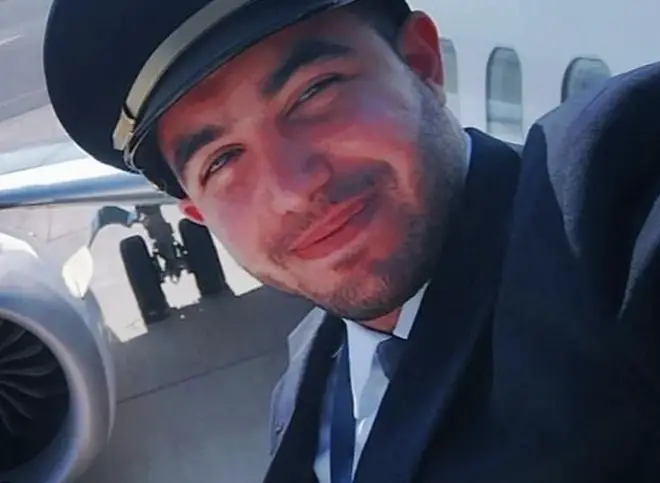
According to people familiar with the matter, the Omani authorities had reviewed Hammami’s online activities and considered him to be too interested in radical ideology and unsuitable to serve as a pilot for the state-owned Oman Air. Oman banned him from flying, required him to participate in de-radicalization programs, and assigned him to administrative work, but did not widely communicate relevant concerns. When flydubai hired Hammami in February this year, it did not contact Oman to verify his experience. The company conducted a criminal background check and then placed him on a sensitive route to Tel Aviv, a route Hammami flew on multiple times. UAE authorities are currently investigating flydubai employees involved in the recruitment process.
Israel was supposed to be the last line of defense against Hammami. According to regulations, pilots from Oman and other countries that have no diplomatic relations with Israel are prohibited from flying to Israel, and Hammami should be directly intercepted. Israel requires foreign airlines to submit incoming passenger and crew lists in advance. Israel's tax agency said flydubai sent the manifest for Flight 1073, but the Transportation Ministry, which regulates foreign airlines, said it did not believe it had the authority or the required expertise to vet the crew. The department has never requested passenger or crew lists since the database was created in 2023 and said it was not aware it could do so. The transport ministry said flydubai had agreed in writing to check the background and nationality of its pilots. A 2024 confidential report said the department failed to adequately ensure the safety of foreign airline flights.
Emirati, Omani and Israeli officials have privately said there were major missteps in everything from the UAE and Israel's review to Oman's briefing on Hammami's concerns. The UAE declined to comment while the incident and cause are investigated. A spokesman for the Omani government did not immediately respond to a request for comment. Israeli Prime Minister Benjamin Netanyahu said on Sunday that he had ordered a review of the security of foreign airlines flying to Israel.
Security experts said the failure was shocking given the surveillance and intelligence capabilities of the United Arab Emirates and Israel and the obvious threats to the route. This also highlights the difficulty of aviation safety: After major incidents such as the 9/11 terrorist attacks in the United States in 2001 and the intentional crash of the co-pilot of Germanwings flight 9525 in 2015, regulatory agencies were faced with a dilemma - they must prevent dangerous passengers by ensuring the safety of the cockpit, and they must prevent out-of-control pilots by facilitating intervention. Security experts believe intelligence services must identify and stop threats before they reach airports.
The UAE Attorney General said on Saturday that the co-pilot attempted to commit an act of terrorism. Saudi Arabia, the United Arab Emirates and Israel all suspect it was trying to crash the plane in Tel Aviv. The three countries are investigating whether it acted alone and have not found any connection with any foreign power or major terrorist organization.
Hamami is 29 years old. His father is Omani and his mother is Syrian. He lives in Dubai and traveled frequently to Syria as a teenager. Investigators are looking into whether his radicalization began during the country's long civil war. Hammami studied in Australia, and Israel and the United Arab Emirates are reviewing this period for signs of radicalization. The joint counter-terrorism team in Victoria, Australia, said it was investigating the co-pilot's links to Australia.
Hamami joined Oman Air in 2018 and became a pilot in early 2022. In 2024, the authorities discovered that he was browsing extremist websites and blogs and were concerned about his radical views. They banned him from flying, required him to participate in de-radicalization projects, and arranged administrative work. He left Oman Air in early 2025 and went to Morocco in the summer of the same year to try to find a job with Royal Air Maroc. He was not hired after three months of training. In February this year, he joined flydubai. The company was founded in 2009 and has expanded rapidly, with more than 1,300 pilots flying to 140 airports. The global demand for pilots is strong. There will be 382,000 commercial pilots in the world in 2025, and the industry will need to recruit 267,000 people by the middle of the next decade.
Informed sources said that Oman also handled it improperly. International air licenses are basically managed on a country-by-country basis, but if Oman formally revoked Hammami's license due to concerns, it is likely that the UAE would have been notified. Concerns about extremism should have informed the Gulf. Israel should have known that Hammami was in the cockpit. According to Israel's division of labor, the National Security Agency is responsible for supervising domestic airlines, and the Ministry of Transportation is responsible for supervising pilots and crew members of foreign airlines to ensure that they are from friendly countries. Eitan Ben-David, the former director of the counterterrorism bureau in the Israeli Prime Minister's Office and former deputy head of aviation security at El Al Air, said that about a decade ago, the Transportation Ministry informed him that Turkish Airlines planned to fly an Iranian pilot on a Tel Aviv flight based on an employee list submitted by Turkish Airlines, and he immediately blocked it. This database makes this job easier. The law stipulates that authorized agencies such as the Ministry of Transport and security agencies such as the General Directorate of State Security and Mossad can request a review of the list. The Department of Transportation said it was never informed that the database was operational or accessible. A person familiar with the database said the ministry never made the request.
On the issue of preventing in-flight threats, the Department of Transportation stated that it is responsible for the security of inbound flights, but is not responsible for vetting crew members. It also lacks the corresponding intelligence capabilities and relies on foreign airlines to conduct inspections at its request. The ministry stated that it has been responsible for the security arrangements for foreign air entry into Israel since 1977, and has a framework to verify that pilots of airlines from the country where the flight departs undergo background security checks in accordance with international regulations. The ministry said flydubai was required to place pilots from countries with diplomatic relations with Israel and undergo background checks, but it did not itself check or approve Hammami.
A confidential report by the Israeli Auditor General in May 2024 warned that Israeli aviation security has become lax and pointed out that there are major problems in the way foreign airlines enter Israeli airspace. The report found that security responsibilities in Israel are fragmented and lines of responsibility are not always clear. The report found Transportation Department officials failed to provide effective oversight because of staffing and budget issues, people familiar with the matter said. El Al comes under greater scrutiny. This differential treatment is evident this year. In February, security officials blocked Israeli airlines from operating the Dubai-Tel Aviv route for several months, citing the risk of war with Iran and security breaches at Dubai Airport, but flydubai continued to operate the route. The route has become a key link between Israel and the rest of the world, operating almost continuously during the past three years of war.
Ben David said Israel should intercept the Omani pilot based on his nationality alone. Pilots who would have been excluded based on their nationality are flying to Israel with increasing frequency, a sign that enforcement has become lax, people familiar with the matter said. Ben David said Flight 1073 almost led to disaster due to negligence. He said: "It seems that the names were not checked correctly and not properly vetted. That's why it happened." "We need to treat this incident as if a disaster has occurred."
Comments