
Abstract:
Microsoft is developing a new security feature for Windows 11 called "Emerging Risks" to help users discover serious security vulnerabilities in applications, drivers and firmware on their computers, and remind users to take steps to fix them when necessary.
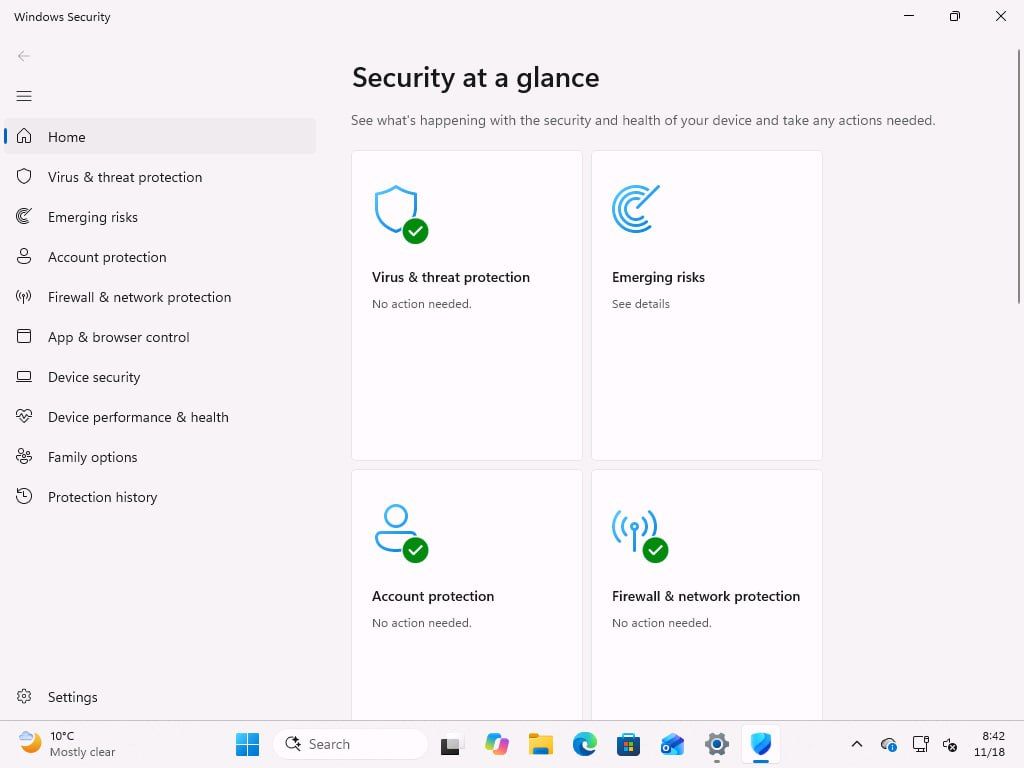
According to the exposed information, this feature has appeared in the Windows Security Center of the Windows 11 preview version, but it has not yet been officially opened to ordinary users. In the beta version, users can see the "Emerging Risks" page in the Windows Security interface, which is designed to track software and hardware components with known security vulnerabilities on the device.
Microsoft defines "emerging risks" as "critical vulnerabilities on devices of concern" that may exist in applications, drivers or firmware. After the system discovers relevant risks, it will provide users with corresponding handling suggestions to help users improve the overall security of the device.
Microsoft official documents show that the new feature will provide users with a clearer view of risks and directly indicate which applications, drivers or firmware have been confirmed to have security vulnerabilities. At the same time, the system will also give suggestions for subsequent operations, such as installing patch updates to fix vulnerabilities; if there is no fix available for some applications, Microsoft may even recommend that users temporarily uninstall the relevant software until the patch is released. In addition, users can view detailed information corresponding to each risk so that they can evaluate whether to take action themselves.
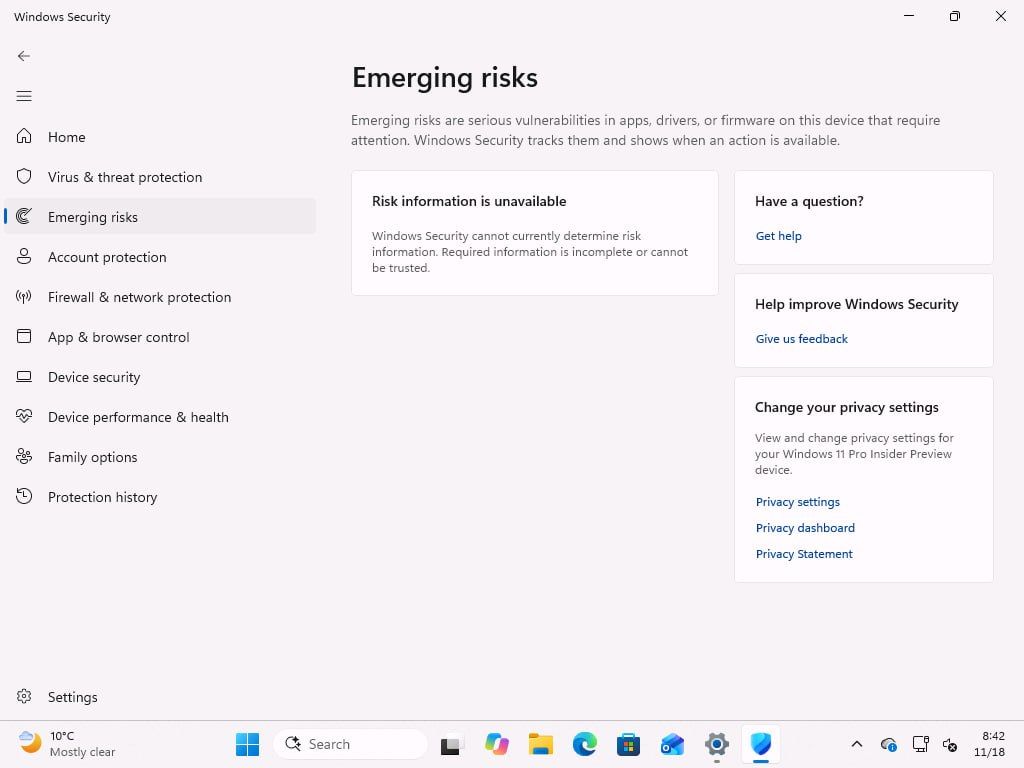
However, judging from the current preview version, this feature is still in the early stages of development. Testers found that most of the "Emerging Risks" page was still blank, and the system displayed "Windows Security Center is currently unable to determine risk information. The required data is incomplete or cannot be trusted." This means that Microsoft has not yet fully enabled the relevant detection capabilities, and it does not mean that the computer is currently absolutely safe.
The analysis believes that Windows itself is already able to read the application, driver and firmware information in the system, so the "Emerging Risks" function is likely to be combined with the vulnerability database maintained by Microsoft to compare native components. Once a publicly disclosed security vulnerability is found in a piece of software or driver, the system will issue a warning on this page and give corresponding recommendations based on the risk level.
Judging from what was found in the preview code, in the future Windows 11 may not only identify vulnerabilities, but also conduct hierarchical assessments of risks to let users understand the severity of the problem and the priority of treatment. If a security patch is available, the system will recommend an immediate update; if the vulnerability has not been fixed, the user may be advised to delete the relevant software, uninstall the driver, or disable the affected components.
Microsoft stated that the "Emerging Risks" feature will be open to all Windows 11 devices in the future and does not require additional hardware support. Even if users turn off security features such as Secure Boot or Memory Integrity, they can still use this new feature.
It is worth noting that this feature is currently confirmed to be a Windows 11 exclusive feature. Microsoft has not revealed plans to port it to Windows 10, which means users still using Windows 10 may not have the same level of vulnerability monitoring capabilities in the short term.
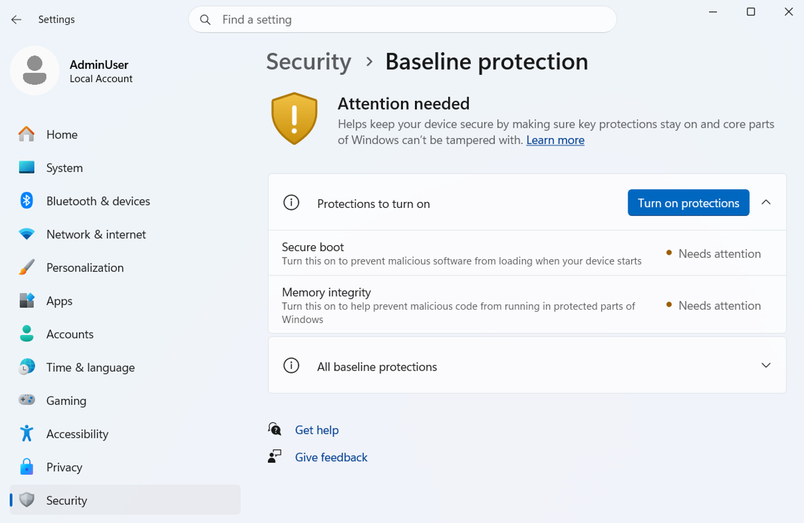
As network attacks become more and more frequent, the speed at which attackers use artificial intelligence to analyze vulnerabilities and develop attack tools is also increasing. Microsoft hopes that through the "Emerging Risks" feature, users can discover security issues in third-party software, drivers and firmware more promptly, so that they can take protective measures before the vulnerabilities are maliciously exploited, further strengthening the overall security of the Windows 11 platform.
Comments