
Abstract:
Microsoft CEO Satya Nadella recently talked about the company's voluntary severance plan for about 60,000 employees and the impact that artificial intelligence may have on Microsoft's future employment structure. When asked directly whether this plan meant that Microsoft was about to make further AI-driven layoffs, Nadella did not give a clear yes or no answer, but said frankly: "I wish I could sit here and say that everything will stay the same, but I can't."
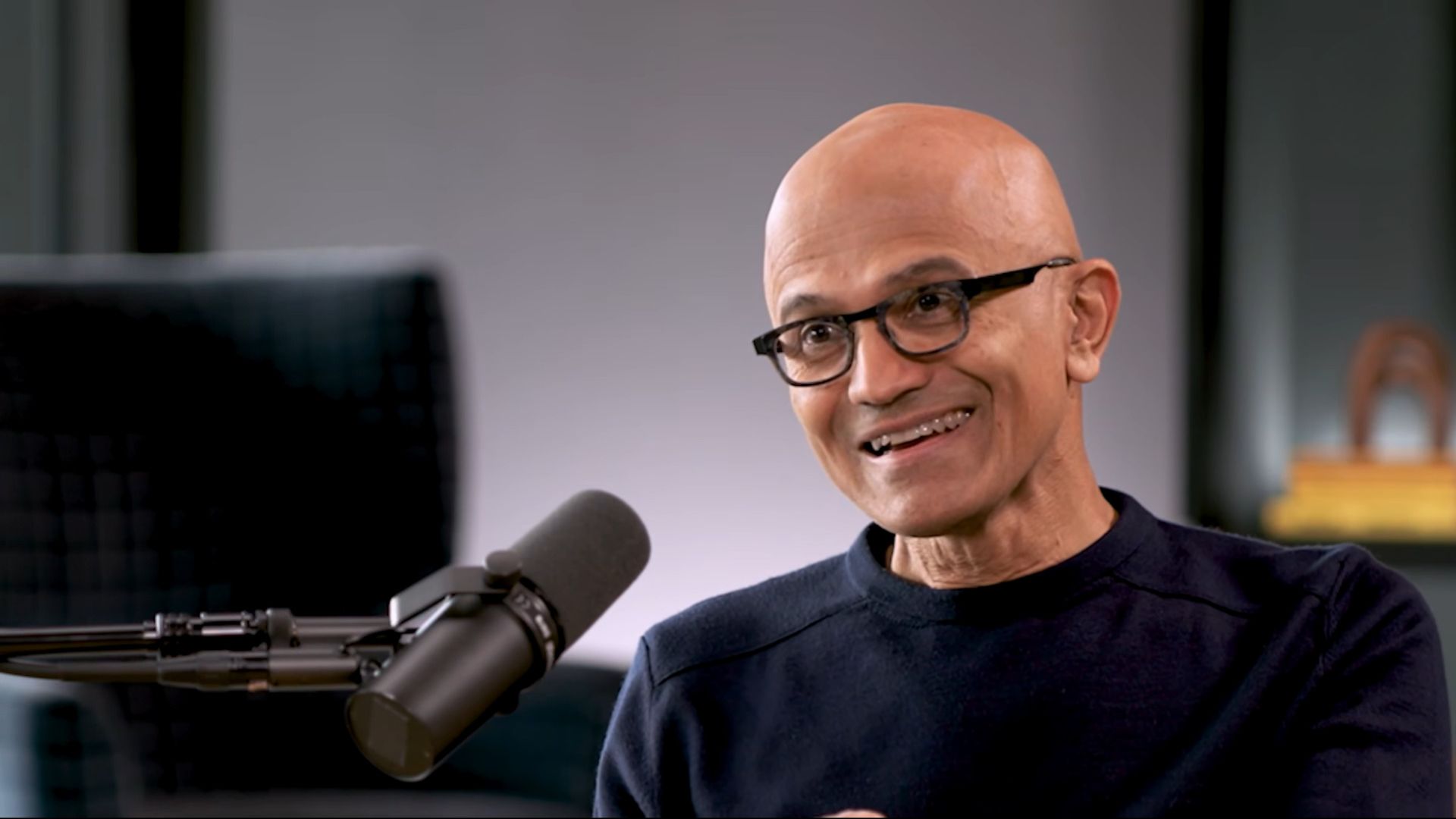
This statement reflects Microsoft management’s expectations for future personnel structure changes. Nadella said that as artificial intelligence gradually changes software development and corporate workflows, Microsoft's more than 200,000 employees will have to be reorganized in different ways. Job opportunities in the future will still exist, but job shapes, team sizes, and specific work processes may all change.
Microsoft announced the launch of the Voluntary Exit Offer (VEO, voluntary severance plan) on October 26, 2026, providing eligible employees with resignation options with financial compensation. This is the first time Microsoft has launched a voluntary severance program covering such a large group of employees.
According to reports, approximately 60,000 employees are eligible to participate, covering markets such as the United States, Canada, the United Kingdom, and India, covering some of Microsoft's artificial intelligence, Copilot, Windows, Xbox, finance, and human resources teams. Eligible employee ranks are level 70 and below, up to the vice president level. Unlike previous voluntary retirement schemes for senior employees, there is no age or seniority threshold.
However, 60,000 people are only potential participants and do not mean that Microsoft plans to eliminate 60,000 positions. A Microsoft spokesperson previously told the media that the company expects the proportion of employees to accept the plan to be less than 5%, which means that the final number of employees may leave less than 3,000 people. Microsoft also made it clear that the voluntary severance plan does not replace other possible personnel adjustment measures.
In an interview with Gergely Orosz, founder of "The Pragmatic Engineer", Nadella further explained the considerations behind this plan. He believes that artificial intelligence is changing the way software engineers work, but this does not mean that the profession of software engineers is about to disappear.
Nadella reviewed the changes in the industry's attitude toward artificial intelligence programming capabilities in the past few years: Initially, many people did not believe that AI could truly undertake software development work, and then there was the extreme view that AI can complete all programming, so software engineers are no longer needed. He believes that software engineering will continue to develop, but the way engineers work and the form of team organization are changing.
For example, he said that there are already some teams within Microsoft that rely heavily on AI agents to carry out their work. Take the team responsible for developing the Cowork AI agent in Microsoft 365 applications as an example. The entire team has only 11 developers. They do not directly write every part of the product, but build a software production system that can use AI to automatically complete product development work.
Nadella described this model as building a factory that can produce software, rather than having engineers do all the work on software products themselves. In his vision, in the future employees will be more responsible for commanding and managing AI agents, with AI undertaking a large number of specific execution tasks.
This also means that the way Microsoft measures the number of people needed for a team may change in the future. In the past, the number of engineers required for a project mainly depended on the complexity of the development task and manpower investment; in the future, a small number of employees may first be used to complete the work with a certain scale of AI computing power. Only when the existing personnel and AI tools cannot meet the demand, further manpower will be added.
Nadella also pointed out that the AI transformation speed of different teams within Microsoft is not consistent. Some teams have quickly adapted to new ways of working, while others are still at an earlier stage. He admitted that not all departments in the company have fully understood and implemented the AI transformation requirements.
For those employees who feel that the development of their team is stagnant and cannot adapt to new technologies, Nadella said that they can change their career direction by voluntarily leaving. He also emphasized that there are still a lot of new development opportunities within Microsoft, and the company hopes that employees can switch to other teams that have begun to adopt AI working models, rather than leaving Microsoft directly.
He also previously said that Microsoft is accelerating the reconfiguration of internal personnel, giving priority to arranging existing employees to positions that are more in line with future business needs, and then considering increasing the recruitment of fresh graduates. This means that Microsoft may continue to be cautious about recruiting junior engineers in the short term.
Nadella believes that this change does not necessarily mean that entry-level positions will disappear permanently, but the company needs to establish a new AI-native software development system before redefining what kind of personnel structure it will need in the future. He described this model as a new software engineering organization method that starts with AI computing power and human collaboration.
At the same time, Microsoft has not avoided the uncertainty that the AI transformation has brought to employees. Nadella admitted that discussions in the technology industry over the past few years around topics such as the singularity of artificial intelligence and the replacement of all jobs by AI have created huge anxiety among employees. Many people are beginning to worry about whether they still have room for career development and whether they will be replaced by automation technology in the future.
He said that companies cannot eliminate this anxiety just through publicity, but must truly complete organizational structural adjustments, provide employees with new job opportunities, and help them adapt to changes in working styles.
Judging from Microsoft's current business strategy, this personnel adjustment is closely related to the company's continued increase in investment in artificial intelligence infrastructure. Microsoft is investing huge sums of money to build data centers, purchase GPUs and expand cloud computing capabilities, and the growth of its AI business also requires the company to re-examine traditional software development and enterprise operating models.
Microsoft’s previously announced capital expenditure plan for 2026 will reach approximately US$175 billion, with artificial intelligence infrastructure being an important investment direction. In this case, reducing the personnel costs of some traditional businesses while improving the per capita productivity of the remaining employees has become part of the company's adjustment of its operating structure.
It is worth noting that Nadella did not promise that Microsoft would not lay off employees in the future. His statement actually admitted that artificial intelligence will change the company's personnel needs. Some teams may be reduced in size, some positions will disappear or be transformed, and new job opportunities will also appear.
Therefore, this voluntary severance plan for 60,000 people cannot be simply understood as an ordinary retirement benefit arrangement, nor can it be directly equivalent to Microsoft's decision to eliminate 60,000 positions. It is more like a proactive choice provided by Microsoft to its employees before it fully shifts to an AI-native work model, and it also creates space for the company to reconfigure its personnel structure.
For Microsoft employees, the real concern may not be how many people accept this voluntary severance plan, but the signal Nadella has clearly sent: Microsoft will not guarantee that the current positions, team size and working methods will remain unchanged in the future. As AI agents gradually take on more practical work, employees who can effectively organize, manage and verify the results of AI work will play a more important role in the new corporate structure.
Comments