
Abstract:
Microsoft recently revealed the next-generation Windows AI PC development roadmap, trying to establish a unified grading system for the artificial intelligence PC market in the next few years. According to the plan, Microsoft will divide future AI PCs into four different levels based on device memory capacity, AI processing capabilities, and the ability to run large models locally, covering everything from entry-level office equipment to high-end systems with workstation-level computing power.
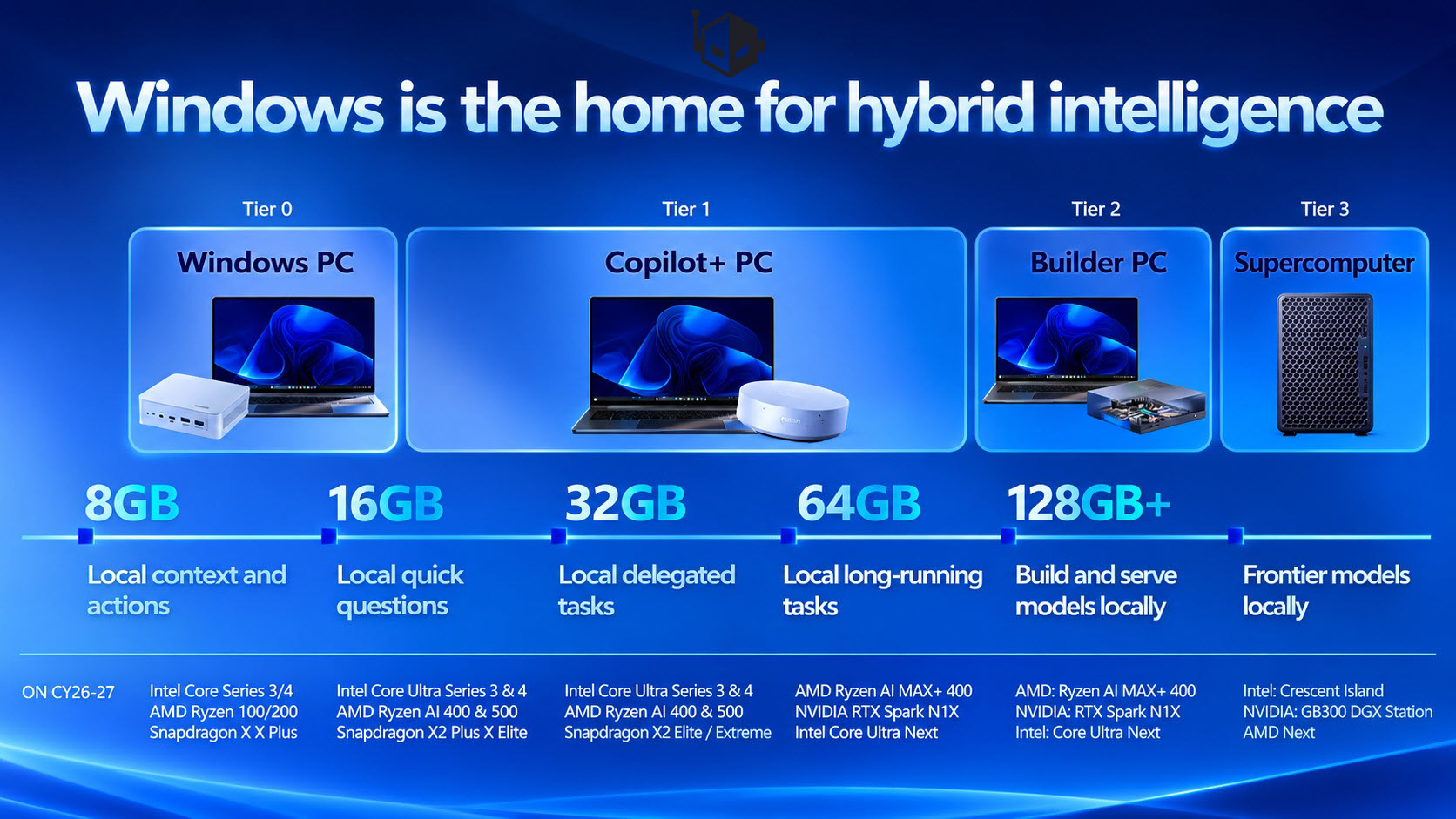
In this roadmap, Microsoft once again emphasizes the strategic positioning of "Windows is the home of hybrid intelligence" and believes that future artificial intelligence experiences will be completed by both the cloud and local devices, and personal computers will become an important terminal carrying AI capabilities. To achieve this goal, the company is cooperating with chip manufacturers such as AMD, Intel, and Qualcomm to create an AI hardware ecosystem covering different price ranges and performance levels.
The most basic level of the roadmap is called "Tier 0". This type of device is equipped with 8GB of memory and is mainly aimed at the entry-level market. It can perform basic AI tasks such as local context understanding and simple operation execution. Microsoft believes that such products can meet daily needs such as email processing, office document editing, video conferencing, and light web browsing.
However, 8GB of memory is close to the minimum configuration standard in today's computing environment. It is generally believed in the industry that this capacity can easily become a performance bottleneck when faced with complex applications and multi-tasking scenarios. Therefore, Tier 0 devices serve more as an introduction to AI popularization rather than as a high-intensity productivity platform.
Microsoft plans to widely adopt Intel Wildcat Lake series processors, AMD Ryzen 100 and Ryzen 200 series products, and Qualcomm Snapdragon C, Snapdragon X and Snapdragon X Plus platforms at this level. At present, some related products have entered the market, and the price is generally maintained at around US$500.
For the mainstream consumer market is the "Tier 1" level AI PC. Microsoft defines it as a core component of the future AI computer ecosystem, with memory configurations extending from 16GB to 64GB. All devices in this range comply with the Copilot+ PC standard and can support more complex local artificial intelligence functions.
Compared to entry-level products, Tier 1 devices are capable of handling not only local problem understanding and contextual analysis, but also local agent tasks and longer-running AI workloads. In other words, many tasks that originally need to be uploaded to the cloud for processing can be completed directly locally on the device in the future, resulting in faster response times, better privacy protection, and lower network dependence.
In this market, Microsoft is focusing on next-generation processor platforms, including Intel Core Ultra 3 Panther Lake, AMD Ryzen AI 400 "Gorgon Point", Qualcomm Snapdragon X2 Plus and Snapdragon X2 Elite. At the same time, subsequent products such as Intel Nova Lake and AMD Ryzen AI 500 "Medusa Point" have also been included in long-term planning.
The roadmap shows that Microsoft has more radical goals for high-end AI PCs. As the scale of local large models continues to expand, higher-level AI devices will appear in the future, and their memory configurations will increase to more than 64GB, and some professional platforms will even reach 128GB or higher.
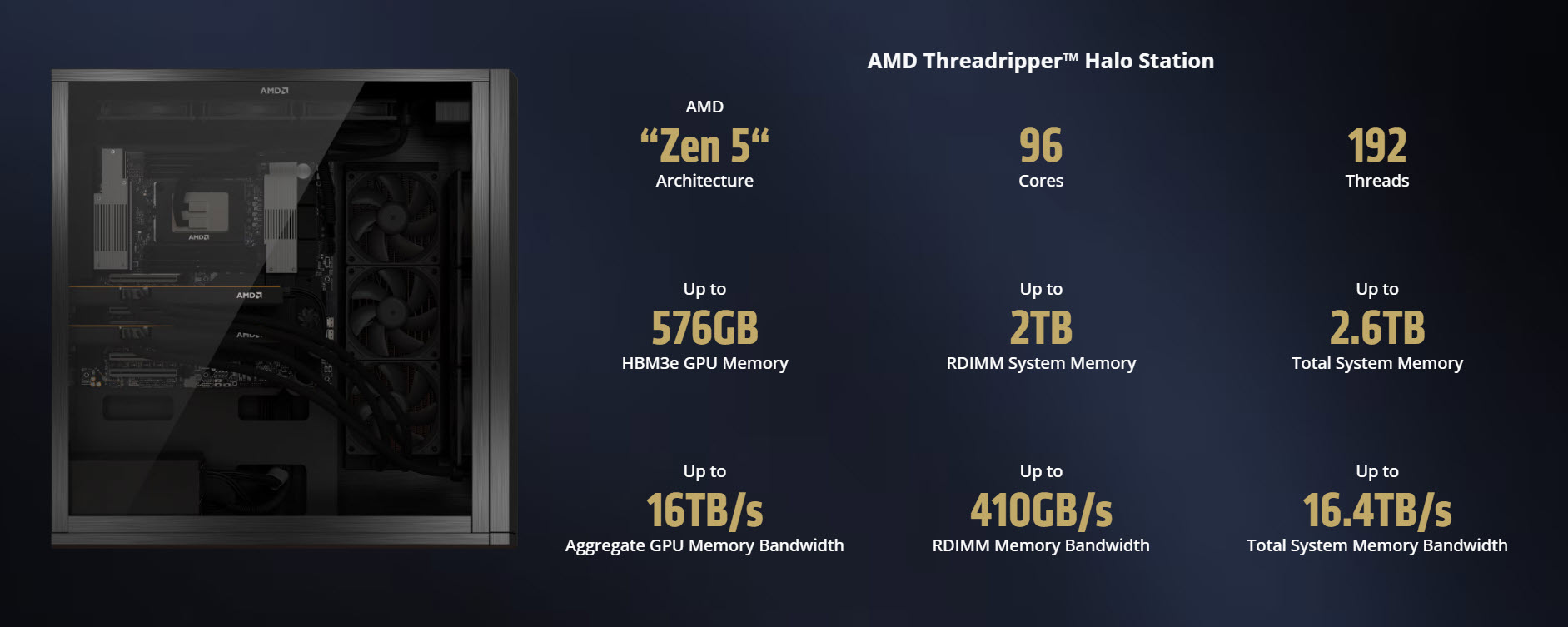
Microsoft positions these products as "builder PCs" and "supercomputer-class AI PCs." They are mainly aimed at developers, research institutions, content creators and enterprise users. They can run larger-scale artificial intelligence models locally and undertake complex reasoning, code generation, content creation and professional computing tasks.
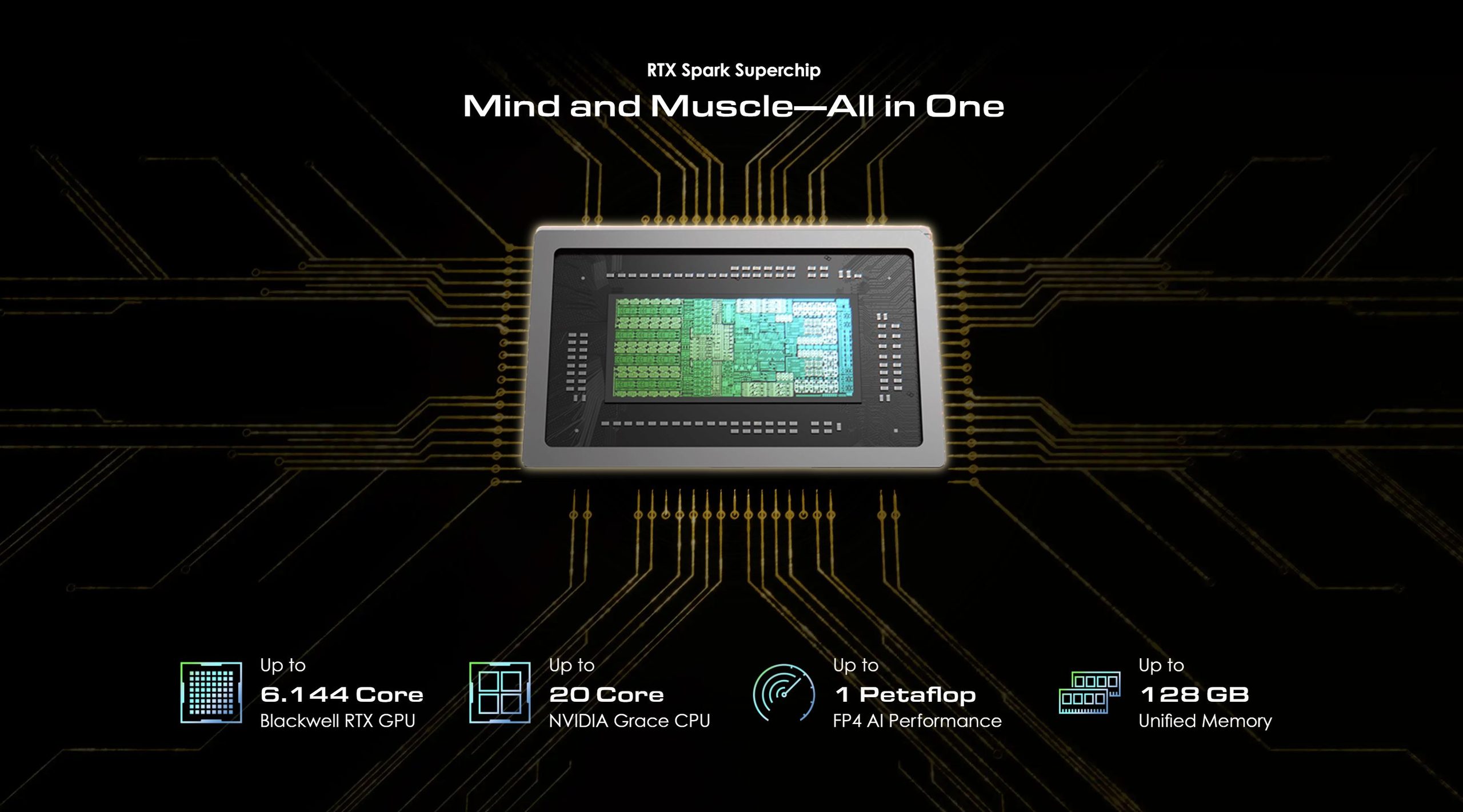
From the perspective of chip layout, in addition to the next generation of AMD and Intel AI processors, the high-end market in the future will also introduce more powerful graphics computing platforms and high-performance hardware including NVIDIA related solutions to accelerate the development of local generative AI.
Although Microsoft has tempered its promotion of the Copilot+ ecosystem in recent years, it can be seen from this internal roadmap that the company has not lowered its emphasis on the AI PC strategy. On the contrary, Microsoft is trying to build a complete AI computer system covering memory sizes from 8GB to 128GB or more, so that users with different budgets and needs can obtain corresponding levels of artificial intelligence experience.
As the next generation AI processors from AMD, Intel and Qualcomm are launched one after another, the competitive focus of the Windows ecosystem in the next few years may gradually shift from traditional CPU performance to local AI computing power, NPU performance and large model running capabilities. Microsoft obviously hopes to use this layered roadmap to set new hardware standards for the AI PC era and further consolidate Windows' core position in the field of personal computing.
Comments