
Abstract:
Microsoft has created a series of new product brands around artificial intelligence PCs in recent years, the most popular of which is Copilot+ PC. This brand was originally regarded as an important carrier for Microsoft to promote the next generation of Windows experience, especially the rumored Windows 12. However, now Microsoft seems to be gradually diluting this brand, and has even begun to directly cancel the Copilot+ PC logo on some new products.
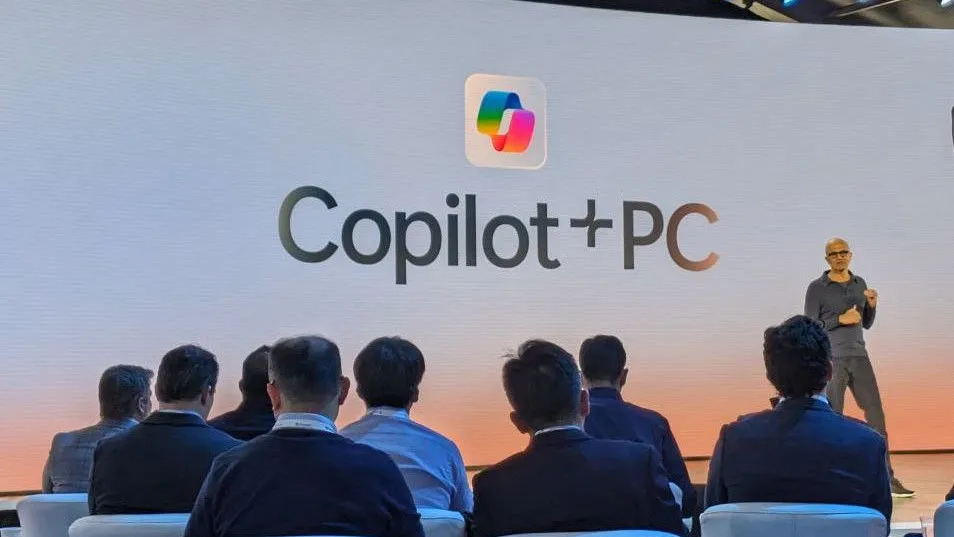
Copilot+ PC was first launched in 2024. Its positioning is not just a high-performance computer in the ordinary sense, but a set of AI PC standards defined by Microsoft. Qualifying devices need to be equipped with an NPU that can provide more than 40 TOPS of computing power and support a range of Windows features that rely on local AI computing power. Microsoft hoped to use this brand to clearly distinguish traditional PCs from the new generation of AI PCs, and at the same time push users to purchase devices equipped with new processors and NPUs.
This strategy was highly consistent with the industry's expectations for the next generation version of Windows at that time. A large number of previous reports have suggested that Microsoft may introduce deeper AI capabilities through Windows 12, and Copilot+ PC can become a new hardware platform to carry these functions. However, Windows 12 has not yet been officially announced. Instead, Microsoft continues to use Windows 11 as the basis of its operating system and gradually adds a large number of AI functions to the existing system.
Now, the Copilot+ PC brand itself is beginning to show signs of weakening. Some of Microsoft's recent high-performance Windows devices have not continued to emphasize this logo, including the Surface Laptop Ultra for high-end AI workloads. The device has a lot of local computing power, but Microsoft no longer highlights the brand as it did when it promoted the Copilot+ PC.
This means that Microsoft is gradually changing its past product strategy of "defining AI PC through a unified brand". Rather than telling consumers whether a computer is a Copilot+ PC, Microsoft now prefers to directly emphasize the capabilities of the device itself, such as local AI computing, NPU performance, GPU computing power, and the ability to run large AI models.
From the perspective of product positioning, this change also has a certain realistic background. After the launch of Copilot+ PC, although Microsoft invested a lot of marketing resources, the brand did not form a very strong consumer awareness like Intel's "Evo" hardware certification system. For ordinary users, it is not easy to understand what Copilot+ PC means, and technical indicators such as "40 TOPS NPU" are difficult to directly translate into actual experiences that consumers can perceive.
At the same time, Microsoft has continued to integrate AI features directly into Windows 11 in recent years instead of waiting for the next generation of operating systems. Recall, Click to Do, natural language search and various system-level AI functions have gradually become part of the Windows 11 and Copilot+ PC ecosystem. In other words, some technical features that might have been used to prove that "Windows 12 requires new computers" have now entered Windows 11 ahead of schedule.
This also changes the role of Copilot+ PC in product strategy. Initially, it was tasked with promoting the AI PC replacement wave and paving the way for the next generation of Windows; but now, Windows itself has been able to continuously obtain new AI capabilities through updates, so consumers do not need to wait for Windows 12 to get the so-called new generation of Windows experience.
It's worth noting that this doesn't mean Microsoft has canceled Windows 12. Microsoft still has not officially announced Windows 12, nor confirmed the name, release time or specific hardware requirements of the next generation of Windows. Therefore, the gradual fading of the Copilot+ PC brand cannot be directly equivalent to the cancellation of the Windows 12 project.
A large number of rumors surrounding Windows 12 have previously linked Microsoft's CorePC, modular Windows architecture, AI-first design and higher NPU requirements. Some of these technical directions have indeed been reported or appeared in internal Windows development, but there is no evidence that they will eventually be launched in the form of a product called Windows 12.
It is particularly worth noting that the NPU requirement of more than 40 TOPS itself belongs to the hardware standard of Copilot+ PC, rather than the minimum configuration of Windows 12 that Microsoft has announced. Therefore, it is not accurate to directly understand "40 TOPS NPU" as a mandatory requirement for Windows 12.
Microsoft is actually taking a more gradual approach to advancing Windows. Windows 11 remains its primary desktop operating system, with new AI capabilities constantly being added through feature updates, while new processors are responsible for providing more powerful local AI computing capabilities. In this way, even if Microsoft finally launches Windows 12 in the future, a large number of the technical foundations of the so-called "next generation Windows" may actually have been gradually completed in the Windows 11 era.
From this perspective, the meaning of Copilot+ PC is changing. It was once thought to be an important brand for Microsoft moving from traditional PCs to the Windows 12 and AI era, but now it is increasingly looking like a transitional marketing label. If Microsoft eventually further downplays or even stops using this name, it does not mean that the AI PC strategy itself has failed, but it may mean that the company is trying to reintegrate AI capabilities from an independent PC brand into Windows and PC products themselves.
It is still unclear whether Microsoft will re-launch a new PC brand in the future, nor whether the next generation of Windows will eventually appear under the name "Windows 12". But what is certain is that the product narrative Microsoft has built around the Copilot+ PC over the past few years is changing, and the brand that was once considered a possible entry point to Windows 12 hardware is no longer as central as it was originally.
Comments