
Abstract:
Microsoft's capital expenditures in the latest quarter fell short of Wall Street expectations, drawing attention to its plans to invest in artificial intelligence infrastructure. However, this does not mean that Microsoft is scaling back its AI investment. The actual situation is that the construction progress of some data center projects is behind schedule, causing expenditures originally expected to be incurred in this quarter to be postponed to subsequent financial quarters.
According to data released by Microsoft, in the quarter ending in September 2026, the company's capital expenditures reached US$45.2 billion, including expenditures related to financial leases, which was lower than analysts' expectations of US$51.7 billion, with a difference of approximately US$6.5 billion. Although it did not meet market expectations, Microsoft's capital expenditures in this quarter still increased by about 30% compared with the same period last year, reflecting that artificial intelligence infrastructure construction still requires huge investments.
Microsoft also lowered its full-year capital expenditure forecast for 2026, adjusting the previously expected US$175 billion to US$170 billion. However, this adjustment does not mean that the company has changed its strategic direction of investing heavily in artificial intelligence.
Microsoft Chief Financial Officer Amy Hood said that some third-party suppliers failed to deliver the required data center capacity on time, leading to delays in related expenditures. Microsoft expects these facilities to be put into use in the second half of the company's fiscal year. As project construction advances, capital expenditures are expected to accelerate again, while rising prices for hardware such as memory will further push up infrastructure construction costs.
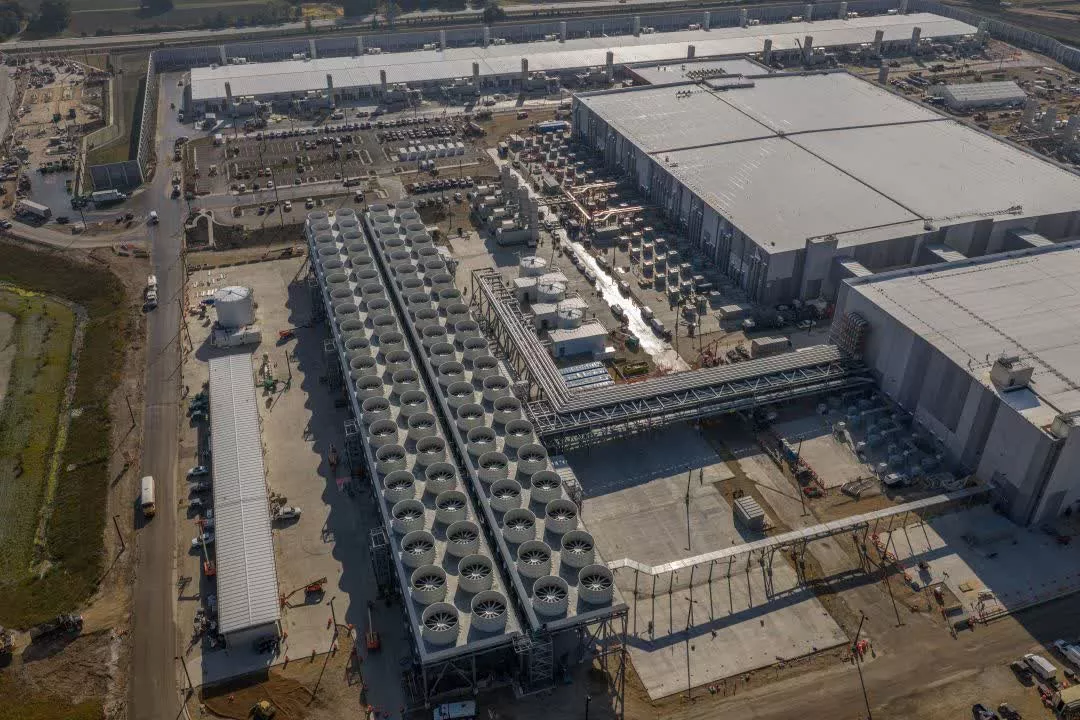
Microsoft added 24 new data centers this quarter, but not all of the company's infrastructure is directly built and operated by itself. In order to quickly expand cloud computing capabilities, Microsoft also cooperates with a number of smaller cloud infrastructure operators. Since 2023, Microsoft has signed related contracts totaling more than $80 billion with CoreWeave, Nebius, and Nscale to acquire additional data center capacity.
However, third-party infrastructure projects also face practical obstacles. Microsoft recently abandoned a data center capacity cooperation arrangement with Nscale due to insufficient power supply capacity. In addition, the construction progress of a Nebius facility in New Jersey, USA, has been slower than expected. These problems show that in the context of rapid growth in the demand for artificial intelligence computing power, data center expansion not only depends on funding and chip supply, but is also restricted by factors such as power resources and infrastructure construction progress.
Similar problems are not unique to Microsoft. Amazon is also purchasing and stocking Nvidia GPU server racks in large quantities, but some data centers are temporarily unable to put these devices into operation due to lack of sufficient power. Amazon’s capital expenditure budget for this year is about $220 billion, about $50 billion higher than Microsoft’s adjusted full-year budget, showing that the race for AI infrastructure investment among large technology companies continues.
Google parent company Alphabet also maintains a huge investment plan, with a full-year capital expenditure budget of US$195 billion to US$205 billion. However, Alphabet's capital expenditures reached $51.4 billion in the quarter ended in September, which was also lower than market expectations. The company expects capital expenditures to increase significantly next year.
Huge infrastructure investments are also putting pressure on Alphabet's cash flow. The company's free cash flow for the quarter was negative $9.1 billion, continuing a previous trend of pressure on free cash flow. In contrast, Microsoft still maintains strong cash generation capabilities, providing more financial space for continued investment in AI infrastructure.
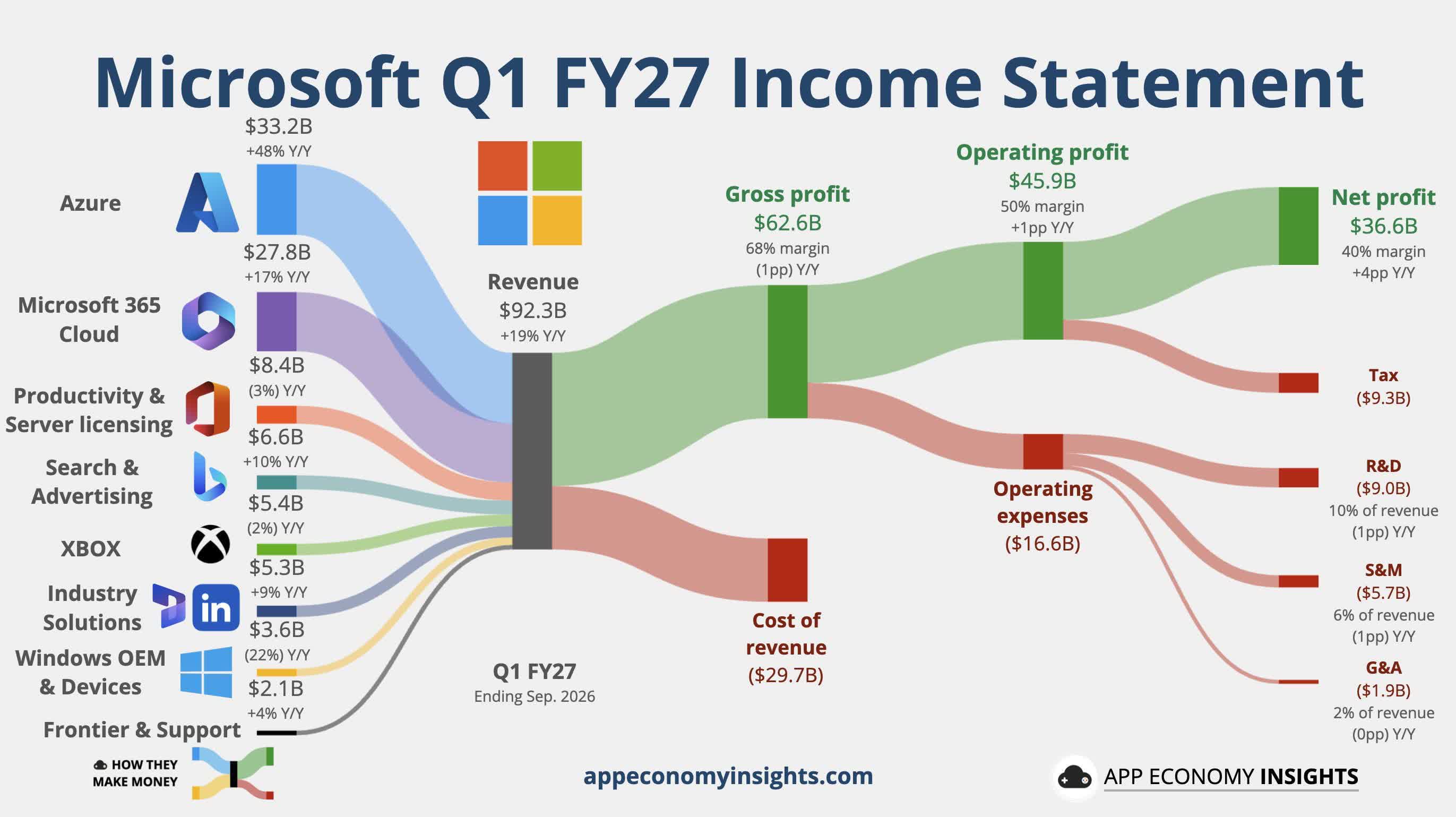
Microsoft's Azure cloud computing business performance provides important support for its high capital expenditures. Azure revenue increased 48% year-over-year in the quarter to $33.2 billion. At the same time, Microsoft's free cash flow is still positive at $18.6 billion, showing that while the company is expanding investment in artificial intelligence infrastructure, its core cloud business can still generate considerable cash flow.
It is worth noting that while Microsoft is increasing investment in AI infrastructure, it is also continuing to reduce some labor costs. Previously, the company has taken measures including providing employees with voluntary severance compensation packages, which may involve up to 60,000 employees. This reflects Microsoft's reallocation of resources to invest more capital and operating resources into artificial intelligence, cloud computing and related infrastructure, while controlling costs in other areas.
Overall, Microsoft's capital expenditures this quarter were lower than expected, mainly reflecting the time difference between data center construction and third-party capacity delivery, rather than the cooling of the AI investment boom. Microsoft's expenses are still likely to increase significantly in the next few quarters as delayed projects come into use. At the same time, the cost of key hardware such as power supply, data center construction cycle, and memory are becoming important factors restricting the expansion of AI computing power by global technology giants.
Comments