
Abstract:
According to people familiar with the matter, OpenAI plans to purchase AI chips from Alphabet’s Google, which is the latest step in the ChatGPT developer’s vast layout to expand its AI infrastructure. The final terms of any deal are not yet known, the person said. OpenAI and Google both declined to comment.
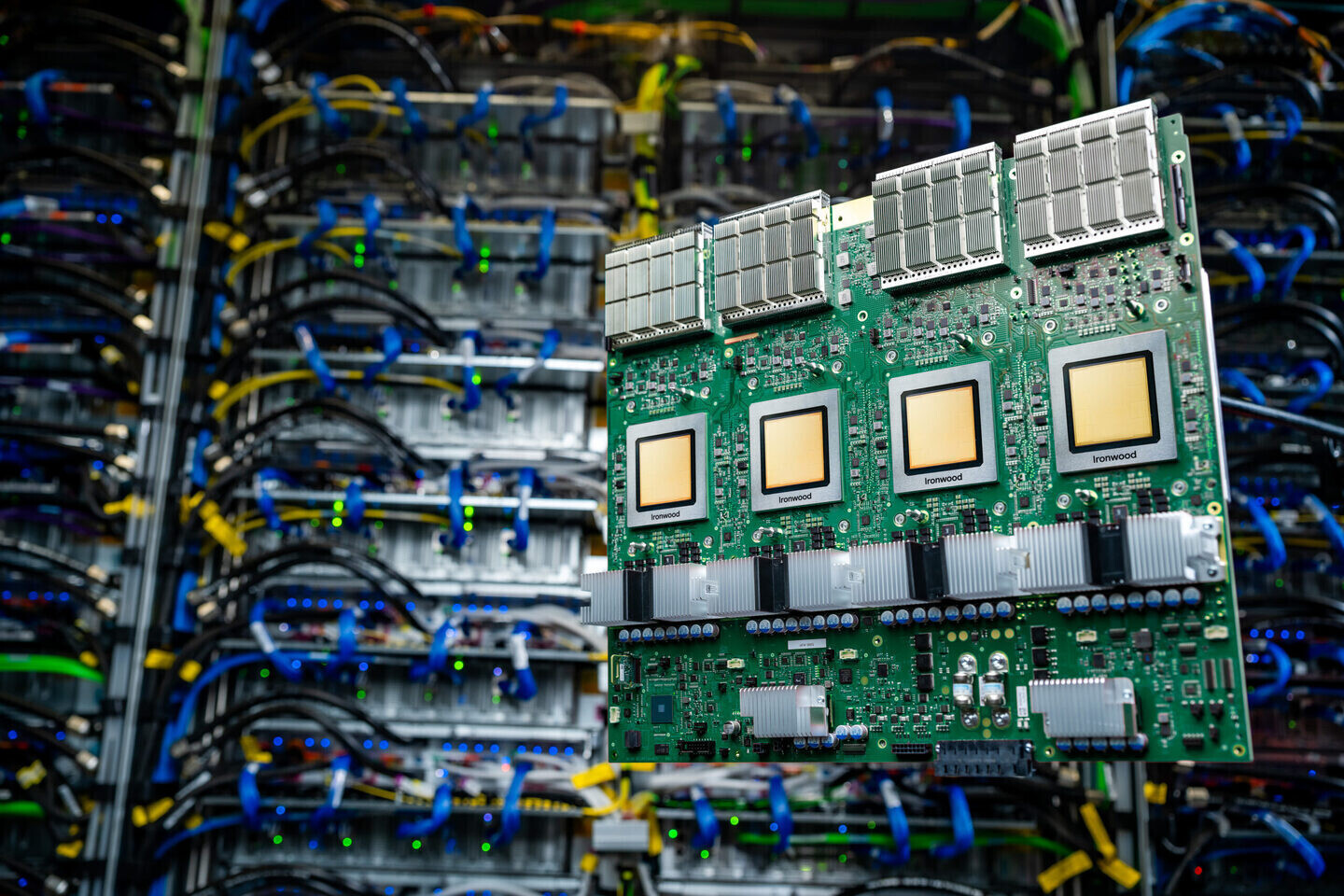
Google's Tensor Processing Unit (TPU) is growing in popularity as an alternative to Nvidia's market-leading AI chips as companies seek cheaper chips suitable for running artificial intelligence models. Google began selling TPU directly to some customers this year.
This move also reflects OpenAI’s multi-pronged strategic intention to urgently improve its AI computing power.
The company has previously announced that it plans to start using self-developed chips later this year to support the operation of its AI models. This means that it has joined this "self-developed chip wave" launched by many companies, jointly challenging Nvidia's dominance in the field of computing power.
It is worth mentioning that the internal chip Jalapeno developed by OpenAI and Broadcom was developed with the assistance of senior Google employees. Richard Ho, who is in charge of OpenAI’s internal chip team, has previously participated in the research and development of Google TPU.
Google began developing its TPU more than ten years ago. Initially, these TPUs were used to speed up the company's web search engine and improve efficiency. But these chips quickly proved valuable in handling AI work and have emerged as an alternative to Nvidia's GPUs in recent years.
Nvidia’s computing hegemony encounters new challenges
The purchase plan will deepen the relationship between OpenAI and Alphabet's Google - although the two companies are in direct competition in the fields of artificial intelligence products and search.
For a long time, OpenAI and Nvidia have had a close relationship. From the training of the first-generation GPT model to the global popularity of ChatGPT, almost all core model evolutions of OpenAI are built on tens of thousands of NVIDIA GPU clusters. Huang Renxun personally delivered the world's first DGX AI supercomputer to OpenAI, and the popularity of OpenAI directly pushed Nvidia to the top of the world's market value.
In August this year, Nvidia CEO Huang Renxun said that OpenAI has committed to large-scale deployment of Nvidia AI infrastructure by 2030. The existing and planned deployment scale is approximately 12 GW, with the opportunity to expand to approximately 16 GW.
However, this has not stopped OpenAI from seeking to diversify its supply chain. Faced with the increasingly high cost of inference, the huge computing power gap of millions of chips, and the bargaining disadvantages and supply interruption risks caused by over-reliance on a single supplier, OpenAI is obviously unwilling to tie all its wealth and life to Nvidia.
No coincidence. Oracle also announced on Tuesday that it will provide customers with computing power based on Alphabet's Google TPU chip on its cloud platform for the first time.
Regarding this layout, Mahesh Thiagarajan, President of Oracle Cloud Infrastructure, said in a statement that different AI workloads have different computing power requirements. This choice allows customers to flexibly select the most appropriate infrastructure in terms of performance, throughput and economy for each AI workload.
Google executive Amin Vahdat said in a statement announcing the deal with Oracle that "the next generation of artificial intelligence will require diverse computing power."
Comments