
Abstract:
Microsoft recently released the latest Windows 11 update, focusing on optimization for 8GB memory devices. The company said that by improving the memory management mechanism and system resource scheduling, computers equipped with 8GB of memory can now achieve up to 20% improvement in response speed, and in multi-task scenario tests, the performance improvement can reach up to 40%.
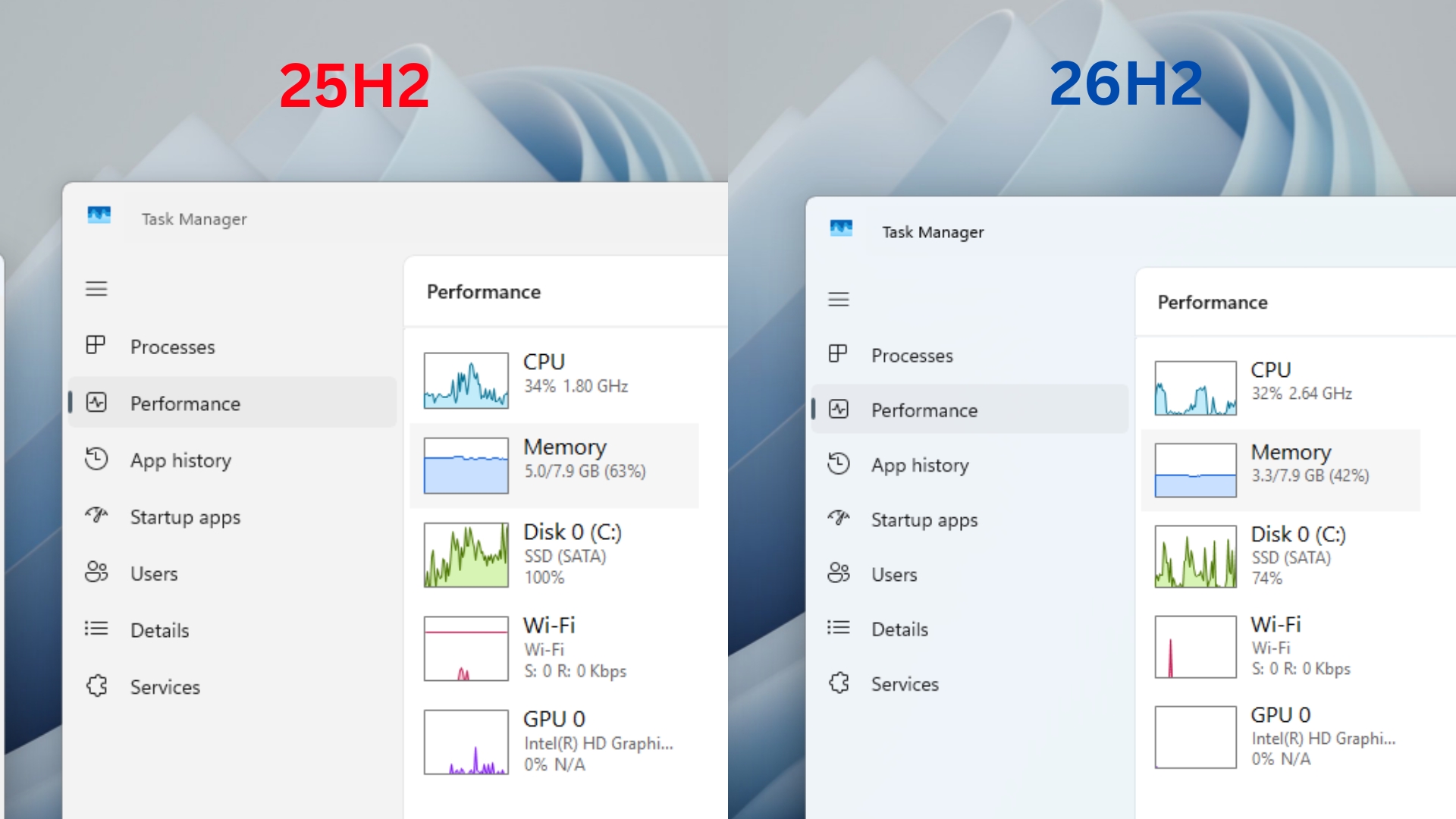
Over the past year, Microsoft has continued to promote the Windows 11 performance improvement plan, hoping to solve the problems of system bloat and high memory usage that users have long reported. Microsoft has previously said that Windows 11 has become more responsive, and now with the latest update coming online, the company has further announced more specific optimization results.
Pawan Davuluri, who is in charge of the Windows business, said that in a laboratory test environment, the system response speed of 8GB memory devices can be increased by up to 20%, and multi-tasking performance can be increased by up to 40%. Microsoft emphasized that these improvements mainly come from improved memory utilization efficiency rather than increased hardware requirements.
Microsoft explained that Windows will always transfer some data to a slower storage device when there is insufficient memory, and then read the data back when the user revisits the relevant application or tab. Although this process can ensure that the system continues to run, it can also cause application reloading, switching lags, and reduced response speed.
To solve this problem, Microsoft has re-optimized the memory compression mechanism of Windows 11. The so-called memory compression is to keep temporarily inactive data in a more compact form in the memory instead of writing it directly to the hard disk or SSD. After adjustments, Windows 11 can now retain up to an additional 2GB of active data in memory, thereby reducing the performance loss caused by frequent access to storage devices.
Microsoft said that this means that applications or browser tabs that users have previously opened will be less likely to be reloaded when they switch back, and the overall user experience will be smoother. This improvement will be more obvious especially when running multiple programs at the same time.
In addition to the operating system itself, Microsoft has also made targeted optimizations for the Edge browser and Microsoft 365 applications. The company claims that Windows, Edge and Microsoft 365 related components can reduce memory usage by up to about 900MB cumulatively. Among them, the four office software of Word, Excel, PowerPoint and Outlook can release about 360MB of memory resources in total.
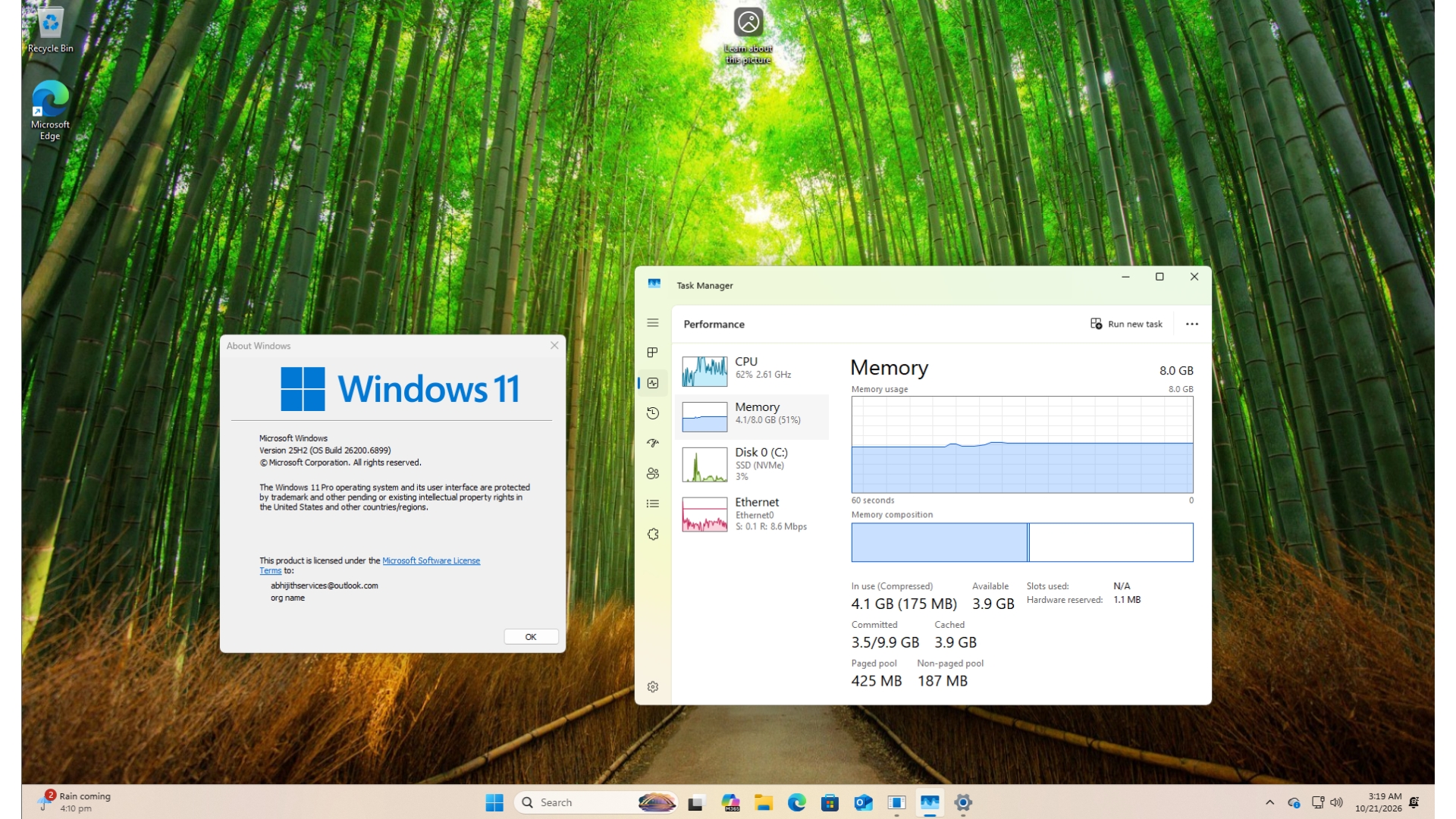
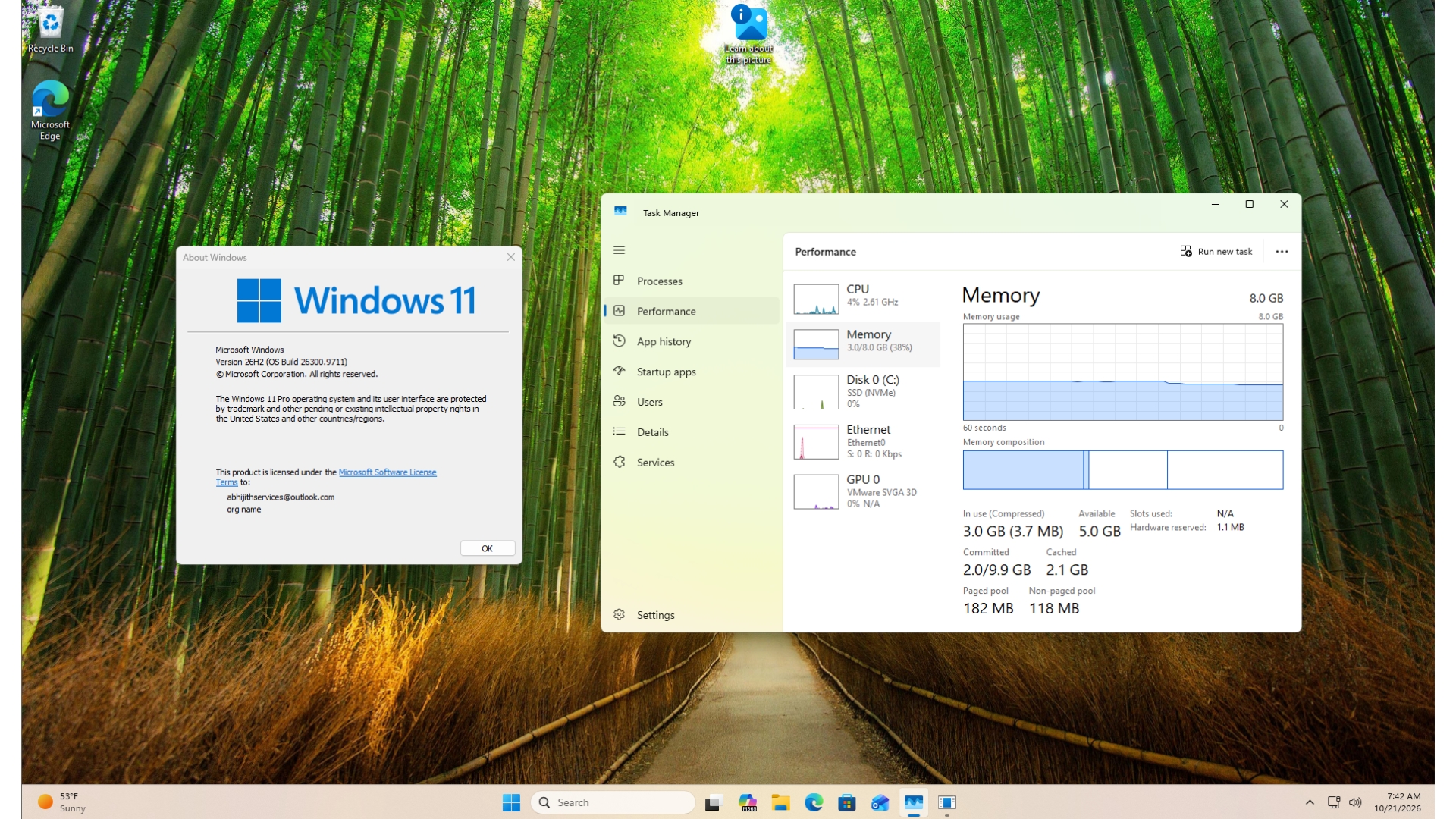
Widgets widget functionality has also been adjusted. On computers with 8GB of memory, Windows 11 no longer preloads the Widgets panel by default, but only loads it when the user actively opens it. This change can save about 200MB of memory usage.
At the same time, the tab management mechanism of the Edge browser has also been upgraded. Tabs that have not been used for a long time will automatically go to sleep after 15 minutes, further reducing background memory consumption.
Microsoft also disclosed details of internal testing. On a device with 8GB of RAM, testers opened 20 Edge tabs, a 4K video, multiple large Word, Excel, and PowerPoint documents, as well as Outlook and File Explorer, and kept all programs running at the same time. Compared with earlier versions this year, the new version of Windows 11 demonstrates significantly faster multitasking capabilities in this high-load environment.
Microsoft said that the current update is just the beginning of memory optimization work. In the coming months, the company will also continue to improve the memory compression mechanism to make it smarter and more efficient. At the same time, different functions in Windows will further share underlying components and resources. For example, the search function and Widgets may share a unified Web engine in the future to reduce repeated use of memory.
As artificial intelligence applications and local AI models continue to increase their demand for system resources, 8GB memory devices are facing increasing pressure. Microsoft's large-scale optimization for mid- to low-end hardware is seen as an important measure to improve Windows 11's reputation. For the large number of users who are still using computers with 8GB of memory, this update is expected to bring a smoother daily use experience without the need to upgrade hardware.
Comments