
Abstract:
Just this week, the revised draft of the Road Traffic Safety Law was officially submitted to the 24th Session of the Standing Committee of the 14th National People’s Congress for initial review. This revision has filled in a key piece that has been missing for a long time in the domestic top-level legal rules in the field of autonomous driving.
This revised draft specifically sets up an independent chapter with special regulations on self-driving cars. It clearly delineates the conceptual boundaries of self-driving cars and assisted driving functions at the national legal level for the first time. It also clarifies the core responsibility determination rules that attract the most attention: If self-driving cars commit road traffic safety violations while the self-driving function is activated, self-driving car manufacturers and importers will directly accept illegal handling.
If the self-driving car does not activate the self-driving function, or the driver controls an ordinary car that only has assisted driving functions, such scenarios of driving on the road will all be implemented in accordance with the existing conventional management regulations for non-self-driving cars, and the corresponding responsible entities are still the vehicle users and actual drivers.
In view of the ground-breaking rules added in this draft, many industry experts who participated in the legislative discussions also immediately interpreted the far-reaching significance behind the relevant adjustments.
If the autonomous driving industry wants to truly embark on a healthy and sustainable development path, it must respond positively to the ownership of rights and responsibilities that all consumers are most concerned about in the name of the law. The new chapter dedicated to autonomous driving in the Road Traffic Safety Law is to build a unified basic framework from the top level of rules for subsequent technological research and development, commercialization and industry governance related to autonomous driving.
Judging from the long-standing chaos in the market, the draft clarifies for the first time a clear boundary between autonomous driving and assisted driving, which can fundamentally prevent some car companies from exaggerating their publicity and evading responsibility after an accident. For a long time, many car companies have been keen to over-package functions that are still in the assisted driving stage into fully automatic driving. Once an accident does occur, they will immediately use the rhetoric that the driver is the first responsible person and shift all the responsibility to the so-called ordinary users who did not take over the vehicle in time. Consumers often find it difficult to defend their rights.
The draft directly clarifies that in true autonomous driving scenarios, the vehicle system dominates driving behavior, while in assisted driving scenarios, humans are always controlling the vehicle. Cars equipped only with assisted driving functions are fully managed according to traditional vehicle management, directly upgrading the previous verbal safety commitments of car companies into rigid legal obligations, which is essentially the most basic protection of the safety of public life and property.
Another groundbreaking rule design is that the draft stipulates that for traffic violations and traffic accidents that occur when the autonomous driving function is activated, the manufacturer and importer will bear the relevant responsibilities first by default; if the company can provide sufficient evidence to prove that the relevant illegal acts have nothing to do with the autonomous driving function itself, the responsibilities can be divided separately, and the burden of proof is directly assigned to the car company closest to the operating data. This not only takes into account rational judgment at the technical level, but also is full of humanistic care for ordinary users.
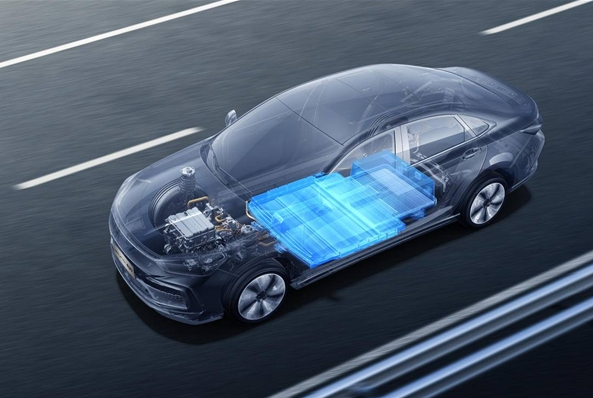
Such a rule design can, on the one hand, force relevant operators to fully evaluate the true maturity of their own technologies, choose a business route that suits their own capabilities under the clear distinction between autonomous driving and assisted driving, and no longer rely on false propaganda to deceive consumers. On the other hand, the enterprise that has mastered all vehicle operation data and has an absolute technological advantage should bear the main burden of proof, forming a reasonable constraint on the technologically powerful party, and maximizing the reasonable interests of ordinary consumers from the practical level.
This rule adjustment also directly corrects the misunderstanding widely existing at the public level. Currently, the vast majority of mass-produced cars in the domestic market are equipped with only L2-level assisted driving functions. Drivers must hold the steering wheel at all times to monitor all road conditions and assume all driving-related responsibilities.
The core reason for many assisted driving-related accidents in the past is that ordinary consumers were misled by the excessive marketing of car companies and mistook assisted driving for autonomous driving, which ultimately led to avoidable tragedies. This time, after the legal definition is clearly defined, it is equivalent to drawing the clearest cognitive red line for all consumers.
Comments