
Abstract:
On November 13, according to the Wall Street Journal, this summer, Jensen Huang called several senior financial executives of Nvidia to the office. As the AI economy propped up by Nvidia's crazy investment is teetering on the edge, Huang wants to make sure the company isn't heading in the wrong direction. During the meeting, he began scolding Colette Kress, who has now replaced him as Nvidia's interim CEO. Kress served as CFO at the time.
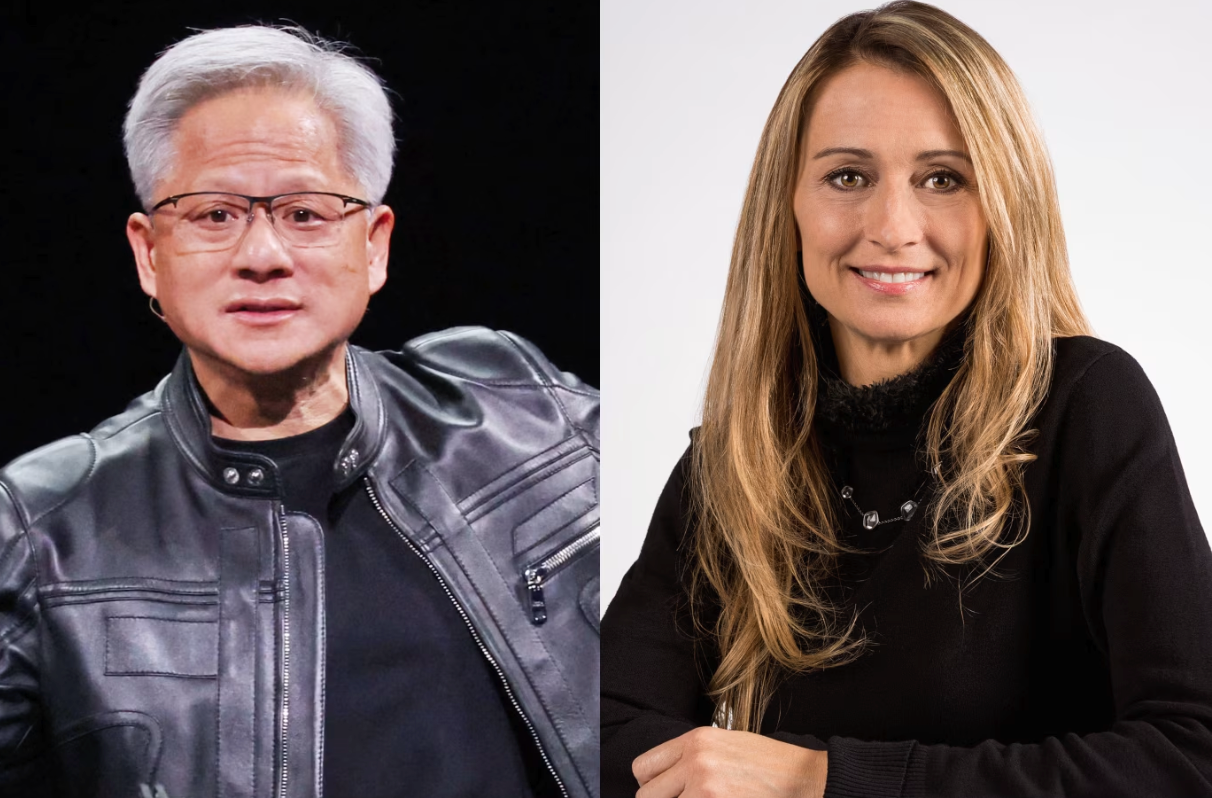
Huang Jen-Hsun and Kress
According to a person familiar with the conversation at the time, Huang interrupted Kress during her presentation and said she was "like a deer caught in the headlights."
Huang called in Kress and his senior financial team to find out a growing problem: Nvidia was negotiating with companies that could not afford to buy its chips and was considering providing billions of dollars in guarantees to these companies. That includes deals led by Nico Caprez, Huang’s son-in-law. Caprez has been providing financing to emerging cloud service providers and data center developers, hoping to cultivate them into long-term customers of Nvidia.
Informed sources revealed that Huang Renxun had previously launched a round of AI trading boom, and now he is beginning to question whether this series of investments and transactions have gone too far.
The CFO who only knows how to report
Huang Jen-Hsun said at the August meeting that Kress was just a "reporting CFO," not someone who could help him formulate strategies or make decisions.
He then began to describe the situation facing the company. He said that large cloud service providers are moving away from Nvidia and plan to use alternative chips to reduce their dependence on Nvidia. To make matters worse, the large amount of chip wafers and memory that Nvidia had promised to purchase were hitting him like an "avalanche" and turning into a burden.
Now, Kress must now lead Nvidia through this avalanche, and an even bigger one. On Thursday, she was named interim CEO, replacing Jensen Huang. Previously, it was revealed that Huang Renxun had two extramarital affairs. On Thursday, Huang resigned.

Chris and husband
Kress needs to lead the company through this difficult time. Nvidia is currently facing federal and internal investigations. As one of the world's largest companies, Nvidia has not had a clear successor. The company said it will examine both internal and external CEO candidates.
Kress once said that it was Jen-Hsun Huang who attracted her to Nvidia. She said Huang is a visionary leader. In addition, she was fascinated by the company's corporate culture. In a 2018 awards show interview, she described Nvidia's culture as "not self-centered."
Huang runs a relatively flat organization with about 60 direct reports, including Kress. Over the past five years, the company's market capitalization has surged from less than $1 trillion to a high of $5.8 trillion in October.
But Nvidia's sheer size sometimes puts Kress in tricky situations.
This spring, Huang's son-in-law Caprez and another vice president, Raj Mirpuri, told potential business partners that Nvidia could arrange a credit-backed deal within weeks. Dozens of companies lined up to join the program, hoping Nvidia's support would lower their borrowing costs. In exchange for providing credit support, Nvidia proposed that cloud service providers should share a portion of their revenue with Nvidia.
As the plan progressed, Kress raised questions including how to decide which deals to move forward, how to value guarantees and how to calculate returns on investments, according to a person familiar with the matter. Behind the scenes, she was trying to rein in Huang's son-in-law, who was promoted to vice president in January, people who have worked with her said.
NVIDIA is still continuing to advance related plans. The company was in talks with OpenAI to provide financial guarantees for the largest data center project in history. The project is located in Ohio and will become the world's largest data center upon completion.
OpenAI was negotiating to rent the entire park and planned to deploy Nvidia chips worth approximately US$300 billion there. Given that OpenAI is responsible for lease payments, Nvidia will provide financial guarantees to give banks more confidence in lending.
Negotiations continued until late summer. On July 26 this year, the Wall Street Journal reported that Nvidia was considering providing a $250 billion financing guarantee for the project. The next day, Nvidia's stock price fell 5%, and its market value evaporated by US$250 billion.
While Nvidia and OpenAI were close to a deal, in the following weeks, Kress restructured the deal, cutting Nvidia's initial financial commitment to OpenAI in half, according to people familiar with the matter. Nvidia and OpenAI signed a scaled-down agreement on August 17.
In the days that followed, Huang pushed employees to develop a way to judge whether the guarantee was worth it, asking them to factor in potential chip sales.
According to a report in the Wall Street Journal at the end of August, Nvidia suspended some transactions in a new financing plan. The program provides credit support to AI cloud service providers in exchange for a share of the revenue.
In conveying the news of the suspension to customers, Caprez and Mirpuri told multiple cloud service companies that Nvidia's executive team and board of directors were increasingly scrutinizing these financial support transactions, making it increasingly difficult to finalize quickly, according to people familiar with the matter.
In the face of external criticism, Kress has publicly defended Nvidia's role as the "banker" of the entire AI industry. Critics believe that Nvidia's attempt to support the demand of the entire industry has made itself more vulnerable to the impact of the industry's downturn. Kress described the deals as shrewd investments.
“We recognize the scale of this type of support, and we know some people will call it revolving financing. But we have a different view on it,” she said in late August. “The return on equity that we get from the capital we invest will be very significant.”
Huang Renxun is dissatisfied
Huang Renxun has privately expressed to close associates that he is increasingly dissatisfied with Nvidia's stock market valuation. Nvidia stock's monthly average price-to-earnings ratio fell from 23 times in May to 16 times in October. Other big tech companies trade at much higher P/E ratios.
In order to appease worried investors, Nvidia took a series of measures, including implementing the largest stock buyback program in history.
In October this year, Nvidia began to tighten financial support.
During a meeting in Berlin, Huang Renxun and several of the company's sales executives conveyed a new message to the CEOs of six large Nvidia chip purchasing companies sitting around a round table. He opened with a story that sounded like a fable, according to people who attended the meeting.
Huang Renxun said at the time that he once found a soup vendor in Japan with a long queue in front of the stall. He also queued up, and after waiting for a long time, he had one of the best soups of his life. When he asked for another bowl, the stall owner refused because there were too many waiting customers and there wasn't enough soup to share.
"He knows business better than all of you." Huang Renxun said to the CEOs of these cloud computing companies. Huang explained that the soup guy would not sell all his inventory to one or two customers, but would keep prices high and keep his customer base diverse.
"You didn't let my product reflect the value it should have." He said.
Comments