
Abstract:
Microsoft co-founder Bill Gates warned that there is currently "no plan" for the "social, political and economic turmoil" that artificial intelligence will bring. Gates said AI could become "the greatest equalizer of all time, or the greatest source of injustice" but he saw no "evidence that leaders, experts and communities are adequately addressing these challenges."
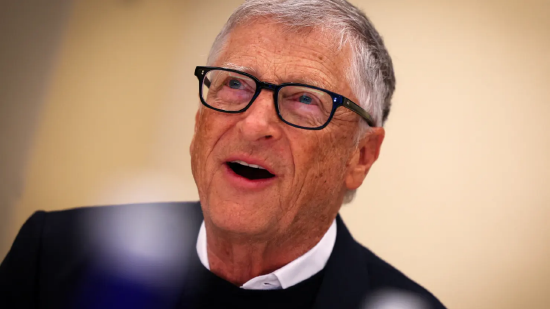
In an article published on Wednesday, Gates argued that artificial intelligence could lead to job losses for workers across all sectors of the economy, squeeze hiring for entry-level jobs, and force policymakers to rethink employment, education and social security systems.
This article is different from Gates’ past remarks. Gates works with Microsoft and other artificial intelligence companies through the Gates Foundation. He said in October last year that artificial intelligence is "the most significant technological change I have ever seen in my lifetime," adding, "It is so profound that its impact cannot be overstated."
In the article, Gates said that new national and international institutions will ultimately be needed to help coordinate and guard against evolving AI risks around the world.
Gates said: "The challenges are enormous. Even under the best-case scenario, the transition to a new era of artificial intelligence will be one of the most tumultuous periods in human history."
"Vicious Circle"
In the article, the billionaire argued that unlike previous technological changes, artificial intelligence could replace cognitive jobs across industries faster than unemployed workers can move to newly created jobs.
He wrote: "We need time to prepare for the period of social, political and economic turmoil we are about to enter."
"Unfortunately, we are not preparing for this now. I see no evidence that leaders, experts and communities are adequately addressing these challenges. There are no plans in place for a smooth transition into the AI era."
White-collar employment has already been affected, Gates said, with sales, customer support, software engineering and paralegal jobs likely to be the first areas affected. He added that AI could eventually take on tasks including loan evaluation, data analysis and patient triage.
Blue-collar workers will also come under pressure as increasingly powerful robots become cheaper, while young people could be at risk of entering a labor market with fewer jobs, he added.
He added: “The people who need their time the most are the people who have the least—like accountants being replaced by robots, or workers losing their $20-an-hour jobs to $10-an-hour robots.”
Competition is likely to accelerate AI adoption as companies leverage AI and robotics to cut costs and prices, forcing rivals to follow suit. "The combination of robots and artificial intelligence could create a vicious cycle," he added, warning that retraining and finding new jobs would cause serious unrest.
Gates suggests how the government should prepare
Gates - who admitted in the article that he still has financial ties to the tech industry - also said the technology could "accelerate innovation" to tackle the world's "toughest technological challenges": providing reliable clean energy, combating climate change, growing enough food and eradicating disease.
Managing this transition requires the establishment of new national institutions capable of coordinating policies in areas such as employment, taxation, energy, elections, public health, the financial system and national security, he said.
"But even if a country can handle its own affairs, it will still face risks across its borders. That is why an international organization needs to be established at the same time," he said.
These agencies could draw on models from existing systems, such as the global inspection regime for nuclear weapons, international aviation regulations, and agreements to protect the ozone layer.
“A new global organization in artificial intelligence will need to incorporate elements of all three and more,” he added.
Comments