
Abstract:
In October 2017, Qudian, which started with campus loans, was listed on the New York Stock Exchange in the United States. Its market value exceeded US$10 billion on its first day of listing, making it the largest Chinese concept stock IPO in the US stock market that year. The 34-year-old founder Luo Min also appeared on the Hurun Post-80s Rich List with a net worth of 12.5 billion yuan.
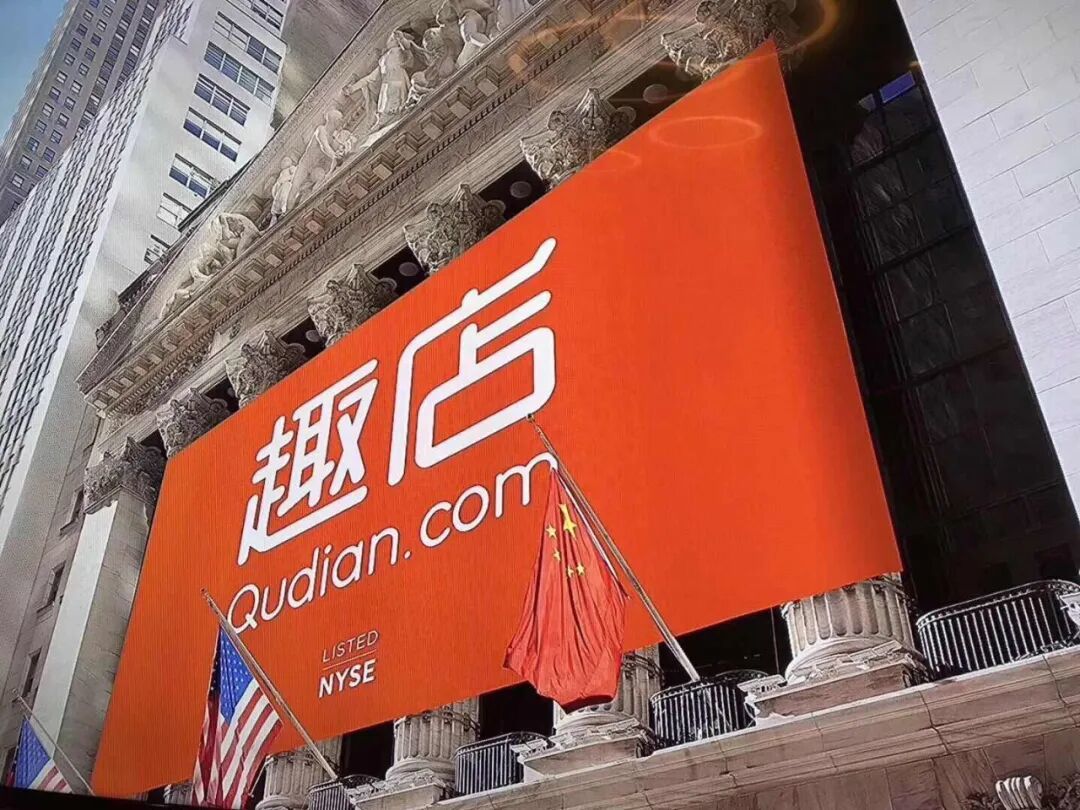
Five months later, on March 12, 2018, Luo Min announced on his 35th birthday that he would no longer receive a penny of salary from the company until Qudian’s market value reached US$100 billion. At that time, Qudian’s market value was US$5.2 billion.
Eight years flew by. In October 2026, Qudian, which had already been renamed High Templar Tech Limited (stock code: HTT), not only failed to reach US$100 billion in market value, but shrank to US$332 million, less than a fraction of the year.
On October 14, Luo Min, chairman and CEO of Qudian, received a notice from the Xiamen Municipal Taxation Bureau that due to the historical equity reorganization of its two domestic companies, Xiamen Qudian Technology and Xiamen Lexiang Times, he was required to declare and pay personal income tax of 790 million yuan (approximately US$116 million) as "income from property transfer". Immediately afterwards, the company's board of directors decided that the personal income tax of 790 million yuan, together with possible subsequent late payment fees, fines and all tax costs, would be fully borne by the listed company.
790 million yuan is more than one-third of Qudian’s current total market value, and accounts for more than 20% of the company’s 3.81 billion yuan in discretionary cash. Luo Min, who announced that he would not receive a penny in salary, asked a listed company to settle his personal tax bill eight years later.
How come personal tax bills have become the “public account” of all shareholders?
Luo Min’s personal tax of 790 million yuan is related to the establishment of a VIE (protocol control) structure more than ten years ago.
In the early years, Internet financial companies went public in the United States. In order to circumvent foreign investment access restrictions, they generally set up listing entities overseas. Domestic entities that actually operate businesses - such as "Xiamen Qudian" and "Xiamen Lexiang" involved this time - had industrial and commercial equity in the personal name of the founder Luo Min, and the profits were transferred to the listed company through an agreement.
Later, in order to turn this fragile "agreement control" into real "equity control", Qudian reorganized the two Xiamen companies from 2023 to early 2026. The operation method is exactly the same: first, the registered capital in Luo Min's name is significantly reduced, and then the affiliated companies within the listed company system increase capital in a large amount, diluting Luo Min's personal shareholding ratio to about 0.1%.
From the perspective of Qudian’s board of directors, the equity of these two companies was “held” by Luo Min on behalf of the company, and the reorganization was carried out according to the company’s instructions. Luo Min did not personally pocket a penny in cash, so the tax should not be borne by him personally.
But this logic simply does not work in the face of tax law.
The tax law only recognizes industrial and commercial registration. The equity was registered in Luo Min's name and transferred to other companies through capital increase and dilution, which constituted Luo Min's personal "property transfer" from a tax perspective. Based on the 20% personal income tax rate, the tax authorities determined that the value of the transferred rights and interests was as high as 3.95 billion yuan, and the corresponding tax was exactly 790 million yuan.
In July this year, the Ministry of Finance and the State Administration of Taxation jointly issued Announcement No. 21 to launch penetrating supervision on offshore trusts and equity holdings. Just three months after the new regulations came into effect, the reminder notice from the Xiamen Taxation Bureau was accurately delivered to Luo Min’s desk.
Since the tax bill was issued to Luo Min personally, why can the board of directors decide to use the listed company's money to fill the hole?
The answer is simple: because of this company, Luo Min alone has the final say.
Although Luo Min chose to "avoid voting" during the board of directors' vote according to regulations, under the dual-class structure of AB shares in the US stock market, this avoidance was just a formality. The annual report shows that Luo Min holds 42.7% of the company's equity, but holds up to 87.8% of the voting rights. Even if all other institutions and retail shareholders vote against it, it will not have any impact on the outcome.
In name, the company took care of the boss, but in reality it was the external small and medium-sized shareholders who accounted for nearly 60% of the shares. They passively collected about 450 million yuan in real money to settle the capital operations of the major shareholders in the early years. What is even more worrying is that Qudian warned in the announcement that the company is also evaluating the impact of other similar historical restructurings. 790 million yuan is probably just the first bill.
Cut all the main business and "eat interest" on 3.8 billion in cash
What is more magical than paying taxes for the boss is that Qudian, which took over this huge tax bill, is no longer a normal operating enterprise.
The 2026 semi-annual report disclosed together with the tax bill shows that in the first half of this year, Qudian’s total revenue was only 8 million yuan, a year-on-year drop of 72.7%. A company listed on the New York Stock Exchange has been working for half a year, and its main income cannot even afford a house in a first-tier city.
The reason is that in the first half of this year, Qudian shut down its "last mile" express delivery business in Australia. At this point, all the physical businesses that Luo Min had worked on were liquidated. In the first half of the year, the company's R&D expenses were cut by 75% to only 6.1 million yuan. However, administrative expenses increased by 61% to 184 million yuan due to depreciation of the headquarters building and benefits, resulting in a net operating loss of 180 million yuan.
What is absurd is that Qudian, whose main business has been zero, actually achieved a net profit of 417 million yuan attributable to the parent company in the first half of the year.
"Kuaima Financial Media" found that as of the end of June this year, Qudian had 3.81 billion yuan in discretionary cash and another 2.33 billion yuan in restricted cash. With this funding, Qudian’s net income from interest and investment in the first half of the year reached 1.284 billion yuan, doubling year-on-year.
This 3.81 billion yuan of freely disposable cash is exactly the original accumulation that Luo Min saved in the "campus loan" ten years ago.
In 2014, Luo Min founded "Qu Fenqi" and won seven rounds of financing in two and a half years by lending money to college students. Qudian was listed on the New York Stock Exchange in October 2017, and its market value once exceeded 10 billion U.S. dollars. 34-year-old Luo Min made it onto the rich list with a net worth of 12.5 billion U.S. dollars. The following year, he shouted the slogan "No salary for less than 100 billion U.S. dollars."
However, as campus loans and high-interest cash loans were heavily regulated and eliminated, Qudian’s main business of lending collapsed. With billions in cash in hand, Luo Min began a "history of defeats." Dabai Automobile, which sells cars, Wanlimu, who sells luxury goods, and Wanlimu Children, who sell education and training, all have not survived more than two years. The most intriguing thing was making prepared dishes in 2022. Luo Min went to the Oriental Selection live broadcast room to spend 30,000 yuan in gifts to become the "top brother", but was blocked by Dong Yuhui on the spot. The sentence "The director has just graduated from college and has some personal grudges" instantly ignited the entire network's resistance to the original sin of campus loans. Stars on the platform lined up to cancel the contract, and the pre-made dishes quickly went cold.
In order to wash away the past, the company will erase the word "Qudian" at the end of 2025 and change its name to High Templar Tech.
After a lot of hard work, Luo Min discovered that instead of burning money and getting scolded in the real industry, it would be better to cut off all the business. There is no need to recruit customers, manage the team, or take risks. You can just sit quietly on 3.8 billion in cash and earn interest, and still earn hundreds of millions a year. On the contrary, Guosheng Securities, an A-share company, will earn 206 million yuan less in 2025 due to fluctuations in the market value of its shares in Qidian.com, and its net profit in the first quarter of this year was dragged down by a 97.91% drop.
However, this 790 million yuan tax bill finally broke Luo Min's comfort of lying flat and eating rest. This money suddenly drained more than 20% of Qudian’s live money. For a company that does not have any industrial blood-generating capabilities and lives purely on principal and interest, the principal has shrunk by 20%, and future investment returns will also be discounted.
Luo Min, who vowed not to receive a penny of salary, did not break his promise after all. Eight years later, he used 87.8% of his voting rights to let all shareholders hand over the last payment for him during those years of brutal growth.
Comments