
Abstract:
In the past two days, I saw a particularly interesting piece of news. There is a company in Australia called Apate.ai, named after the goddess of deceit in Greek mythology. What this company did is particularly outrageous. They built 350,000 AIs. And the main job of these 350,000 AIs every day is to lie to people.

It’s just that the target they deceive is a bit special.
They specialize in scammers.
Yes, he is the kind of liar you think he is.
Each AI will pretend to be an ordinary person, old or young, male or female. They even have different accents, can speak several languages, and even have their own personalities.
Scam calls, phishing websites, investment scams, etc. As long as they find a scammer, they will find a way to send an AI there, pretend to be a victim, and chat with the scammer.
The most important thing is that these AIs have a very funny common feature, that is, they are very easy to deceive.
The scammer asked to transfer the money, and it said it would be no problem.
The scammer asked me to open the website, and it said it was okay.
The scammer asked me to fill in my bank card number, but it said yes, no problem.
Then when it comes to the execution step, you will suddenly start to act stupid.
Oops, where did I put my bank card?
Oops, which password is this?
Oh, I am old and my eyesight is not working well. Little brother, can you say it again?
Just talk to the scammer so abruptly, some phone calls can even last for more than two hours...
The liar almost collapsed.
But the old lady on the other end of the phone was very polite.
"Sorry, young man, please teach me again."
According to Apate themselves, their AI has chatted with scammers 2.5 million times, and is still chatting with tens of thousands of scammers at the same time every day.
In total, it took the scammer about 17 years.
Well, 17 years...
Australia's telecom operator TPG has directly transferred nearly 590,000 suspicious calls to Apate's AI to answer them. As a result, the Commonwealth Bank of Australia has directly reduced publicly reported fraud losses by 76%.
The funniest thing is that from time to time, scammers are dragged down by these AIs to the point of collapse and curse at the phone.
Not only did Apate not get angry, it also included these curse words in its financing roadshow materials. Their co-founder said that Apate is probably the only company in the world that celebrates when users criticize its products.
The origin of all this was a family picnic a few years ago.
The founder of Apate is Dali Kaafar. He took his family out for a picnic that day, and then received a strange phone call. This phone call was too crude and sounded like a scammer.
But he didn't give up, because in order to make the children happy, he started to engage in abstraction, pretending to be possessed by a silly fairy, and was very cooperative, just chatting with the liar sentence by sentence.
This chat lasted for 44 minutes, and then the whole family burst into laughter.
After laughing, Kaafar suddenly realized something.
During these 44 minutes, the scammer kept chatting with him on the line and had no time to call others. Originally, an old man living alone might receive this call, and he might be defrauded of the last pension money that could support his survival.
Of course, the price is that he also got in for 44 minutes.
So, at that moment, he had a new idea, and he asked himself a question, whether this matter could be left to AI.
Because Kaafar was originally doing network security research at Macquarie University in Sydney, he and his colleagues began to specialize in studying scam calls and used AI to dismantle the scammers' words bit by bit. In 2024, the idea became Apate.
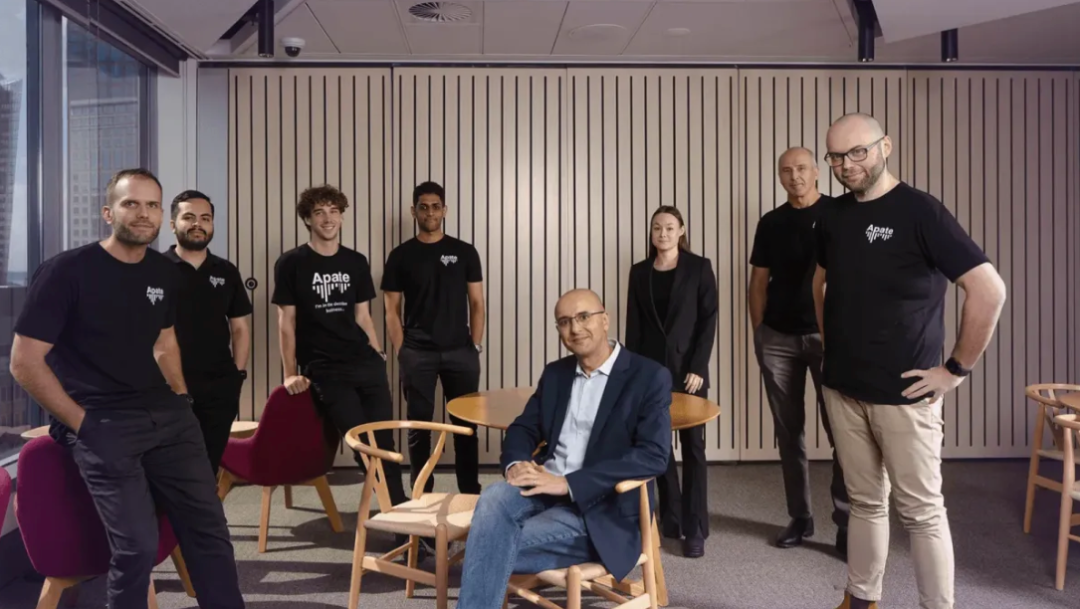
44 minutes on a picnic turned into a guardianship that took a total of 17 years.
If there is one thing in this world that I hate to the core, it must be fraud.
I believe that many people think the same way as me.
But now, AI seems to be changing something that was particularly unfair in the past, which is the cost between doing evil and preventing evil.
Recently, I was watching a documentary about telecom fraud in northern Myanmar. I really felt that everyone was working hard to prevent ordinary people from being deceived.
But one very disgusting thing about fraud is that its cost structure is naturally beneficial to scammers.
For example, a liar can call hundreds of people a day. It doesn't matter even if all the first few hundred people hang up, because this is a gamble, but as long as one person is deceived in the end, he may make a lot of money.
But for ordinary people, you may not have been cheated a thousand times before.
Only for the thousand and first time, I happened to meet a liar who was particularly good at acting, I happened to be in a bad mood that day, and I happened to encounter my own weakness.
That may mean that your life savings will be gone.
Liars can fail countless times, but ordinary people like you and me, sadly, sometimes don’t even have the chance to fail once.
So our country, our entire society, has done countless things and has been trying to find ways to increase the vigilance of ordinary people.
Now that AI is here, scammers can use technology to reduce the cost of doing evil.
Then why can’t we use the same technology to reduce the cost of protecting others?
In August this year, Apate received US$8.15 million in seed round financing. Although they seem to be small in the entire AI wave, I will still be in awe of them. Moreover, they have really begun to have customers like banks and telecom operators who are really willing to pay.
Once goodwill can continue to operate, be copied, and be scaled up, then I think the power it generates may far exceed the ability of one person.
What a coincidence.
Just when the Apate incident became popular, a very similar thing was happening in China.
It is the AI Xiaohai that has caused a lot of noise recently.

I believe many people know this, so I will give you a brief summary.
Probably, there is a group of people who use AI to batch-generate some fair-looking boys and shout "auntie" to the camera every day.
The back and forth means that today my father is sick, tomorrow I will be bullied, and the day after tomorrow I will be short of money. Anyway, I will continue to suffer miserably.
In the end, some middle-aged and elderly women felt sorry for him and bought the high-commission products in his window. Some commissions were even as high as 55%. This was probably such a pattern.

The most outrageous thing is that there is a 79-year-old old lady who really believed in Xiao Hai on the phone. She bought a train ticket alone and ran to Shanxi to find him.
Because Xiaohai told her that they could go see the apricot blossoms and pick morels together.
But the old lady didn’t even know where to go after arriving in Shanxi.
She only knew that Xiaohai was there.
Later, the police discovered something was wrong and asked him about it. Finally, he contacted his family and took him back.
Then, just after this incident was exposed, a group of young people in China, with their magic and wisdom, decided to start using AI to fight back.
One of them was a 19-year-old college student named Xiaozhou.
He found that an old man at his friend's house had bought several items in his window because he felt sorry for Xiao Hai.
So Xiaozhou thought of a particularly interesting way, since the old man believed in Xiaohai.
Let Xiaohai tell the old man himself that he is a liar, so he also used AI to generate a 30-second video.
It's still the same Xiao Hai's face, but this time, Xiao Hai has transformed into a rich second generation living in a mansion and wearing a suit.
This is a screenshot of the Beijing News interview with Xiaozhou.

In this video, Xiaohai’s white-haired father ran over and advised him not to lie to those aunts and mothers again.
As a result, Xiaohai turned his back and said that he didn't care about those aunts at all. As long as he shouted, they would come and give money.
Finally, he kicked his father out.
After this video was posted, it actually only had a few dozen likes, but Xiaozhou’s friend showed the video to the elderly at home.
The old man who used to buy things for Xiaohai said after reading:
"Oh, why is this like this."
"I will never buy anything from him again."
Just like that, a 30-second video really made an old man change his decision.
Later, more and more young people were infected and inspired and began to join.
Some people asked Xiao Hai to go to jail, some asked Xiao Hai to smoke and drink, and others asked him to wear a gold chain and count money in a mansion.
Some people even asked Xiaohai to wear prison uniform, hold on to the iron bars of the prison, and admit to the camera that he was a liar.
This is how a wonderful AI confrontation began.
I especially like what Xiaozhou said in an interview with the Beijing News.
"Kind people should not be deceived."
Just such a simple sentence, I think, is more powerful than any grand so-called AI manifesto.
After reading these two stories, the story of Apate and Xiaozhou, I was really moved with emotion. Moreover, this perfectly demonstrated a very special change in the AI era.
In the past, if an ordinary person wanted to do a good deed, he might not be able to do it.
Now, he finally has the opportunity to use AI and technology to amplify his goodwill.
A long time ago, I wrote an article about a 17-year-old male high school student who pretended to be an AI and cured the entire B station with his replies. They are all ordinary but great people.
Every day we discuss how smart the model is, what benchmarks it has broken, and how many tasks it can complete that could only be done by humans in the past.
Of course these are important.
But I think that behind these increasingly powerful AIs, the pure kindness to people is often even more precious.
The future of AI that I most want to see is probably this.
Technology itself actually has no position.
What AI is amplifying is never just human abilities.
It is also amplifying people’s choices.
I hope that one day in the future, we can use the most advanced technology to protect the oldest and simplest kindness of mankind.
I also hope for those who are kind.
Never have to do it because of your own kindness.
And get hurt again.
Comments