
Abstract:
Nowadays, receiving and sending express delivery has become a daily routine for many people. It is convenient to receive and send express delivery, but it is inevitable that you will encounter annoying problems. You may not expect that a seemingly ordinary operation: temporarily changing the door-to-door time, or calling customer service to inquire about the whereabouts of a package, may be recorded as a "complaint order" in the back-end system of some express delivery companies, which will affect the evaluation of the courier, or even escalate to a fine.
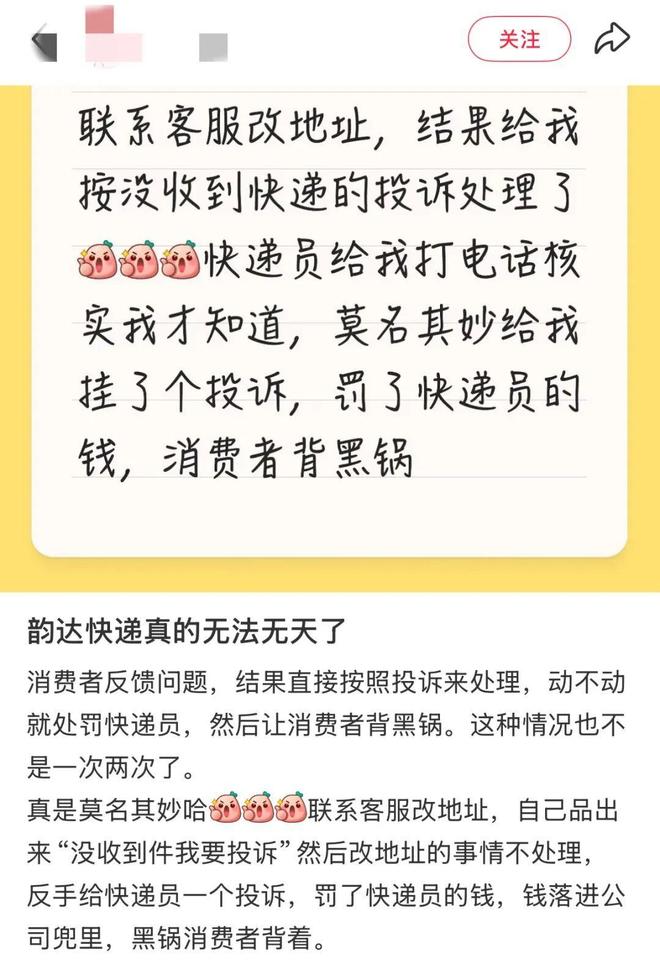
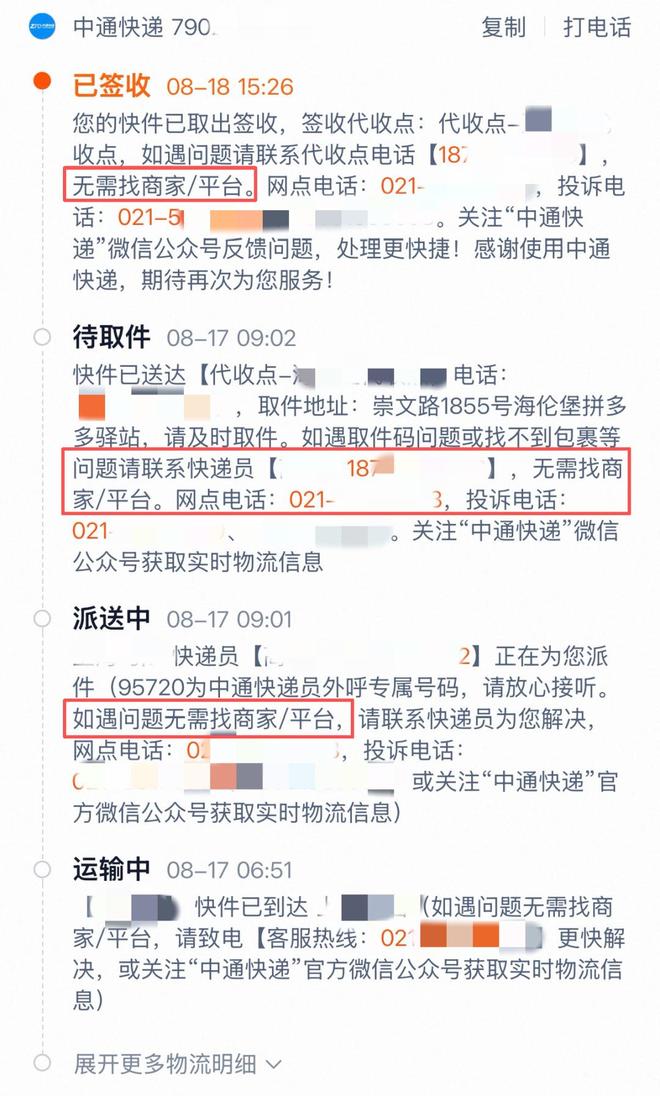
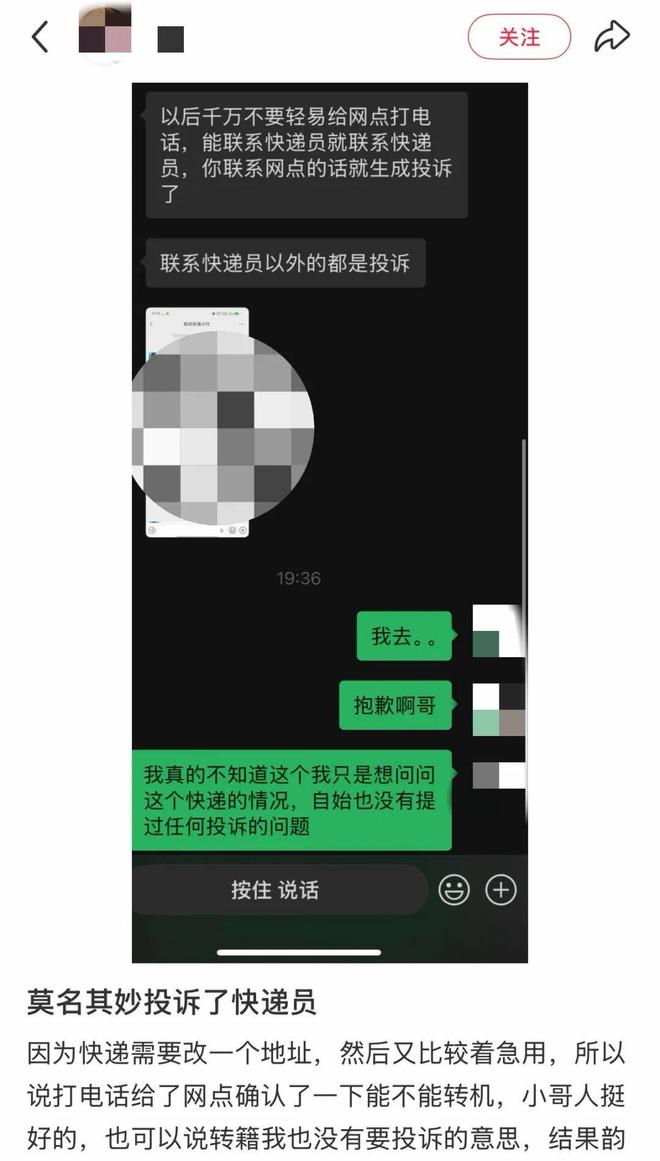
Many consumers have had similar experiences. The courier will specifically remind the customer or leave a message in the logistics details: If you have any questions, don’t call the platform in advance and contact the platform directly to resolve it privately. The reason is very practical: if the system records an incoming call, it may trigger an assessment or even a fine.
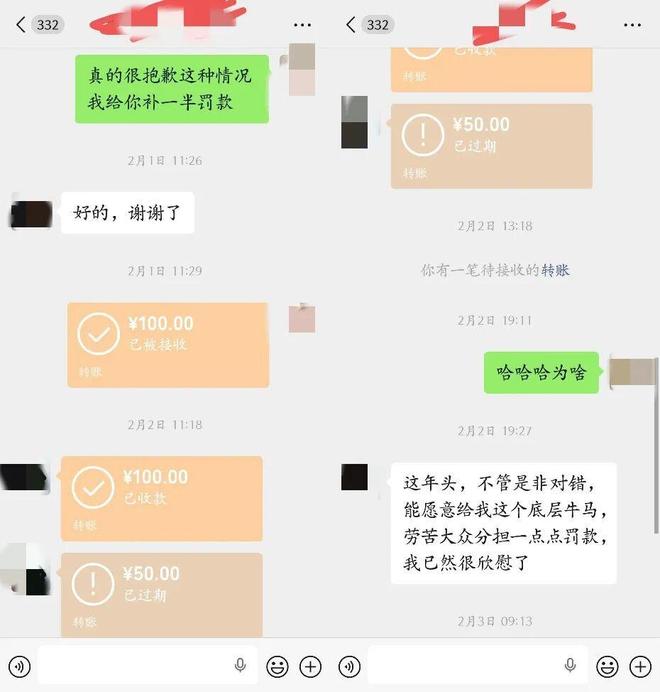
Many couriers reported that couriers cannot change the delivery time. Once users request to change the delivery time and call customer service, they may be subject to a "complaint ticket." If the user wants to cancel delivery, it is better to contact the courier directly. If a customer service call is made, it may be recorded as a "complaint ticket" in the background. In some express delivery companies, a complaint means a fine of 200 yuan or 100 yuan.
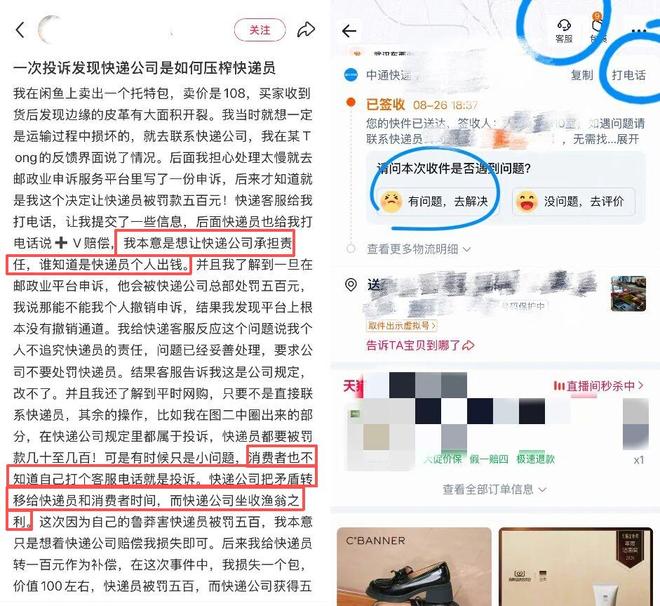
Some practitioners said that the headquarters of express delivery companies have performance appraisals for each express delivery outlet, one of which is "incoming calls." For example, if an outlet handles 10,000 express delivery items a day, if it receives 2 to 3 incoming calls on a certain day, the single express delivery fee will drop from 1.2 yuan to 1.15 yuan, resulting in a loss of 500 yuan a day. The express company deducts money from the outlets in disguise, and the outlets fine the couriers.
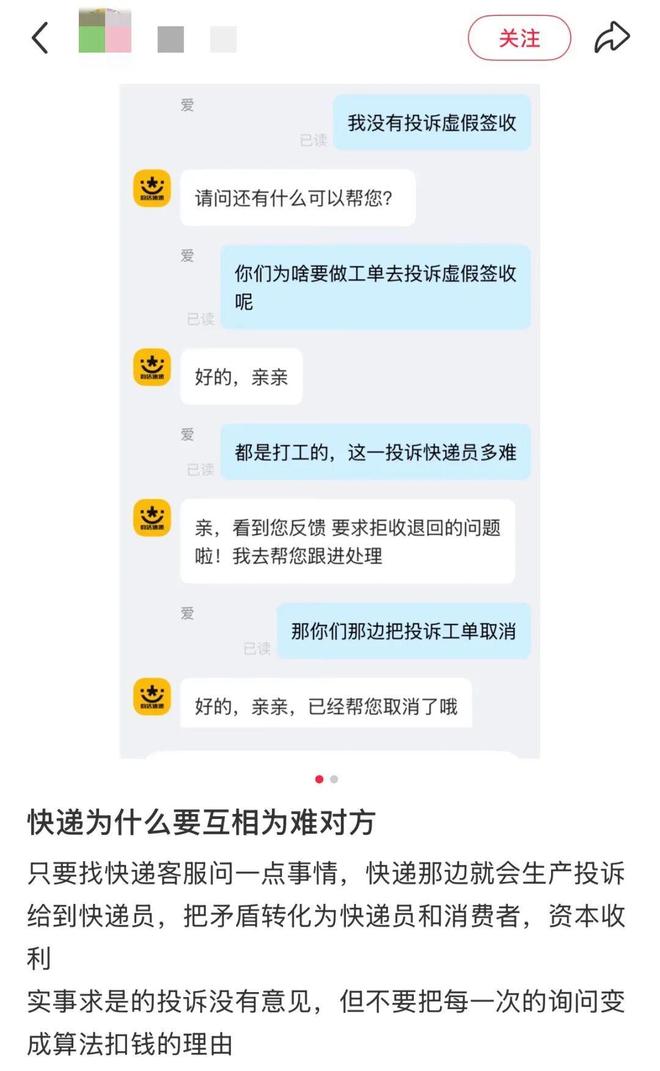
The reporter's investigation found that when consumers call the customer service of the express delivery company, even if it is a normal consultation without any intention of complaining, it will be treated as a complaint call and fed back to the relevant courier. Even if a consumer calls a second time to request to withdraw the complaint, it will be judged as a "second complaint" and the courier will be severely punished. Consumers have confirmed that similar situations exist in express delivery companies such as Yunda, YTO, and STO.
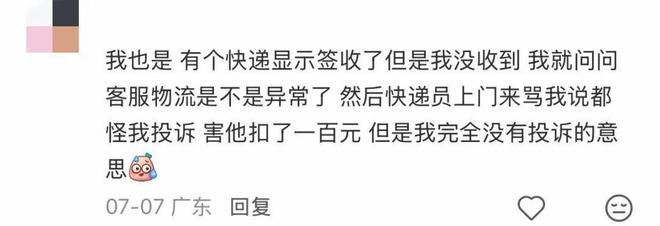
Different express delivery companies have different rules and enforcement methods, but the couriers all expressed the same concern: if the customer calls in, they may have to pay the price. After consumers learn about this situation, they may not dare to consult or complain normally, and even the problems between consumers and product sellers may turn into disharmony between couriers and consumers.
Some media previously reported that a 7-month pregnant woman in Hangzhou was frightened by the courier's negotiation and was diagnosed with a threatened abortion. According to the party's account and the platform's statement, the woman called only to cancel the order and ask questions, but the courier mistakenly thought he had been complained and was worried about being fined, so he came to the door emotionally to ask for an explanation.

The client, Ms. Liu, recalled that the courier called and asked why he was complaining about his attitude. Ms. Liu was confused at the time and replied that she had not complained. However, the courier was very excited and said with a cry that he could only earn 200 yuan a day. After two calls to complain, the 400 yuan was gone. The relevant internal work order shows that the problem category is marked as "salesperson service attitude."
Some consumers have not even called the customer service number. Mr. Tong from Beijing went through the return process after making an online purchase. However, because the seller complained to the courier company, the courier responsible for the order came to him, the consumer, to ask for an explanation. The courier knocked on the door emotionally and told Mr. Tong that the merchant had complained to him for no reason, and the company did not verify it clearly and created a "right or wrong work order."
Many consumers believe that the rule that courier companies record calls as "complaints" is a deflection of conflicts. As a result, on the one hand, couriers are inexplicably punished and have nowhere to appeal; on the other hand, consumers are well-intentioned and do not dare to call again even if they encounter problems and need to complain.
Huang Leping, a labor law expert, believes that couriers are a weak party compared to platforms and may not dare to express their willingness to protect their rights. They may be "blackballed" by the company if they raise objections.
In other words, the courier company's backend does not perform screening and lacks automated processing of manual review, simplifying complex user demands into cold data indicators. The couriers in the most vulnerable position can only be forced to accept the overbearing clause of "complaining when entering the line".
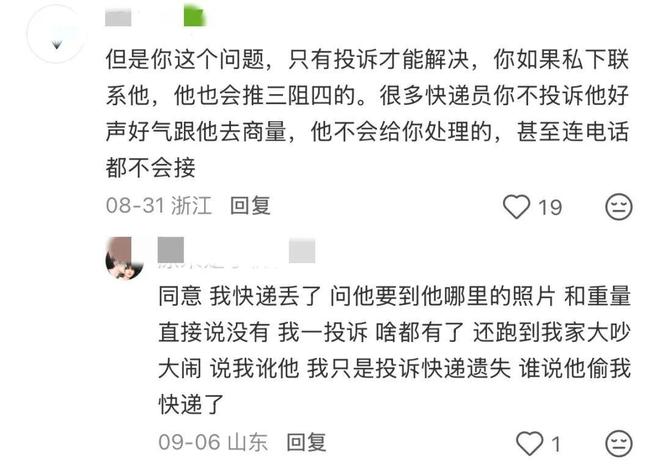
Ma Liang, a professor at Peking University School of Government, also expressed a similar view. He pointed out that such cases are common in many platform economic entities. For example, platforms such as takeout, express delivery, e-commerce, and logistics implement simple and crude "one-size-fits-all" management for employees, without necessary opportunities and channels for relief, feedback, and clarification. This approach not only fails to solve the problem, but may also intensify conflicts and create new problems. Many cases have confirmed that couriers will become angry with consumers after encountering unfair treatment. The company's approach is to make employees pay a price and make sacrifices to calm things down on the surface, but the real problem is not solved and may even encourage unhealthy tendencies. If people with evil intentions learn about this "hidden rule", they may launch malicious complaints and completely destroy the trust relationship between the service provider and the recipient.
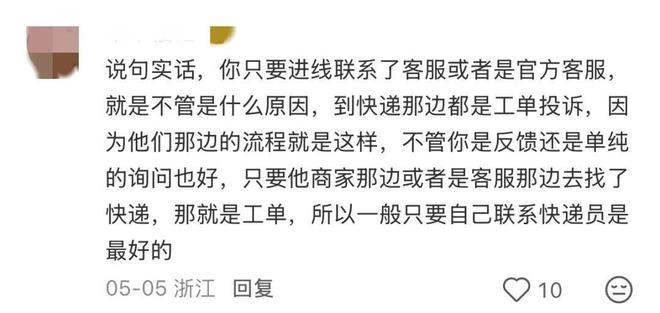
So, why are "assessment upon entry" and "administration with penalties" repeated at the end of express delivery? Industry experts pointed out that this is due to the uneven distribution of benefits and the transfer of management costs under the franchise model. The express headquarters, franchise outlets and couriers constitute three independent stakeholders.
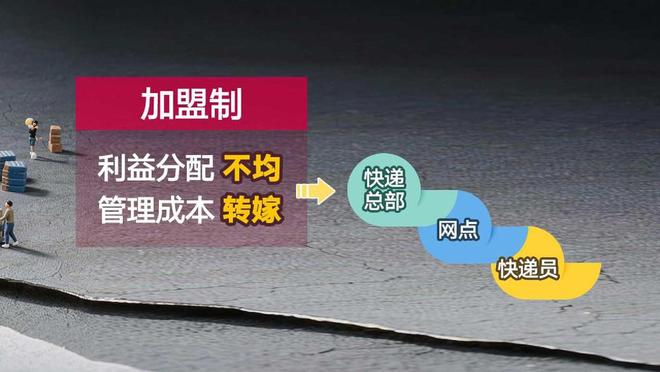
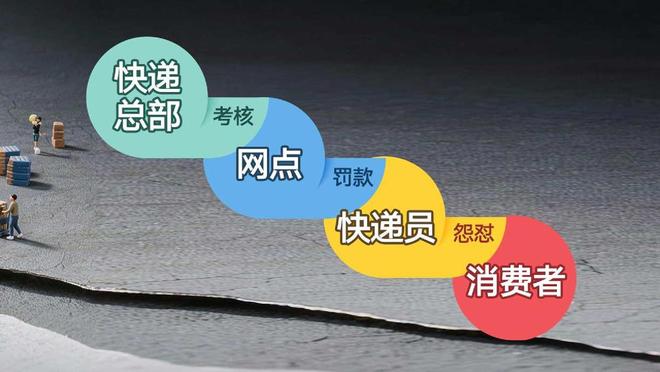
The headquarters puts pressure on the outlets through performance appraisals. The outlets’ income mainly comes from delivery fees, and they are responsible for their own profits and losses. Relatively speaking, profits are thin and the risks are high. Therefore, fines are used as a low-cost management tool and are added to the couriers layer by layer.
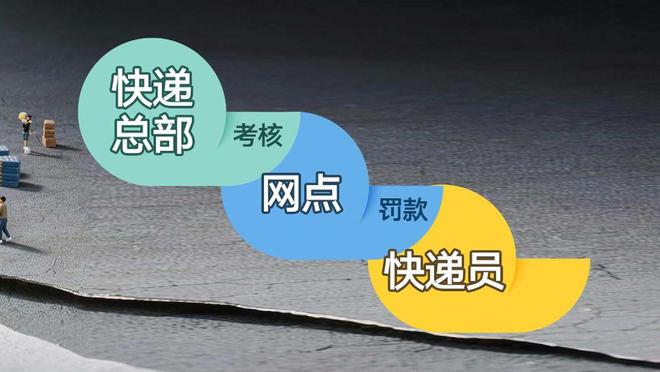
In this structure, fines are not a means to correct wrongs, but evolve into a revenue generation method or a risk hedging mechanism. At the same time, it also artificially creates a confrontation between consumers and couriers.
In fact, the State Post Bureau proposed at the beginning of this year to comprehensively rectify "involution" competition, balance the distribution of interests among corporate headquarters, franchisees, and couriers, protect the legitimate rights and interests of practitioners, and correct unreasonable corporate management behaviors such as differentiated payment of fees and "immediate punishment upon complaint".
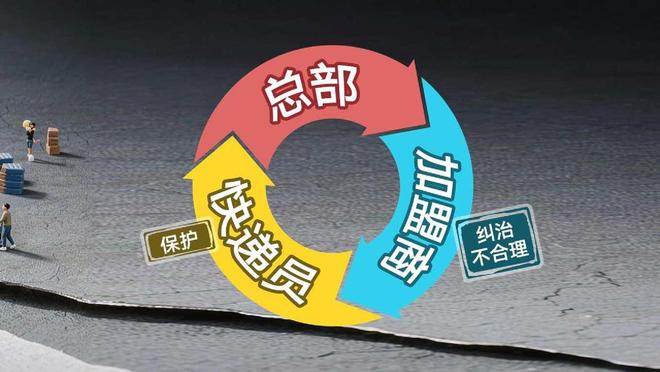
Why would companies rather take the risk of accidentally injuring innocent people and escalating conflicts than make more improvements to the system? What is the source of the problem of "lazy government" management in enterprises? If the company itself is unable or unwilling to solve such problems, what methods are there to correct them? Ma Liang, a professor at the School of Government at Peking University, analyzed that many platform companies have the power of "life and death" over their employees, and have unstable labor relations with layers of dispatch. Platform companies that are obviously in a strong position have formulated all rules for employees in a vulnerable position without providing necessary relief channels. From an enterprise perspective, this approach greatly saves labor costs and improves operating efficiency. But for practitioners, this is a "disaster", and the entire society is actually passively bearing costs that should not be borne.
It is particularly necessary for relevant companies to learn lessons from these cases and incorporate the issues into the revision of rules and the improvement of algorithms. This approach may be difficult to implement because it touches the company's own interests. In this case, the power of external supervision is very important. For example, government departments need to strengthen supervision of overlord clauses in algorithm rules and resolutely correct illegal practices. Nowadays, industries such as food delivery and express delivery are strengthening platform governance, and the fulfillment of platform corporate social responsibilities is highly valued. We can’t just shout slogans, we also need specific operations and implementation.
Comments