
Abstract:
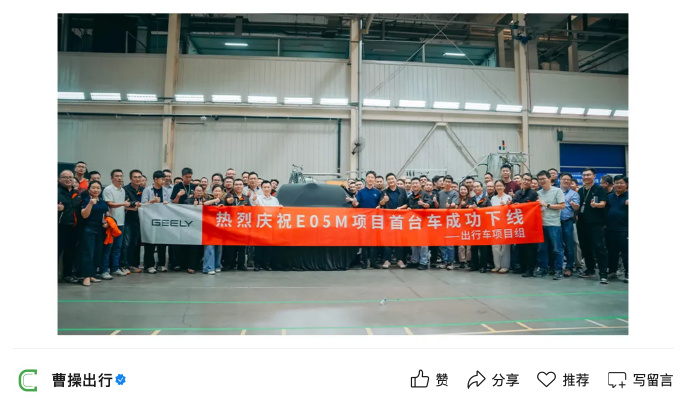
On October 20, China’s first natively developed Robotaxi engineering prototype jointly built by Cao Cao Travel and Geely Automobile and other partners has officially rolled off the production line. The project has moved from prototype vehicle development to the stage of mass production-level solution actual vehicle verification. According to the plan, the customized version of EvaCab Cao Cao will be mass-produced in 2027.
In April this year, Geely Automobile released the Robotaxi prototype Eva Cab at the Beijing Auto Show. This model is developed around L4 level autonomous driving and unmanned operation requirements. It adopts Geely's global AI 2.0 technology system and is planned to be equipped with a 2160-line digital lidar with a maximum detection range of 600 meters and a single-second imaging point of 25.92 million, providing hardware support for the vehicle to sense the surrounding environment.
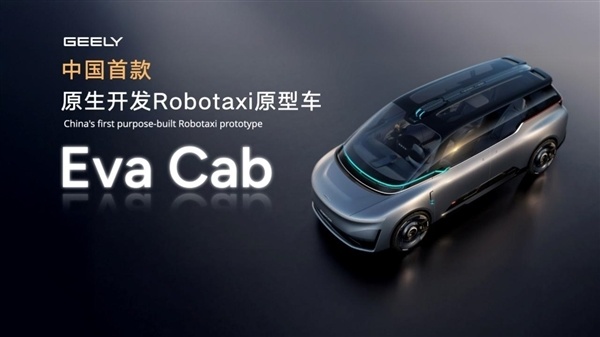
Different from the plan of retrofitting existing passenger vehicles, the natively developed Robotaxi develops the entire vehicle around the needs of unmanned operations from the product design stage. After the engineering prototype rolls off the assembly line, the project will further carry out mass production-level solution verification, focusing on vehicle architecture, cockpit experience, safety assurance and operation processes.
Gong Xin, CEO of Caocao Travel, said that the rollout of this prototype is an important step in promoting the coordinated development of "intelligent customized vehicles, intelligent driving technology, and intelligent operations." According to previously disclosed information, Caocao Travel will combine travel operation experience to promote model development with partners such as Geely Automobile.
As the engineering prototype enters the actual vehicle verification stage, EvaCab is one step closer to mass production. However, for Robotaxi to achieve large-scale commercial operation, it still needs to test the performance of the autonomous driving system in complex road environments, as well as vehicle safety, operational efficiency and cost control capabilities. The customized version is planned to be mass-produced in 2027, and subsequent progress is still worthy of attention.
Comments