
Abstract:
Anthropic said that its latest AI model Claude Mythos Preview has significantly shortened the software development time required to deploy artificial intelligence models to AMD GPU platforms. According to the company, in the past this work usually took 6 to 12 months and required dozens of engineers to complete, but Claude Mythos can complete the critical software adaptation work in about three days with almost no manual intervention. This development may weaken the competitive barriers that Nvidia has long established based on the CUDA software ecosystem.
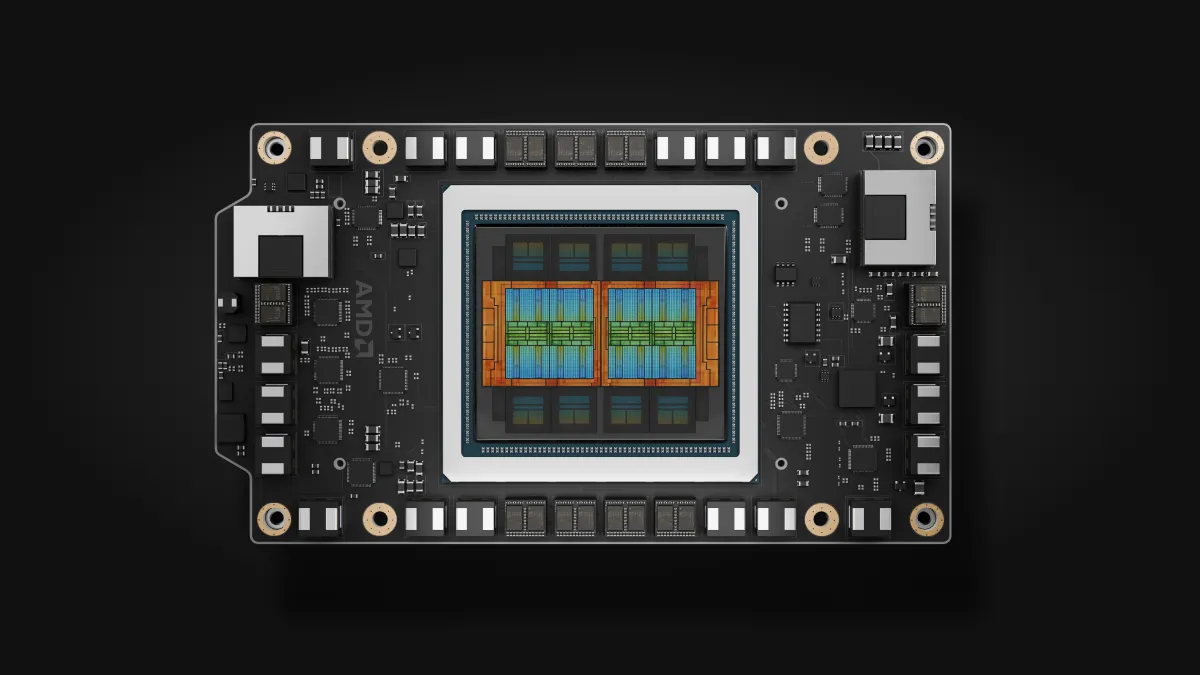
Anthropic co-founder and chief computing officer Tom Brown introduced the results during the company's IPO roadshow to investors. He said that Claude Mythos can automatically port or write almost 100% of the GPU kernel code, enabling Claude models to run on the AMD Instinct MI355X accelerator. Previously, similar hardware adaptation work often required a team of dozens of engineers and took several months.
However, the three days disclosed by Anthropic have a clear scope of application, which does not mean that the entire model deployment, production environment verification and performance optimization process can be completed within three days. The footnote of the roadshow material points out that this achievement is specifically aimed at an Anthropic model completing the prompt word processing (Prefill) task on the AMD MI355X GPU and reaching a performance level that is of practical use value. Anthropic did not clearly state whether the model generation answer stage (Decode) is also included.
The GPU core is an important connection between artificial intelligence software and underlying hardware. It is responsible for converting model calculation tasks into instructions that can be efficiently executed on a specific processor. There are differences in GPU architecture, memory systems and computing units from different manufacturers, so the same AI model often needs to write or adjust the underlying code for different hardware platforms. This type of work has long been an important source of advantages for NVIDIA's CUDA ecosystem.
NVIDIA's CUDA platform has been developed for nearly 20 years and has mature compilers, development tools, optimization libraries and a large developer community. AMD has its own ROCm software platform and supports related computing tasks through the HIP programming layer. In order to help developers migrate CUDA code to the AMD platform, AMD has previously launched the HIPify tool. However, code conversion does not mean that all programs can directly obtain ideal performance. Developers usually still need to do a lot of debugging and optimization.
Advances in AI programming tools are changing this situation. Anush Elangovan, AMD's vice president of artificial intelligence software, said in April this year that Claude has an advantage over HIPify in code conversion because it has built-in web search capabilities and can obtain more technical information during the processing. AMD has previously demonstrated research results using AI agents to automatically write GPU kernels, but early systems were still inferior to human experts in some tests.
Anthropic doesn’t rely solely on Nvidia GPUs to run its models. The company has simultaneously used different types of accelerators such as NVIDIA and AMD GPUs, Google TPU, and Amazon AWS Trainium, and unified managed these hardware resources into a flexibly scheduled computing resource pool. Tom Brown previously called the company's early decision to adopt a multi-chip platform strategy an unusual choice. This strategy may become more attractive as software adaptation time is significantly reduced.
Anthropic started using AMD GPUs for the first time this year and reached a cooperation agreement with AMD involving up to 2 gigawatts of computing power. According to information previously disclosed by both parties, AMD is also using Claude to optimize the workload of the Instinct series GPUs and accelerate the development of the ROCm software platform. AMD believes that AI's automatic generation of kernel code is expected to further lower the technical threshold for customers to adopt its accelerators.
In fact, AMD management has repeatedly talked about the impact of AI programming tools on the GPU software ecosystem. AMD CEO Su Zifeng said in September last year that a large amount of AI software was originally developed around CUDA, but a considerable part of the code can now be converted into a form suitable for AMD platforms through software tools. In July this year, AMD Senior Vice President Vamsi Boppana also said that AI is expected to eliminate the remaining software barriers when adopting AMD GPUs.
At the AMD Advancing AI event held in July this year, Philippe Tillet of OpenAI also talked about the role of AI agents in GPU core development. He said that after OpenAI obtained the AMD Helios rack, it took only a few days for an engineer to confirm that the system was functioning properly, noting that AI agents are gradually taking on some of the work that used to be the responsibility of kernel engineers. AMD also revealed that an engineer asked Claude to help start up the MI355X rack and keep the system running over the weekend.
The data disclosed by Anthropic has attracted attention because the relevant results are no longer just demonstrations or publicity from AMD itself. As an AI company that actually buys and uses chips, Anthropic has disclosed to investors changes over time in its own engineering practices. Its IPO prospectus document also mentioned that with the help of Claude, the company has been able to introduce new chip platforms into the production environment with much lower engineering investment than in the past, although the document did not give a specific three-day figure.
However, the improvement in adaptation speed does not directly prove that AMD GPU has matched Nvidia in performance. Anthropic did not announce the actual running speed of Claude on the MI355X, nor did it provide performance comparison data with similar hardware from Nvidia. The report also pointed out that although the chart displayed by the company marked the adaptation progress of both solutions as close to 100%, it did not explain in detail what work content this ratio corresponds to.
Nvidia CEO Jensen Huang has previously stated that the company itself also uses AI to assist in the development of GPU cores, and believes that no one understands its own chip architecture better than Nvidia, so Nvidia can fully utilize the hardware performance. Regarding the adoption of other accelerators by companies such as Anthropic, he once called Anthropic a special case rather than an industry trend.
At the same time, AI automatic writing of GPU kernels also faces new resource bottlenecks. An analysis published by SemiAnalysis in July this year believed that software development costs are decreasing, but the code generated by AI agents still needs to be tested and verified on actual GPUs. Each agent requires corresponding GPU resources to run tests, and AMD's internal GPU resources for such development are insufficient, which may become a constraint for further expansion of applications.
Overall, the significance of Claude Mythos' demonstration is not only that it shortens a specific software development process, but also that AI may change the cost of software migration between different GPU platforms. The advantages of CUDA will not disappear immediately. Its mature tool chain, developer ecosystem and long-term accumulated performance optimization experience are still valuable. However, if AI can more and more automatically complete code transplantation, kernel writing and hardware adaptation, customers may be less dependent on specific software ecosystems when choosing GPUs. Competitors such as AMD will also have the opportunity to win over customers who originally mainly used Nvidia platforms with lower migration costs.
Comments