
Abstract:
On November 16, according to the Financial Times, Jensen Huang resigned from Nvidia, casting a shadow over companies developing "open" AI models, shifting the balance of industry power back towards "closed" cutting-edge model laboratories such as Anthropic and OpenAI.
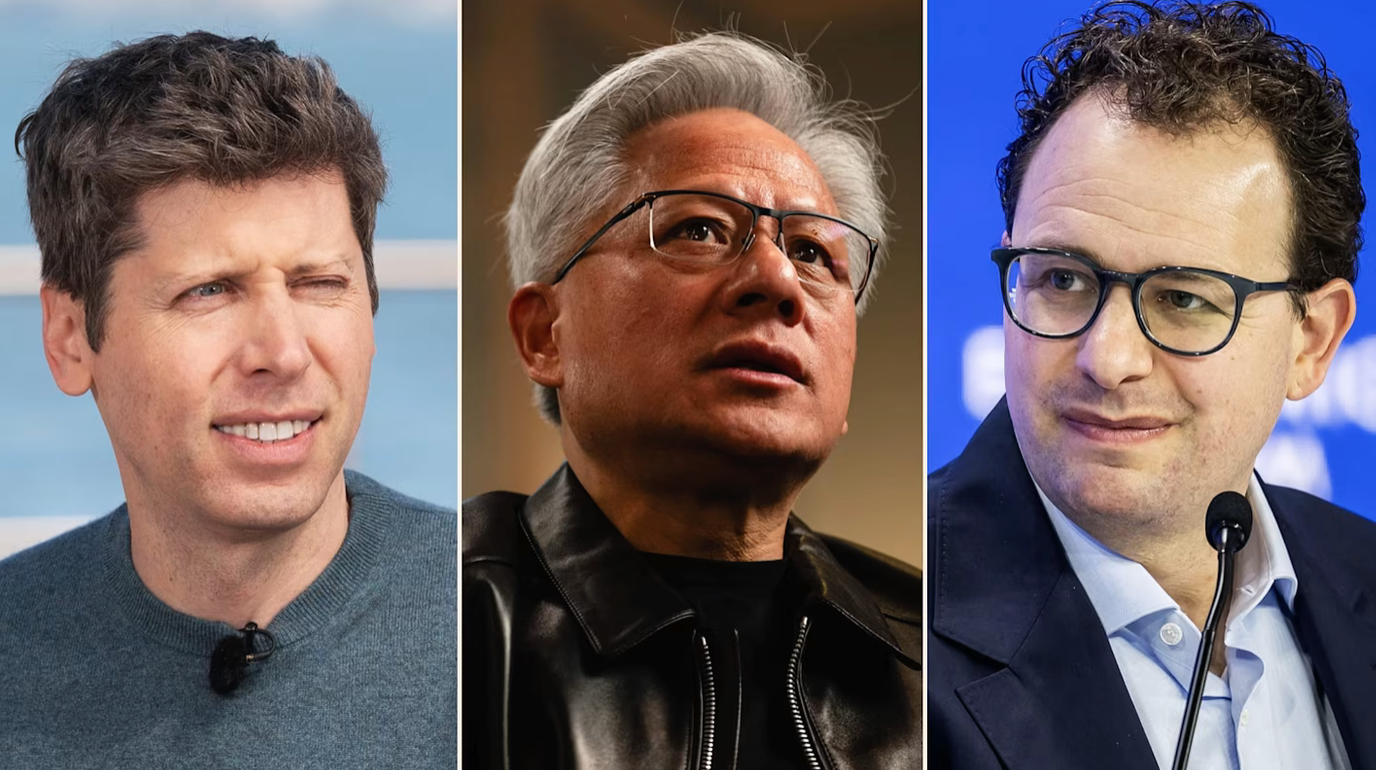
Huang Jen-Hsun's departure will benefit closed-source model developers
As the former head of Nvidia, Huang Jenxun has used Nvidia's balance sheet to build a broad AI ecosystem, including investing in and acquiring startups involved in the development of open source and open weight models. Users can customize these models and run them on their own hardware.
Huang Renxun has been a strong advocate of promoting this type of model. He has lobbied Washington against restrictions on the open model built by China while pushing the United States to develop its own alternatives.
This summer, he wrote in his first post on
The open model loses its flag bearer
Jensen Huang’s ignominious departure from Nvidia deprives the U.S. open model field of its most outspoken and influential supporter.
“I think Jensen Huang has benefited the most financially (from promoting open models), and he is also personally committed to promoting diversification at the model level,” said a venture capitalist who has co-invested in AI startups with NVIDIA. “Without him, and NVIDIA becoming less generous in investing, we may end up facing a world with high concentration of model providers.”
It's unclear whether Nvidia will continue its rapid pace of trading under new leadership. The company had been expected to participate in or lead four startup deals currently being discussed: investments in Thinking Machines Lab and Groq, a potential collaboration with Reflection AI, and the $12.9 billion acquisition of open model platform Hugging Face.
Musk posted on X on Saturday: "Huang Renxun has done an outstanding job in promoting supply chain construction at NVIDIA, but many of the transactions are only verbal agreements between him and the other party, rather than formal written contracts. Without Huang Renxun, at least some key transactions may fall through."
Huang described these investments as a way to cultivate U.S. dominance in this technology. But others point out that there are more direct business motives behind these investments: These transactions help Nvidia expand its customer base while also building a line of defense to check the power of OpenAI and Anthropic.
"In a sense, Huang Renxun's departure from NVIDIA is a bad thing for the entire industry. But from another perspective, Huang Renxun is actually a competitor of the cutting-edge model laboratory, because he hopes that the model will become commoditized and ubiquitous, so that he can continue to occupy the core position in the value chain." An executive from a top Silicon Valley AI company said.
Ten years ago, Huang Renxun delivered Nvidia’s first “AI supercomputer” to OpenAI, setting the then-nascent startup on a development path that eventually led to ChatGPT.
At the time, OpenAI’s leadership team included Musk, Sam Altman and Dario Amodei. Huang Jen-Hsun’s relationship with these three people supported the AI craze, helped the rise of OpenAI, and also promoted the development of SpaceX and Anthropic founded by Musk and Amodei respectively. Nvidia invested $30 billion in OpenAI earlier this year and committed more than $100 billion to support the lab's flagship data center.
Model companies get rid of dependence on NVIDIA
However, there are also frictions between the two sides. The founders of Frontier Model Labs were dissatisfied with their dependence on Nvidia and tried to reduce that dependence by establishing other partnerships and investing in the development of their own chips.
“This is why you see every laboratory and cutting-edge company investing in its own chip project: it’s all because Nvidia’s profit margin is too high,” said an executive at an AI laboratory. “There is reason to believe that Huang Renxun’s departure will concentrate computing power more in the hands of cutting-edge laboratories and hyperscale cloud service providers. This is good for the laboratory.”
OpenAI worked with Broadcom to develop its own custom chip, Jalapeño. OpenAI CFO Sarah Friar has often spoken about her desire to ensure the company doesn't "put its eggs in one basket" or rely on a single chip supplier.
Anthropic has taken longer than its rivals to diversify its AI infrastructure suppliers, after gaining early support from Google and Amazon, allowing it to use their chips. Although Anthropic revealed plans to accept a $10 billion investment from Nvidia at the same time as the IPO, the company's executives still strongly emphasized during the IPO roadshow that its AI model can be switched to rival AMD's chips within days. This process usually takes several months.
Closed source model benefits
At an event last month, when Huang Renxun was promoting OpenShell, the open source security platform for AI agents independently developed by Nvidia, he insinuated the technical secrecy practices of two cutting-edge model laboratories.
“How can an opaque intelligent system be encapsulated in an opaque box and locked up by an opaque company? This model is obviously unsustainable,” he said.
In the short term, these closed-source model developers may also gain practical benefits from Nvidia's crisis. This week, Anthropic will launch one of the largest IPOs in history, aiming to raise about $100 billion in total. And OpenAI is in the final stages of raising $20 billion in funding. Investors pulling out of the chipmaker may divert funds to the labs, industry insiders said.
"I don't think open weight models will disappear...but losing Huang Jensen, the largest financial supporter and advocate, will slow down their progress. Moreover, this will not harm Anthropic's IPO." An industry insider said.
Some people in and around Nvidia insist that the company's support for open systems will continue despite Huang's departure.
Thomas Wolf, co-founder of the open source AI platform Hugging Face, said: "If open models had only one supporter, this week would mean the end of their era. But in fact, open models have millions of developers, including many supporters within NVIDIA."
Comments