
Abstract:
According to "LatePost", Goldman Sachs released a report two months ago stating that Ulanqab has emerged as the largest and fastest-growing AI computing power cluster in the Asia-Pacific region. This northern border town with a population of only 1.5 million, originally famous for potatoes, volcanoes and astronauts, is becoming the frontline of the AI computing power competition.
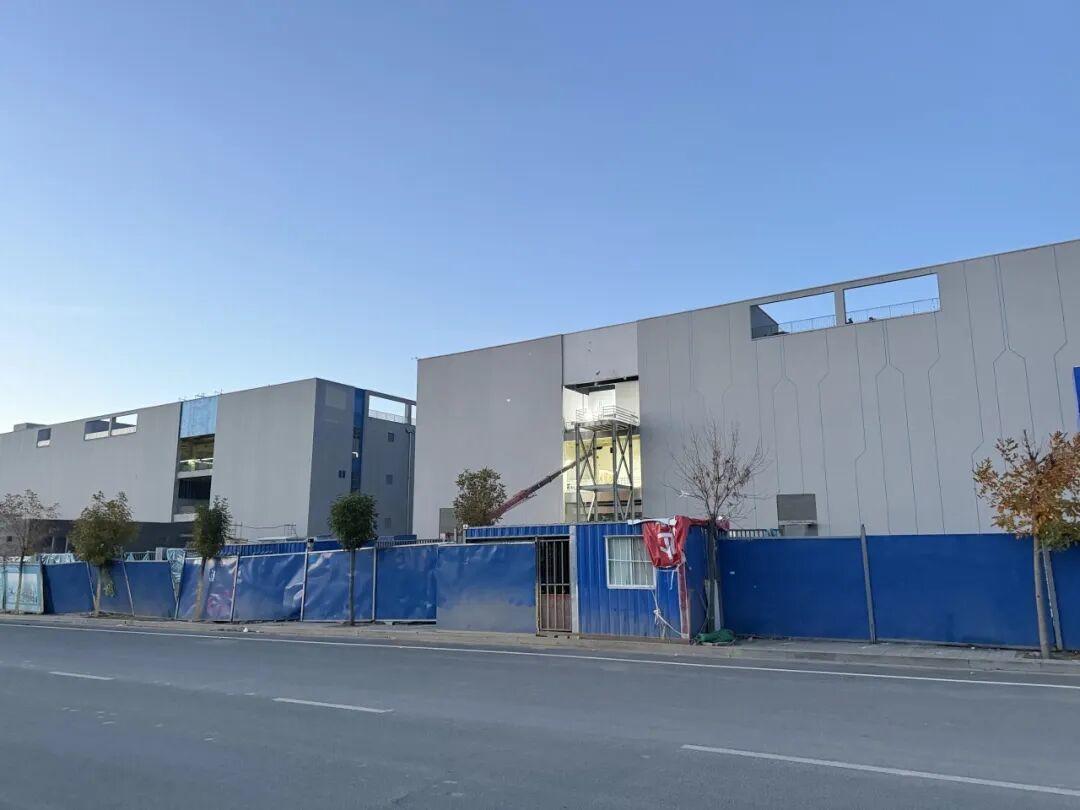
According to reports, the Ulanqab-Chahar High-tech Zone has an area equivalent to nine Shanghai Disney parks. There are 22 data centers under construction in the Bayin area alone. Companies such as CICC Data, China United, Huawei, Kuaishou, and Century Internet are building new computing bases here. Nearly 30,000 blue-collar workers with a daily salary of more than 300 yuan are intensively constructing at various construction sites, and a data center must be built every three months. A single park covers an area of 200 acres, with an investment of more than 3 billion yuan. The power consumption is equivalent to that of 1.45 million households. There are more than 5,000 cabinets over two meters high. Each cabinet houses dozens of GPUs worth more than 500,000 yuan. The wires connecting the GPUs are tens of kilometers long, and the optical fiber length is more than 1,000 kilometers. It also needs to install nearly a thousand air conditioners and use more than 2,000 tons of copper sheets for heat dissipation.
The report pointed out that Ulanqab has turned its windy, cold, and sunny natural conditions into a computing power advantage. Since this year, DeepSeek has been recruiting local operation and maintenance engineers with a monthly salary of 30,000 yuan, and national media have rushed to report on it, bringing this small border town into the spotlight. However, the report also mentioned that the data center's contribution to local employment and tax revenue is limited - in 2025, the data center will only consume 5% of the city's electricity consumption, and the computing power industry will generate 368 million yuan in tax revenue, which is far less than the 768 million yuan in tax revenue and about 18,000 jobs in the ferroalloy industry.
Comments