
Abstract:
Apple is further strengthening the privacy and security protection of the Mac platform. With the release of the latest beta version of macOS 27.3, Apple announced important adjustments to "Full Disk Access" and related device control interfaces, aiming to give users a clearer understanding of what data applications, especially AI agent applications, can access and how much control they have.
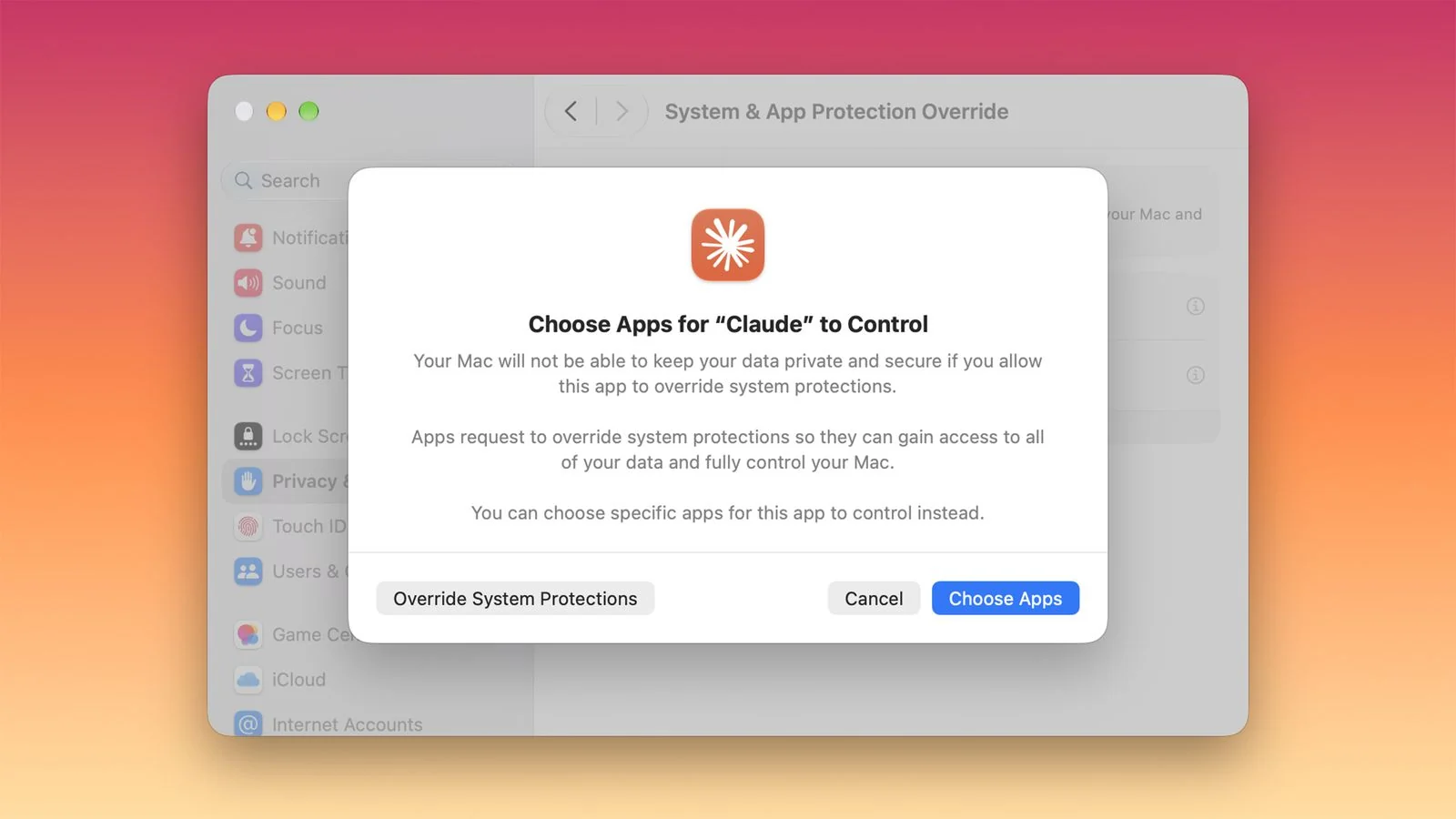
According to the latest instructions issued by Apple to developers, this update will redesign the existing permission system. The originally unified "Device Control and Data Access" settings will be split into two more clear options, namely "System & App Protection Override" and "Accessibility" to help users understand authorization content more intuitively.
At the same time, Apple has also simplified the permission granting process. In the future, users will only need to select the corresponding program from the application list to complete authorization, and will no longer need to use multiple different methods to configure permissions. Apple said this move is designed to reduce the complexity of permission management while improving overall transparency.
Under the new permissions model, Apple will encourage users to grant apps only the permissions necessary to complete specific tasks. For example, with full disk access, users can allow an app to access only specified folders, rather than giving it access to the entire system storage. System control permissions will also be limited to the necessary scope as much as possible.
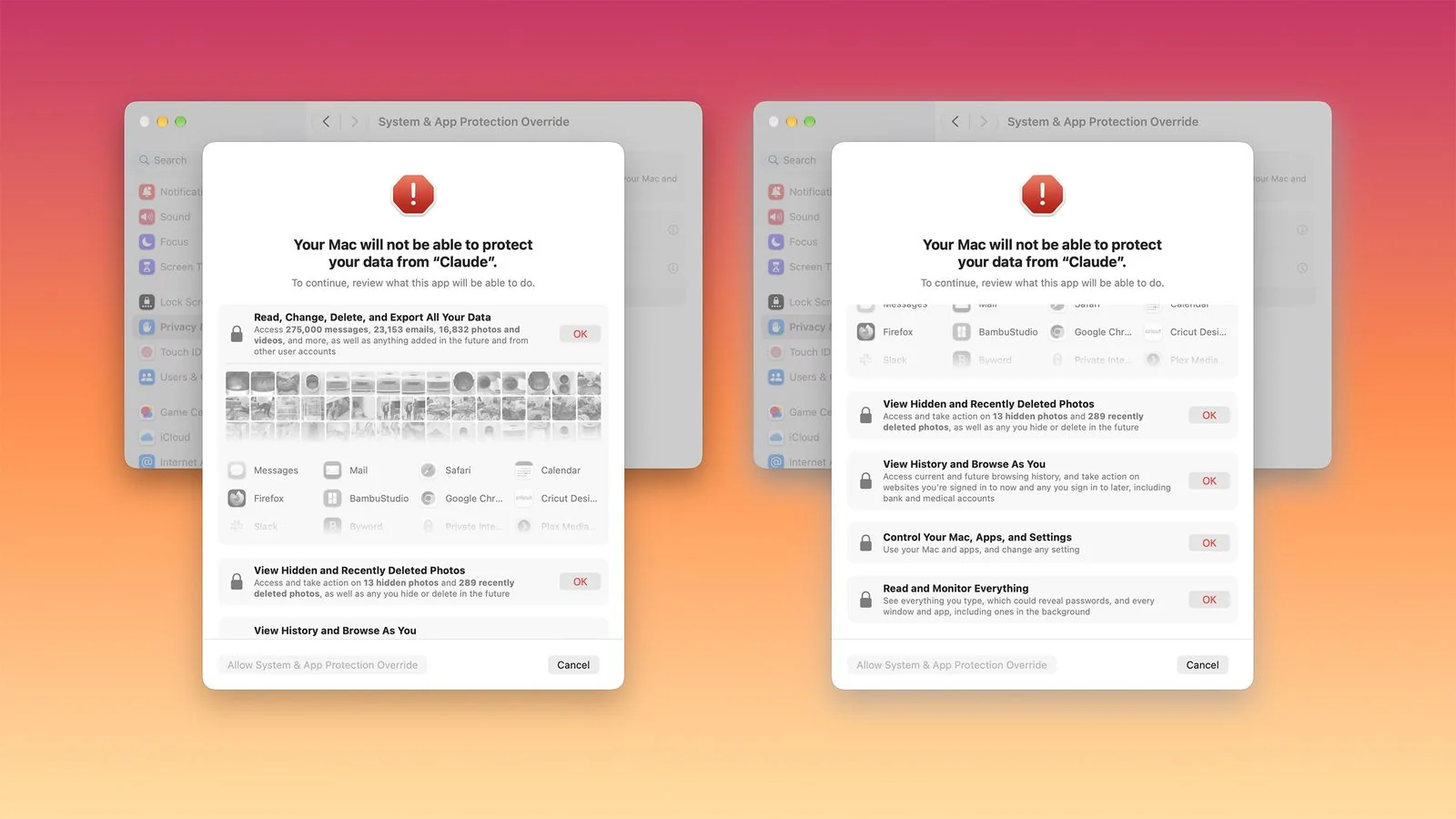
In order to enhance users’ right to know, macOS 27.3 will also explain in more detail during the authorization process what data the application will be able to access and what system content it can control. Apple hopes to help users fully understand potential risks before authorizing through a clearer prompt mechanism.
In addition, the new system adds a "ask every time" mechanism. Users can set some sensitive permissions to on-demand request mode instead of being permanently open after authorization once. In this way, the application needs to ask for user consent again every time it needs to access relevant data, thus reducing the security risks caused by long-term permissions.
macOS 27.3 also introduces visual transparency prompts. When an application controls other applications through the "System and Application Protection Override" permission, the system will display a special indicator in the Mac menu bar, allowing users to know in real time whether the device is currently being controlled by a third-party application.
Apple also reminds developers that they need to adjust the application boot process for the new permission structure and ensure that the software can run normally with only limited folder access permissions or limited application control permissions to avoid affecting the user experience.
For software that uses full disk access permissions to perform backup tasks, as well as applications that rely on accessibility permissions to achieve accessibility services, Apple stated that developers can apply for special authorization qualifications so that newly installed users can still obtain an experience similar to previous versions in the macOS 27.3 environment.
Apple also emphasized that installed apps will not be immediately affected. Existing programs can still run in the same way after upgrading the system, and the permissions previously granted by users will continue to be valid. The new permission mechanism is mainly aimed at new permission application scenarios in the future, and relevant developer qualification certification details will be announced later.
In fact, Apple announced as early as last month that it would adjust the full disk access permissions on the Mac platform. The company pointed out at the time that with the rapid development of AI agent technology, some developers were using this permission in ways that may pose security risks. Once full disk access is granted, the application can theoretically access user files, emails, message records, browsing history, and a large amount of other sensitive data, posing a risk of privacy leaks.
Industry insiders believe that as AI agents gradually become able to perform complex tasks on behalf of users, their demand for system permissions is also increasing. This time, Apple aims to strike a balance between the convenience of AI functions and user privacy and security by refining the scope of authorization, strengthening transparency prompts, and introducing stricter control mechanisms.
As subsequent versions of macOS 27.3 continue to improve, Mac users will be able to manage application permissions more granularly in the future and have a clearer understanding of the actual scope of access to system and personal data by AI applications.
Comments