
Abstract:
Recently, some users discovered that Microsoft Windows 11 may have an unexplained network restriction during the initial system setup phase. Although the device has successfully connected to the Internet, if it is connected to a network environment that only supports IPv6 and does not provide IPv4 at all, the out-of-box setup process (OOBE) of Windows 11 may still not be completed normally.
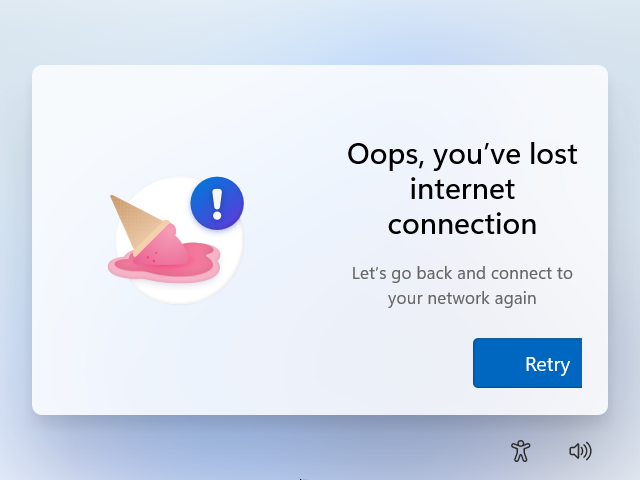
This issue was originally raised by several X platform users, including well-known Windows enthusiast Bob Pony. Tests show that in a network that only has IPv6 connection capabilities and no IPv4 support, Windows 11 can recognize that the device is connected to the Internet and displays "Connected" on the network status interface. However, when the user tries to continue system settings, they will receive an "Internet connection has been lost" error message, causing the installation process to fail.
Subsequently, Bob Pony further verified this phenomenon. He said that this problem not only appears in the public version, but can also be reproduced in the latest Windows 11 Insider preview version. This means that the phenomenon is not limited to an older version of the system, but may still exist in Microsoft's current development version.
IPv6 is a new generation Internet protocol designed to solve the problem of IPv4 address resource exhaustion. As enterprises and operators gradually upgrade network infrastructure, pure IPv6 network environments are becoming more and more common. Therefore, the compatibility issues of Windows 11 in such environments have caused some users to pay attention to future network support capabilities.
It is worth noting that Microsoft has been working hard to improve Windows' support for modern network environments in recent years. In the Windows 11 optional preview update KB5127936 released in October this year, Microsoft introduced IPv6 CLAT (Customer-side Translator) function support for Wi‑Fi and Ethernet interfaces. This feature is based on the 464XLAT conversion mechanism, which allows applications and services that still rely on IPv4 to continue to run in pure IPv6 networks, thus improving the compatibility of old software in new network environments.
Through this mechanism, programs that originally require IPv4 connections can communicate normally without the underlying network natively supporting IPv4, helping users and enterprises reduce compatibility issues during the transition to IPv6.
At the same time, Microsoft has previously publicly reminded users not to disable IPv6 in Windows systems. According to Microsoft's official technical documentation, IPv6 has become a core component of the Windows operating system since Windows Vista. Microsoft points out that disabling IPv6 or unbinding it from a network interface may cause some Windows components to not function properly.
For situations where network protocol priorities must be adjusted, Microsoft recommends that users adopt a configuration strategy of "prioritizing IPv4 over IPv6" instead of directly turning off the IPv6 function.
It is unclear whether Windows 11's inability to complete out-of-box setup on an IPv6-only network is a program flaw or a design limitation. Given that Microsoft has recently continued to enhance support for IPv6-related functions, it is generally believed that this is more likely to be an unfixed software compatibility issue rather than a formal networking requirement for future Windows systems.
Comments