
Abstract:
As artificial intelligence capabilities continue to improve, the cybersecurity industry is facing new challenges. Cloudflare CEO Matthew Prince recently said that the recent PHP security vulnerabilities that have triggered urgent patching of a large number of websites around the world may be just the beginning. Artificial intelligence will continue to discover more serious flaws hidden in critical software in the next few years, and the Internet may enter a long-term turbulent stage.
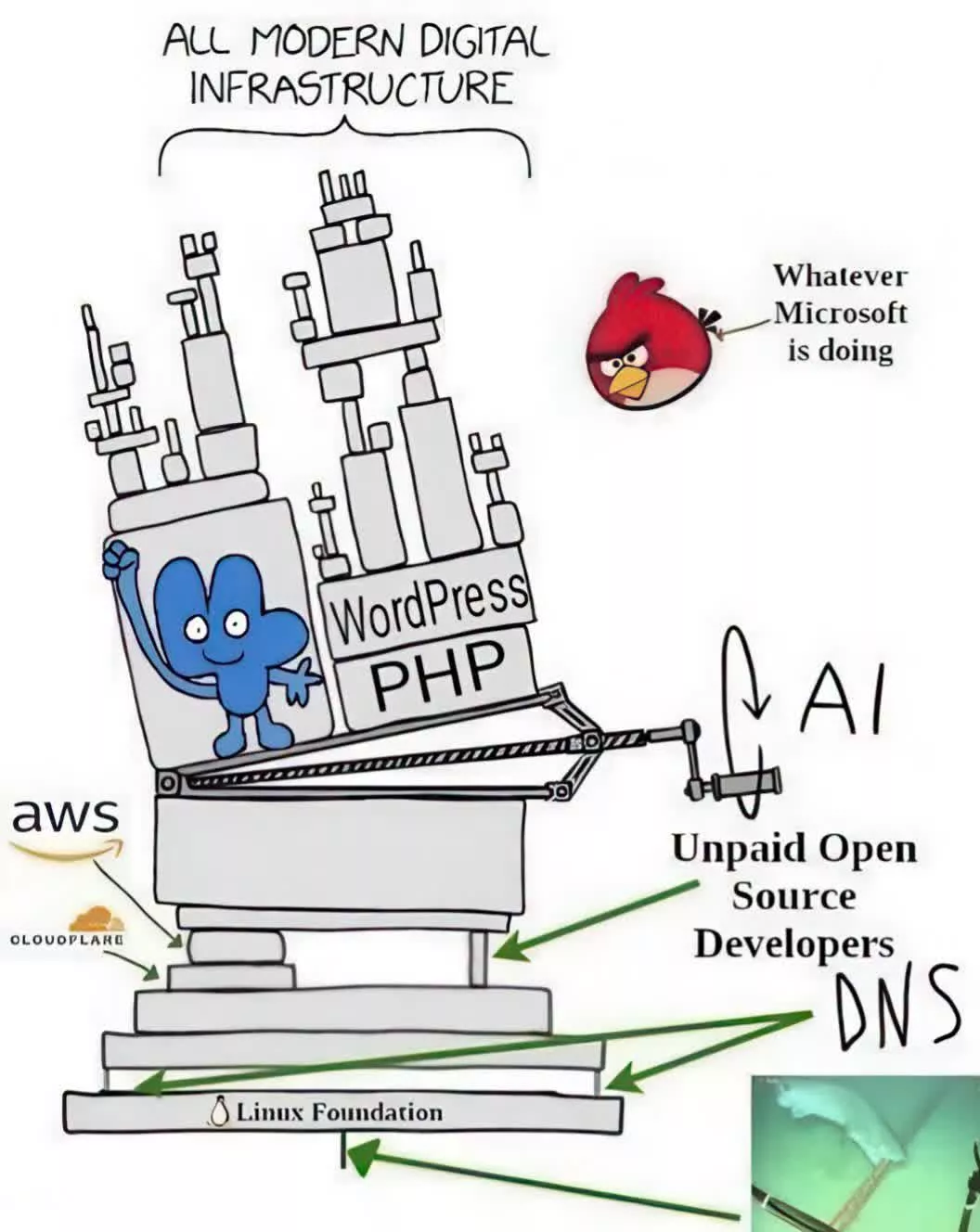
This concern stems from the recent exposure of major security vulnerabilities in PHP. As one of the most widely used network programming languages in the world, PHP is estimated to support about 70% of websites. When relevant vulnerabilities were disclosed, government websites, digital game platform GOG, and many small and medium-sized websites had to urgently deploy patches, and some institutions even closed their websites directly to avoid being attacked.
Matthew Prince revealed that Cloudflare has learned that there are many serious security vulnerabilities in other key software, but the names of related products have not been announced yet. He pointed out that the severity of these problems is comparable to that of the recently discovered PHP vulnerabilities. Once made public, it may once again trigger a global repair operation.
Prince expects similar situations to occur frequently in the future. He said that in the next few years, people may feel the emergence of new security crises almost every week, and the entire industry will continue to be in a high-pressure state to deal with major vulnerabilities.
In his view, the core reason for the change lies in the rapid development of large-scale language models. In the past, finding vulnerabilities in large and complex software codes required a lot of time and expertise for both security researchers and attackers. Discovering a vulnerability that can actually be exploited often requires weeks or even longer of analysis by a team of experts.
Today, this threshold is rapidly lowering. With artificial intelligence tools, researchers can deploy multiple AI agents simultaneously to automatically analyze code bases, completing in hours what used to take weeks. Artificial intelligence can not only help find problems, but also assist in constructing vulnerability exploitation methods, greatly shortening the time from vulnerability discovery to risk verification.
Wiz Research, the network security team involved in discovering the PHP vulnerability, said that the advanced AI model played a key role in the entire research process. With the help of these tools, researchers can quickly develop and adjust effective attack verification solutions for multiple application scenarios, making originally complex and time-consuming research work feasible.
At the same time, the Electronic Frontier Foundation (EFF) pointed out that in October this year alone, about 3% of the total number of known software vulnerabilities in the world were newly discovered that month. Research by security research organization VulnCheck also shows that with the assistance of artificial intelligence, the number of digital security vulnerabilities discovered has increased significantly.
However, experts believe this does not mean that the Internet is becoming more vulnerable. Instead, a large number of hidden vulnerabilities that have been dormant for years, even decades, are being quickly exposed. Although it will bring frequent repair pressure to enterprises, government agencies and website operators in the short term, in the long term, after these problems are discovered and repaired, the Internet infrastructure has the opportunity to become more secure.
Industry analysts believe that the current network security industry is entering a new stage. Artificial intelligence is empowering both defenders and attackers, greatly increasing the speed of vulnerability discovery, analysis, and exploitation. In the next few years, global software developers, security teams, and Internet infrastructure operators will be forced to accelerate the pace of updates and patches to cope with the emerging new security challenges in the AI era.
Comments