
Abstract:
Nvidia is planning to further expand its software business, hoping to obtain more stable recurring revenue through enterprise software licensing in addition to selling artificial intelligence chips. Nvidia CEO Jen-Hsun Huang recently talked about this strategy at a GTC event in Berlin, Germany, and said that software provided to run artificial intelligence agents can adopt a licensing model that charges based on the number of GPUs. The price is, for example, about US$2,000 per GPU per year. This figure has attracted the industry's attention to the potential scale of Nvidia's software business, but it cannot yet be regarded as a officially announced unified charging standard.

It is reported that Huang Renxun talked about the software licensing business in a related question and answer session on October 22, 2026. He said that software licensing will increasingly become an important part of Nvidia's business, especially providing the software, management tools and supporting capabilities needed to run artificial intelligence agents for computing devices in artificial intelligence factories.
The so-called artificial intelligence agent refers to an artificial intelligence system that can perform multi-step tasks according to goals and call tools, access data or run programs within the scope of authorization. Compared with traditional chatbots, such systems usually require more complex operating environments, security controls, and continuous monitoring mechanisms. If enterprises want to deploy artificial intelligence agents on a large scale in data centers, they not only need to purchase GPUs, but also need to solve problems such as software deployment, permission management, operation monitoring, and security maintenance.
NVIDIA is trying to integrate these capabilities into a more complete enterprise-level infrastructure solution. According to the example price proposed by Huang Renxun, if 5 million GPUs adopt a software license of US$2,000 per year, it can theoretically generate US$10 billion in annual revenue; if this scale is maintained for five consecutive years, the cumulative revenue will reach US$50 billion. However, this is only a scenario calculated based on assumptions and is not a revenue forecast published by Nvidia. At present, the company has not disclosed the actual number of applicable GPUs, nor confirmed which products this price will cover, when it will be implemented, and specific contract conditions.
It is worth noting that Nvidia already has a mature enterprise software subscription business. Its NVIDIA AI Enterprise platform is targeted at enterprise data centers and provides the software components required for artificial intelligence development, deployment and management. The license price announced by Nvidia shows that a one-year subscription fee for the platform is US$4,500 per GPU, including corresponding support services; a five-year subscription price is US$18,000 per GPU.
Therefore, the $2,000 per year mentioned by Huang Renxun cannot simply be understood as a price reduction for Nvidia's existing enterprise software. Since it is unclear whether the software scope, license period and service content corresponding to the two prices are the same, it is currently impossible to directly compare their actual costs. The new prices may be for different software combinations or specific artificial intelligence agent operating environments, and the specific situation remains to be further explained by Nvidia.
The reason why the software business is valued by NVIDIA is related to its desire to reduce dependence on a single hardware sale. GPU sales are usually closely related to data center construction cycles, customer purchasing plans and chip supply capabilities, while software subscriptions can generate recurring revenue while customers continue to use related products. If Nvidia can keep enterprises relying on its software platform to run and manage AI workloads over the long term, it has the opportunity to generate ongoing revenue from deployed GPUs, rather than just recognizing a one-time sales revenue when a new chip is sold.
This strategy is also related to NVIDIA’s recent advancement of the artificial intelligence agent security architecture. On October 21, 2026, NVIDIA announced the OpenShell reference architecture, aiming to provide a more complete security environment for enterprises to run artificial intelligence agents. The solution integrates NVIDIA's Vera Rubin computing infrastructure, Vera CPU and BlueField-4 data processor, and introduces a monitoring mechanism called NVIDIA Sentry.
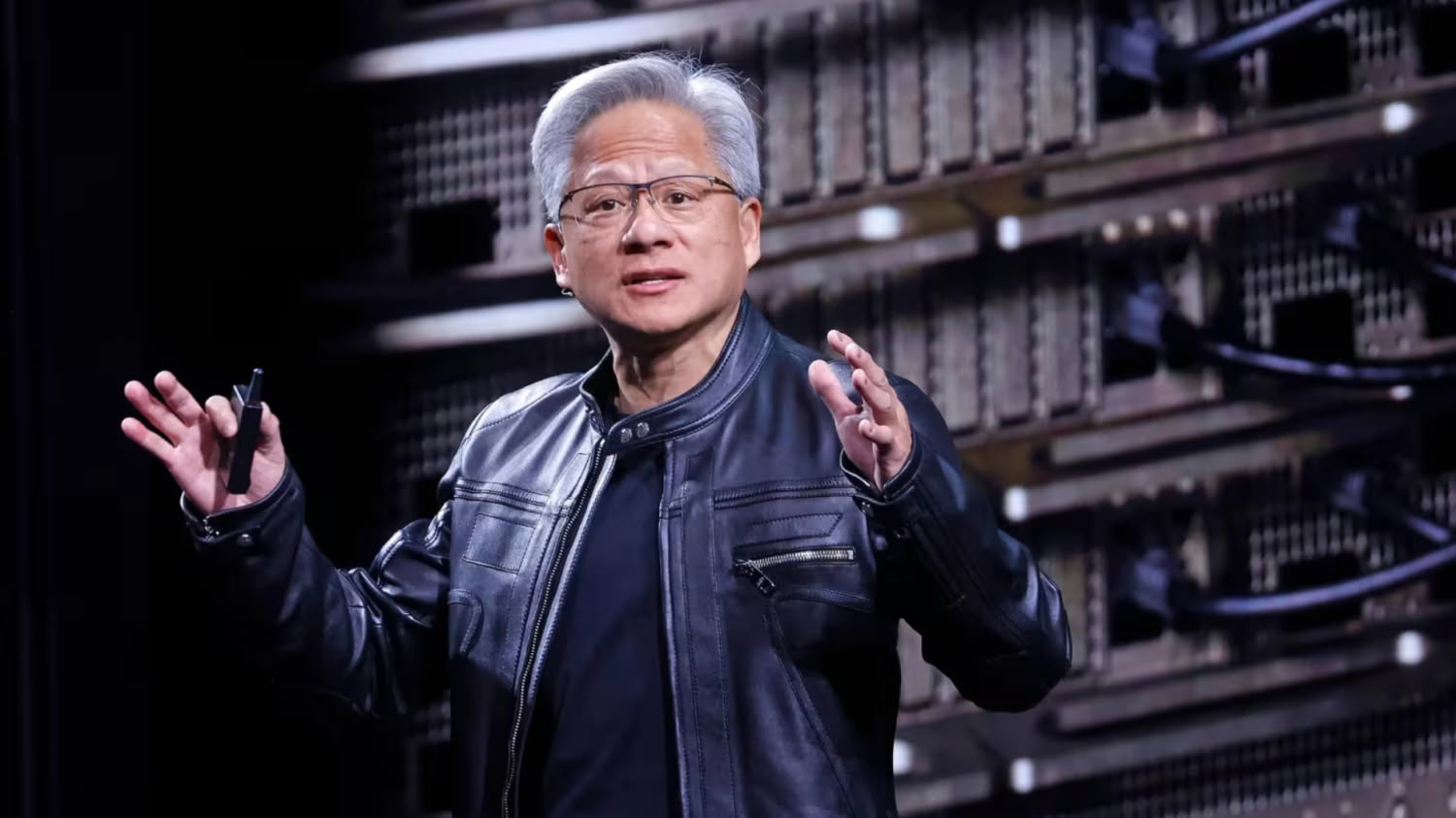
OpenShell provides a running environment for isolating artificial intelligence agents, which can limit the tools, data and system resources that the agents can access. NVIDIA Sentry is responsible for independently monitoring agent activity and taking quarantine measures if an agent attempts to cross established permission boundaries. The design idea is to place some security controls in the underlying infrastructure, rather than relying entirely on the security mechanism of the artificial intelligence model itself.
This is especially important for enterprises deploying artificial intelligence agents. Agents may be authorized to read internal files, access business systems, and even perform actions with real consequences. If permissions are improperly configured, or agents are induced by malicious input, data leakage, unauthorized operations, or other security risks can result. NVIDIA hopes to provide enterprises with more manageable deployment solutions through operating environment isolation, permission restrictions and independent monitoring.
At present, other companies have also begun to cooperate around this structure. Anthropic is integrating OpenShell and BlueField hardware with Claude Managed Agents to provide additional operational isolation and access control capabilities for enterprise agents. Salesforce has developed the Slack Admin Bridge for OpenShell, which allows administrators to review agent access requests, approve or deny permissions, and monitor related activities directly in Slack.
These collaborations show that the competition for artificial intelligence agents is gradually expanding from model performance to operating environment, security management and enterprise services. As agents begin to take on more complex tasks, enterprises not only need to judge whether the model can complete the task, but also need to ensure that it respects permission boundaries during execution and can be continuously monitored and managed. Nvidia hopes to integrate GPUs, network equipment, software platforms and security mechanisms into a complete solution, thereby increasing customers' dependence on its technology ecosystem.
Huang Renxun has also emphasized many times before that Nvidia should not be regarded as just a chip manufacturer. The company's business has expanded to network equipment, complete machine systems, enterprise software, as well as medical and health, automotive, communications and life sciences. By providing a complete technology system from computing hardware to software management, Nvidia hopes to gain revenue from multiple aspects of artificial intelligence infrastructure.
However, whether the software licensing model can become an important new source of revenue for NVIDIA still depends on the acceptance of enterprise customers. Some customers may be willing to pay ongoing fees for stable operation, security and technical support; others may choose open source software, develop their own management tools, or meet their needs through solutions provided by other suppliers. Charging based on the number of GPUs also means that as the scale of enterprise deployment expands, software costs may rise simultaneously, so customers will pay more attention to the license scope, contract period, and whether there are repeated payments.
Currently, NVIDIA has not officially announced the complete terms of this licensing plan, which costs approximately US$2,000 per GPU per year, nor has it given a specific implementation date. At this stage, this figure is more suitable as an example of the price proposed by Huang Renxun when he elaborated on the software business strategy, rather than a commercial offer that has been fully effective.
In the long term, Nvidia is trying to establish a new revenue structure: hardware sales help customers build artificial intelligence infrastructure, software licenses continue to generate revenue after the infrastructure is put into use, and security and management tools further increase enterprises' willingness to use its platform in the long term. If this model succeeds, Nvidia's future growth will no longer depend entirely on how many GPUs it can sell each year, but will increasingly depend on how much customers are willing to pay for the software and services that run on those GPUs.
Comments