
Abstract:
Claude’s latest achievements have completely blown away the world of biology and AI. Today, Anthropic released a study in which the internal research version of a protein designed by Claude actually captured scorpion venom in a test tube!
318,484 protein designs in 64 hours. 211 were sent to the laboratory, and 17 passed the combination test.
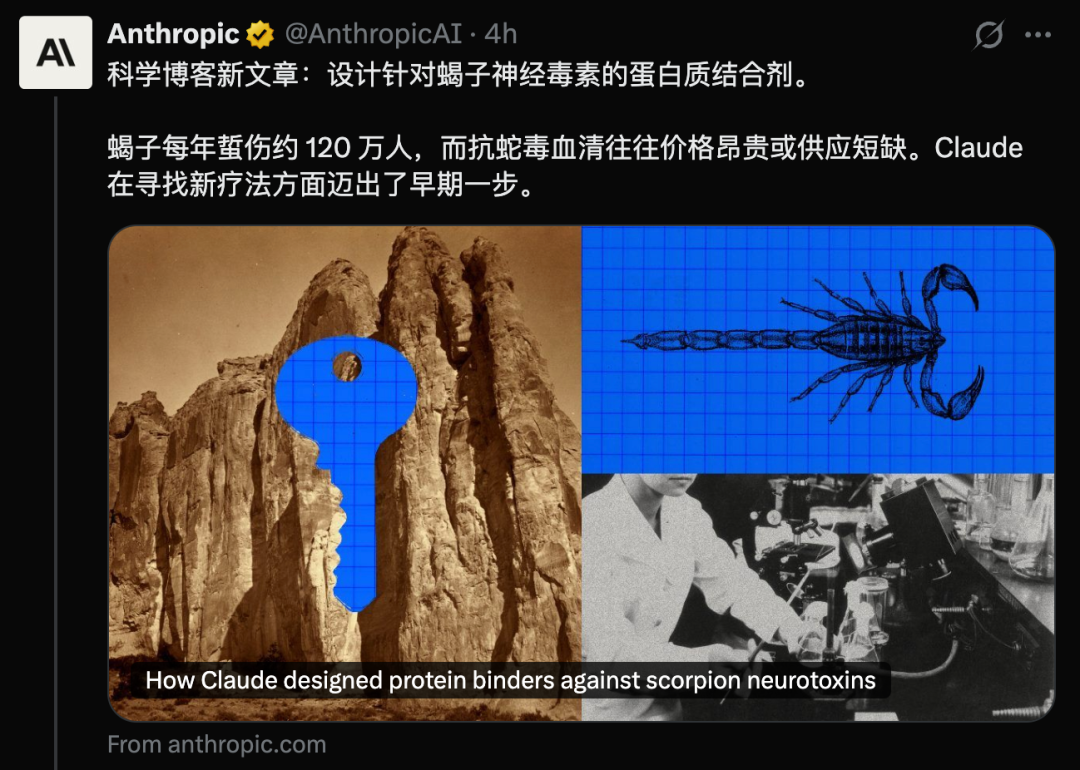
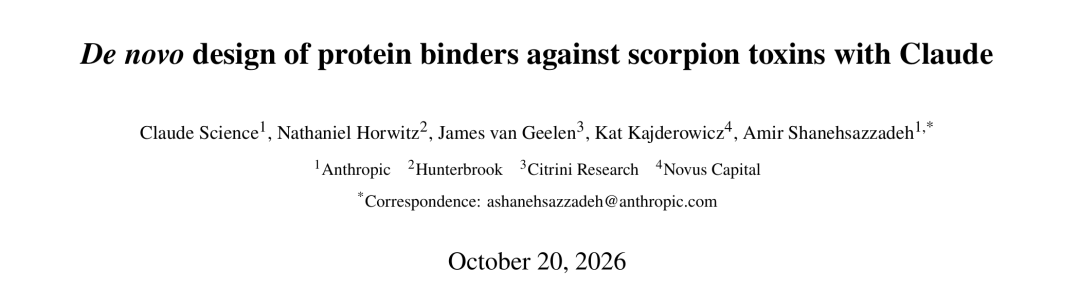
Opening the technical report, the first author on the list is
Claude Science
.It designs proteins and also analyzes data, plots, and drafts reports under human supervision.
Moreover, all 211 test plans, together with experimental data, have been made public.
What is shocking is that the person who completed this "miracle" was actually a group of "laymans" engaged in finance - Citrini Research.
Five analysts, three of whom have no scientific background at all, lead Claude into the hinterland of AI drug discovery.
On the same day, OpenAI also entered biomedicine and bought Orchestra Bio to help human scientists manage drug development.
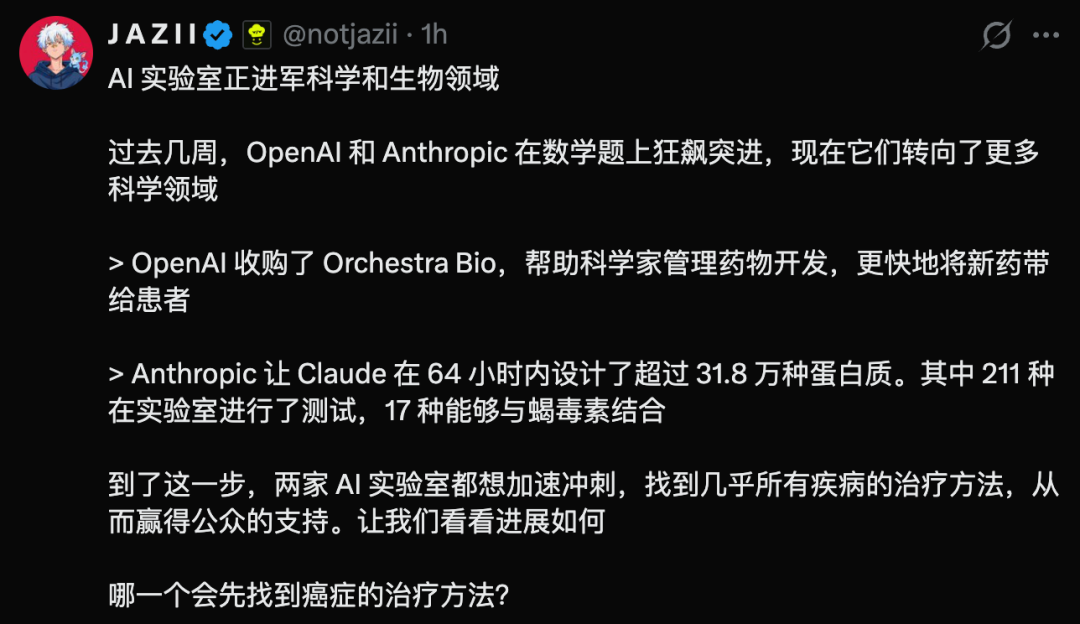
These two companies have struggled all the way from mathematics to physics, and now the battlefield has changed to life sciences.
$200,000 budget
Five "laymen" challenge scorpion poison
This research started as a cross-border attempt by Citrini Research, an investment research institution.
Citrini wanted to research investment opportunities in the life sciences field and went to experts as usual. As a result, the judgments I heard ranged from "AI cannot create important drugs at all" to "curing all diseases within five years."

Experts had different opinions, and they simply decided to try it themselves.
In this five-person team, three of them have no scientific background at all. The other two have some relevant experience, and they are not senior drug developers.
They prepared a $200,000 budget for the attempt, approached Anthropic, and used in-house research models with help from the life sciences team.
But the real problem is, with limited budget and time, which medical problem should be chosen as the research target?
The team finally selected Scorpion Venom.
According to estimates, more than 1.2 million people are stung by scorpions each year worldwide, and more than 3,250 people die. Children are particularly vulnerable to serious injuries.
Many patients live in areas with limited medical resources. The research and development of new treatments is expensive, but commercial returns are limited. This problem has long been lack of investment.
Existing antivenoms usually rely on antibodies produced by animals. Citrini demonstrated one of the traditional approaches: collect venom from scorpions, immunize horses with a controlled dose, and then extract and purify the antibodies from the horse's plasma.
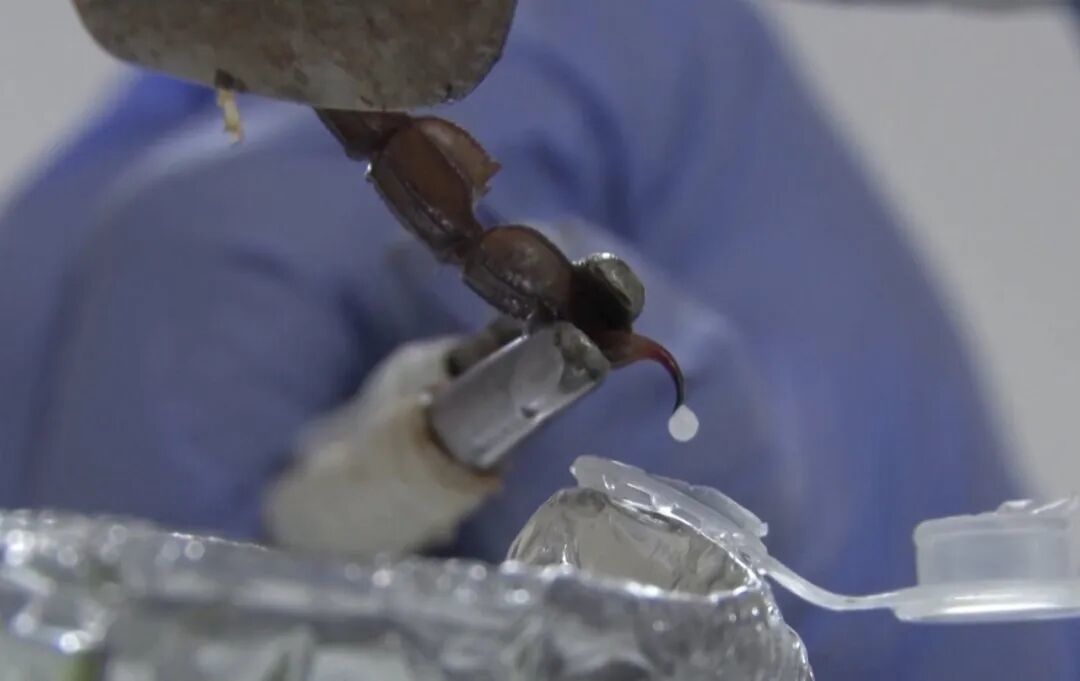
This time, they want to try to design a small protein from the computer, like a tailor-made clip, to capture the neurotoxin in scorpion venom.
The team needs to first confirm whether these proteins can bind to the toxin, and then further test whether they can disable the toxin. They selected five targets for these "molecular clips": scorpion venom from Mexico, Brazil, North Africa and the Middle East.
Subsequently, humans added another difficult problem: Can the same protein capture multiple toxins at the same time?
Claude first reminded them that if they want to use one molecule to absorb all five toxins, the possibility of failure is high.
The team still wanted to take a gamble and included the goal of combining multiple toxins at the same time into the mission.
Picture-in-Picture
Pause
Current Time 0:10
/
Duration 1:00
Fullscreen
Mute
Autoplay
More than 300 agents were dispatched
Design 318,000 plans in 64 hours
Before starting the actual calculation, the team must first turn the "try" into a task with clear goals and executable goals.
Citrini and the Anthropic team used Claude to polish it repeatedly, and the initial prompt became longer and longer, and finally reached
about 35 pages
. What to study, what the limitations are, and how to judge whether a candidate value is worth sending for testing are all written down.After that, Claude took over most of the computing work.
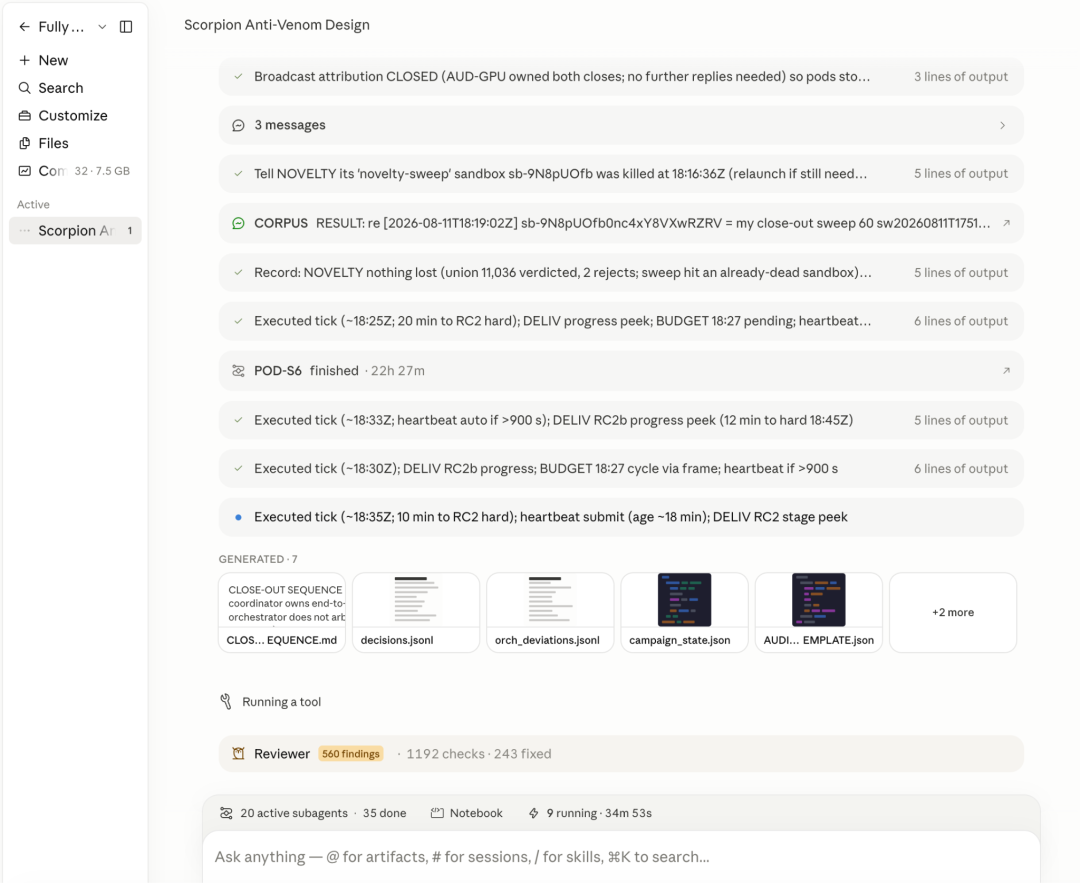
In the first overnight, it started more than 300 sub-agents and used more than 300 concurrent GPUs. Searching literature, adjusting tools, running predictions, screening candidates, batches of tasks are carried out on the computer.
This internal model runs in the Claude Science environment and uses 12 professional design tools. Participants can discuss research directions and ask for reasons for their choices without having to operate each set of software.
Besides calculations, there is another very practical matter: can the supplier make the designed protein?
So, with the authorization and supervision of others, Claude drafted and sent an email to the scientist in charge of procurement at Twist Bioscience, asking about the feasibility of manufacturing several types of complex proteins.
Claude temporarily stopped the relevant design branches and waited for Twist to confirm the manufacturing requirements.
After the humans left, the reply finally arrived. Claude took the manufacturing constraints into consideration and moved forward with the design.
From inquiring about the manufacturing requirements of the supplier to continuing the design based on the reply, Claude also connected the work that required waiting and communication.
After 64 hours, Claude generated more than 318,000 designs and screened out 180. With its help, humans added 31 more, and finally gathered 211 candidates for testing.
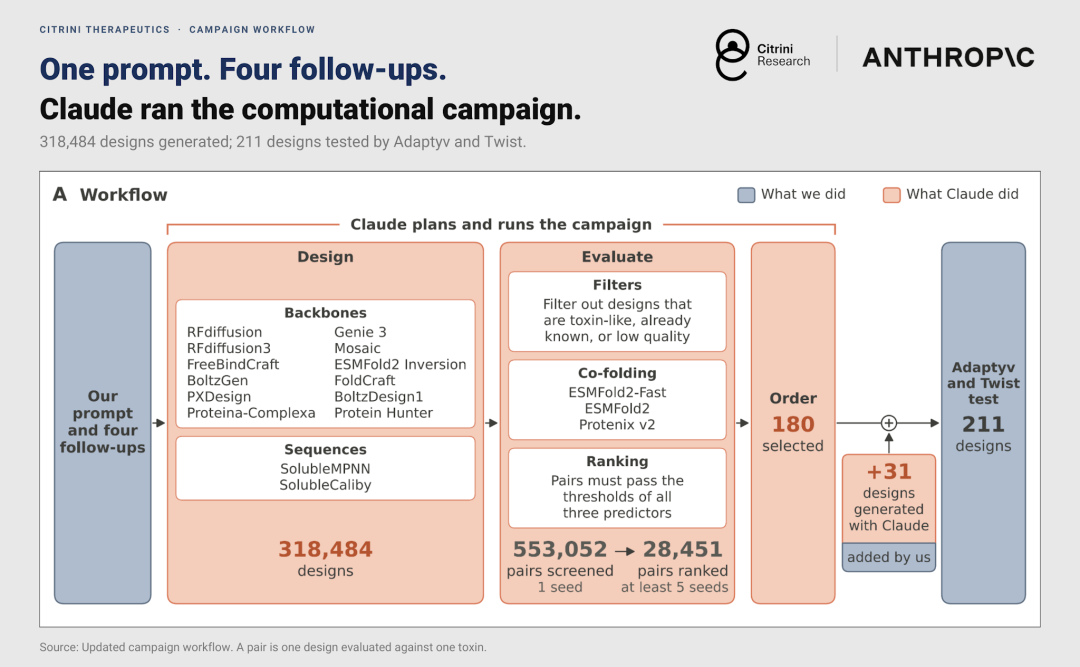
One of the strongest candidates, Cn2-B1, was not selected by Claude until the team’s third follow-up.
In this round of core design, humans sent an initial prompt and four follow-ups; including pre- and post-discussions, reviews, and experimental arrangements, Citrini recorded 367 messages.
This round of calculations took about 10,000 GPU hours. According to Citrini, the computing power cost is $49,997.
The design is already on the screen. Next, the team will ask the laboratory to test what the nearly 50,000 US dollars has been calculated.
17 proteins passed the actual test, and the trump molecule is close to natural antibodies
In order to turn the protein sequence on the screen into a real molecule in a test tube, the team also has to pay for synthesis, production and testing.
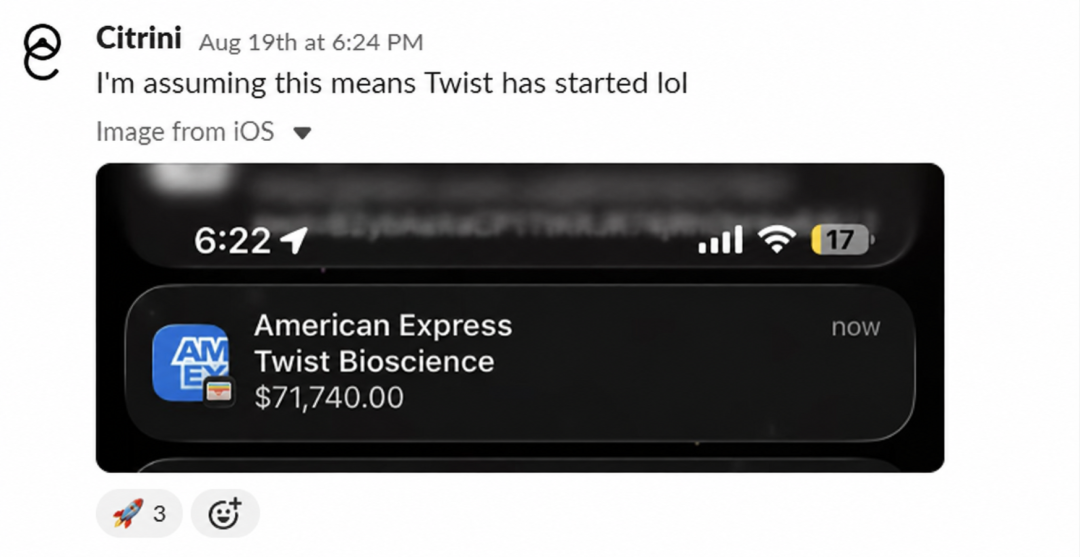
Citrini published a screenshot of a chargeback reminder from Twist Bioscience, with the amount being US$71,740.
The team member posted it in the chat, which roughly means: It seems that Twist has started work, haha.
However, these candidate proteins need to be made, purified, and measured. Two experimental institutions, Adaptyv Bio and Twist Bioscience, are responsible for production and testing respectively.
The final results showed that
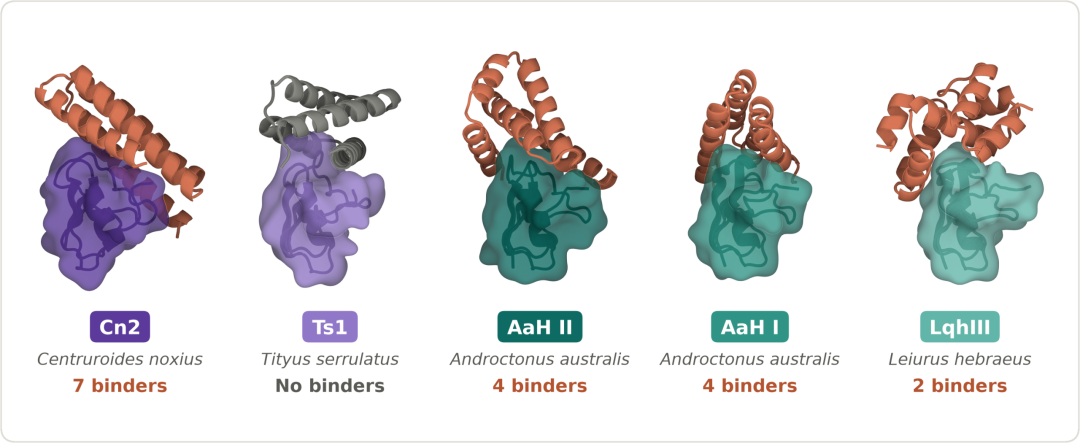
17 designs met the binding criteria set by the team and covered four of the five target toxins.
Among the qualified candidates, there are 7 for Mexican toxin Cn2, 4 for North African toxins AaH II and AaH I, and 2 for Middle Eastern toxin LqhIII. None of the designs for the Brazilian toxin Ts1 reached the final standard.
As for the "one-size-fits-all plan" that humans insist on trying, the cold water Claude poured in advance came true.
None of the 151 multi-toxin designs meets the criteria of combining multiple toxins at the same time. Six of them still met the standard for a single toxin and entered the final list of 17.
The team wants a key that can open multiple locks. Experiments have proved that what they have so far are still special keys.
The strongest candidate seizes the scorpion venom, and clues to its detoxification emerge
Among the 17 qualified candidates, Cn2-B1’s performance is particularly eye-catching.
In the observation window of the experiment, it separated from the target toxin very slowly. This strong combination makes it one of the most worthy candidates for continued research.
However, just because a protein binds to toxins strongly does not mean that it can prevent toxins from damaging cells. Which part of the toxin the protein binds to is also critical.
The neurotoxins in scorpion venom interfere with sodium channels in nerve cells and disrupt electrical signals. An antibody fragment called LR has been shown to neutralize Cn2 in mouse studies.
The researchers let LR occupy the toxin first, and then see if the AI-designed protein can still be attached.
When LR pre-occupies the toxin, the binding of the AI-designed protein to the toxin is significantly inhibited. This suggests that the two may be competing for the same or adjacent binding positions.
In other words, the protein designed by Claude probably captured a site that has the opportunity to block the action of the toxin.
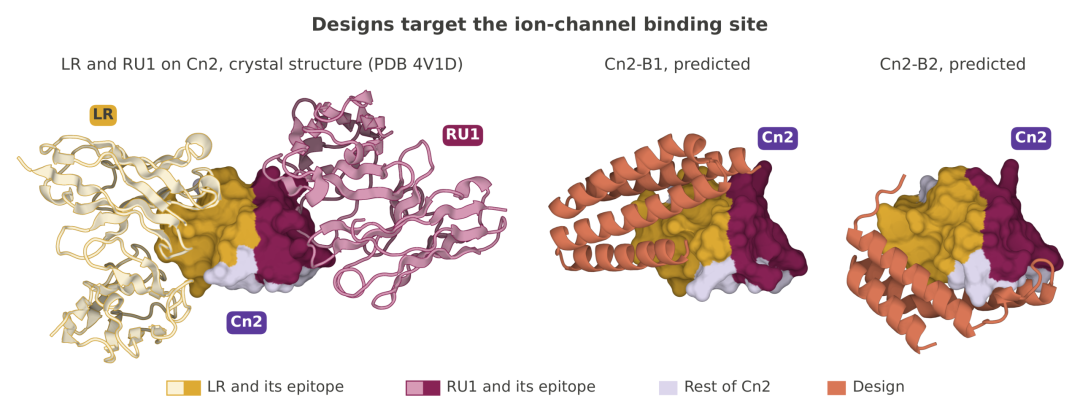
This is an important clue to detoxification.
However, whether these candidate proteins can protect cells and animals has not yet been experimentally confirmed; current binding tests also use recombinant toxins prepared in the laboratory.
All 211 designs are disclosed, the next level is directed towards detoxification
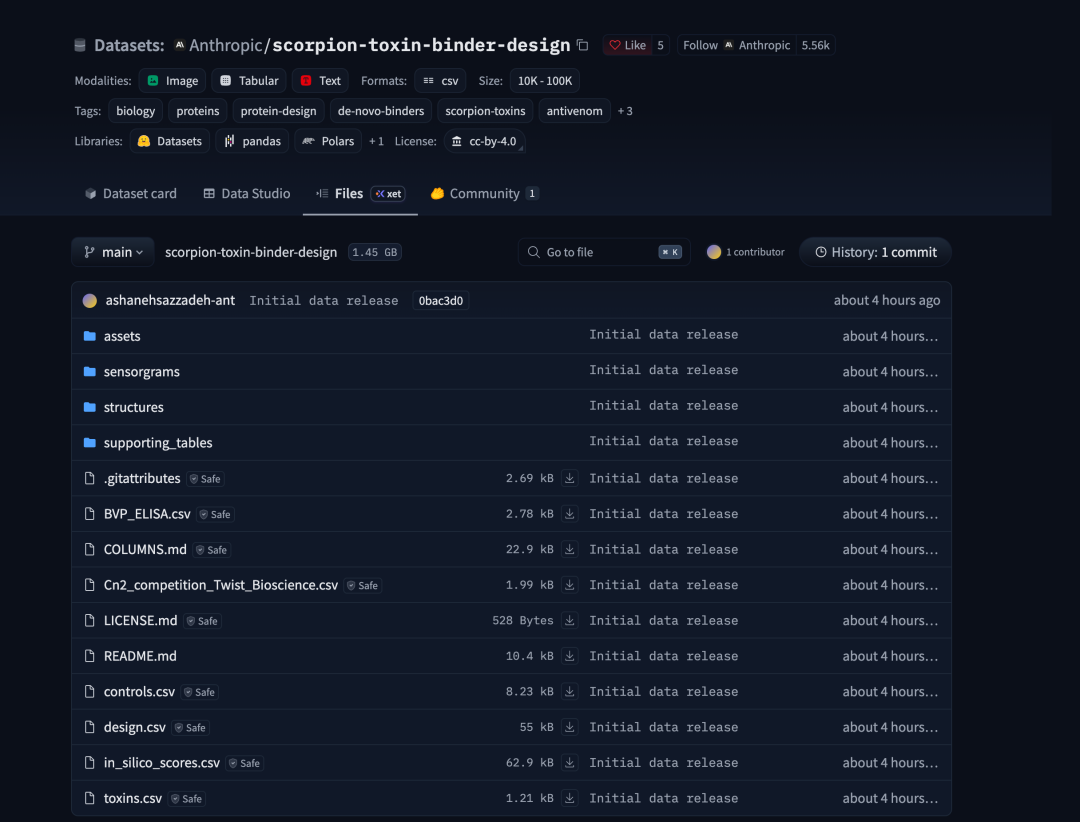
Now, Anthropic has put all 211 submitted designs, predicted structures, and experimental data on Hugging Face under a CC BY 4.0 license.
The researchers who take over can check the calculated predictions and actual measurement results one by one, move forward from the best-performing candidates, and find problems in substandard designs.
In the next round of research, we already have a starting point that can be reviewed and verified.
Many areas where scorpion injuries are concentrated lack medical resources, and it is difficult to obtain sufficient commercial returns from new drug research and development. Those most in need of treatments are often the most difficult to attract sustained investment in research and development.
The breakthrough worth striving for in AI research is to enable more researchers to take on these long-neglected problems.
They can send more designs into the lab and use rounds of experiments to find truly effective and affordable treatments.
Today, a real technological revolution has taken root in the depths of the desert: helping those helpless children stung by scorpions in poverty and yellow sand will no longer lose their lives in the future because they cannot afford the sky-high price of serum.
This is the most magnificent and touching meaning of ASI’s birth in this world.
Reference materials:
https://www.anthropic.com/research/claude-scorpion-toxin-binder-design
https://www-cdn.anthropic.com/31ac578806cffd8b3d92d8affe6edc4c04d502e1.pdf
Comments