
Abstract:
Google is testing a new feature of Gemini, which allows AI to not only call businesses for users, but may also further contact relatives and friends in the address book for users. By disassembling the latest version of the Gemini application package, Android Authority discovered that Google seems to be developing a feature called "Gemini Calling." In the future, users may only need to tell Gemini what they want to say to someone, and AI can directly make a call to complete the message.
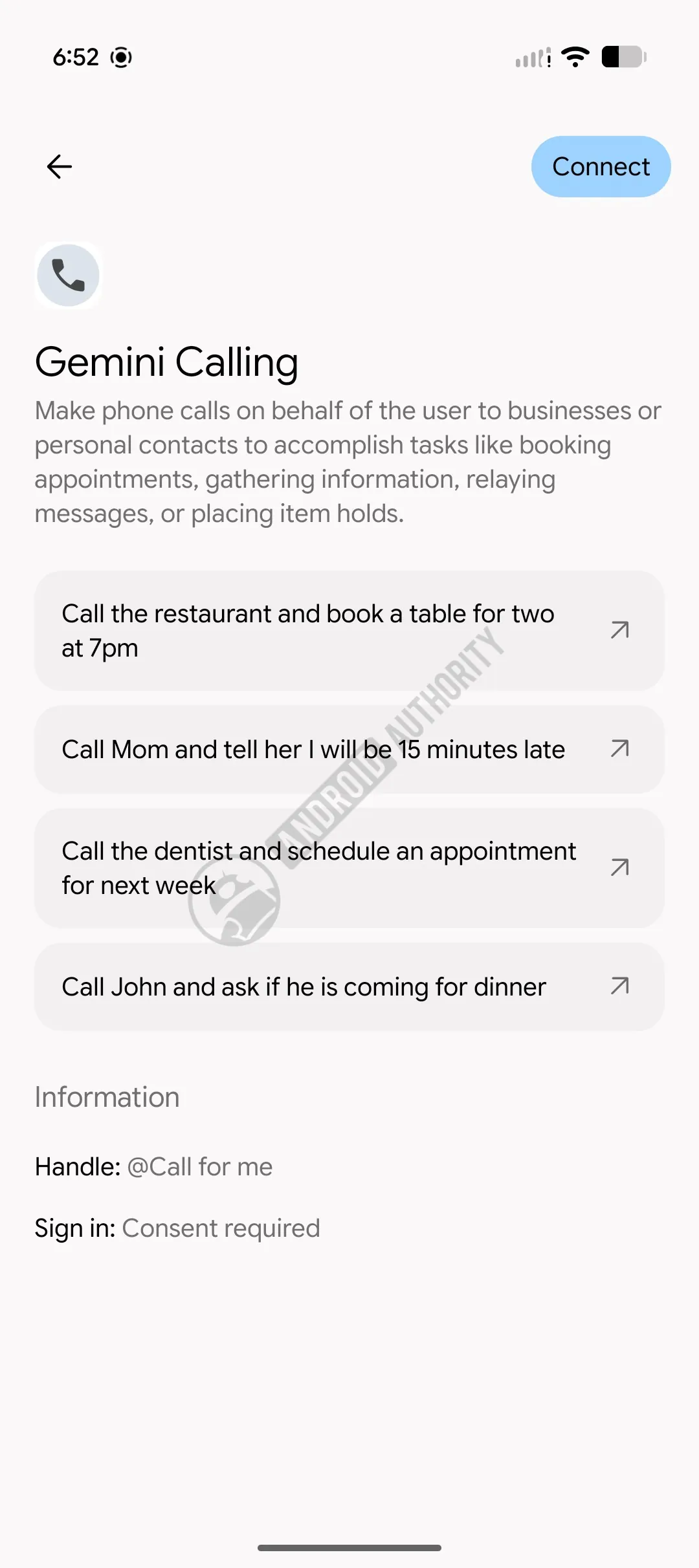
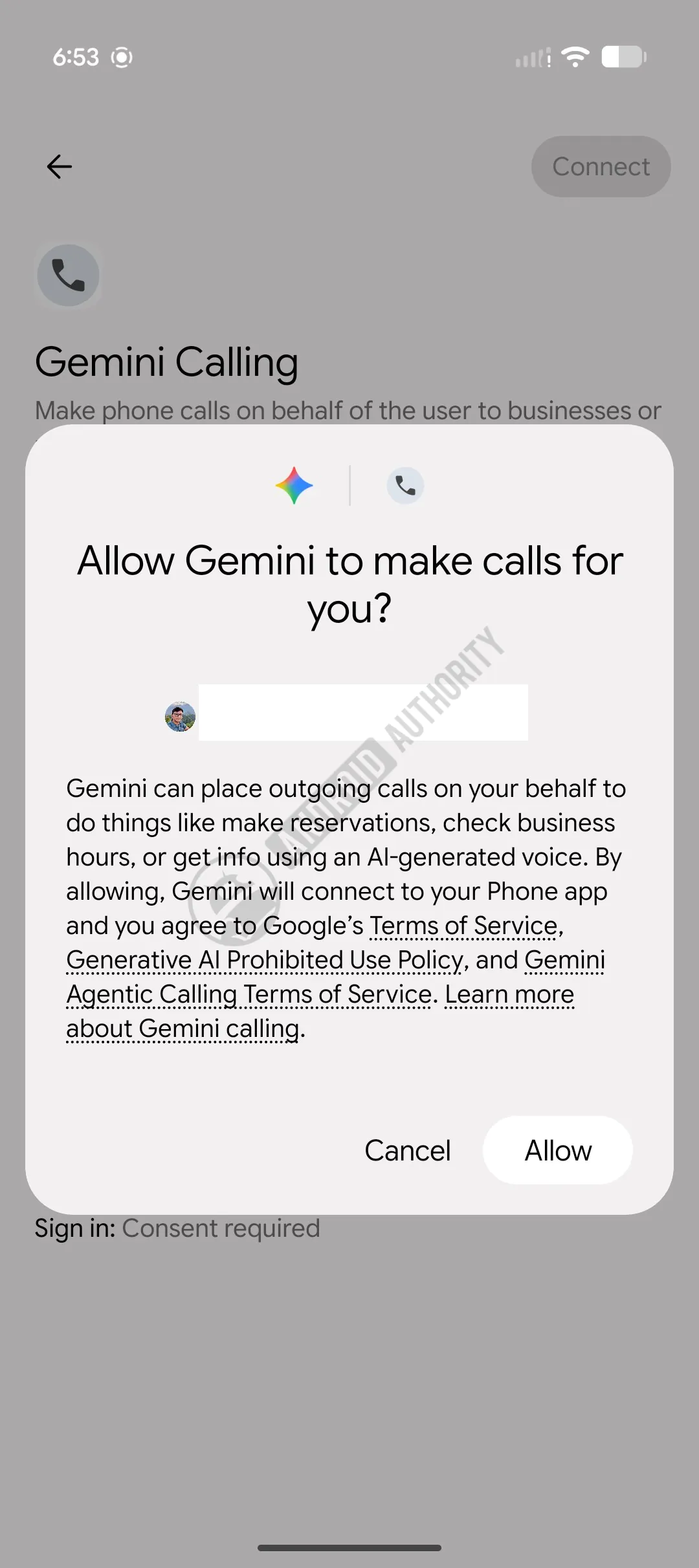
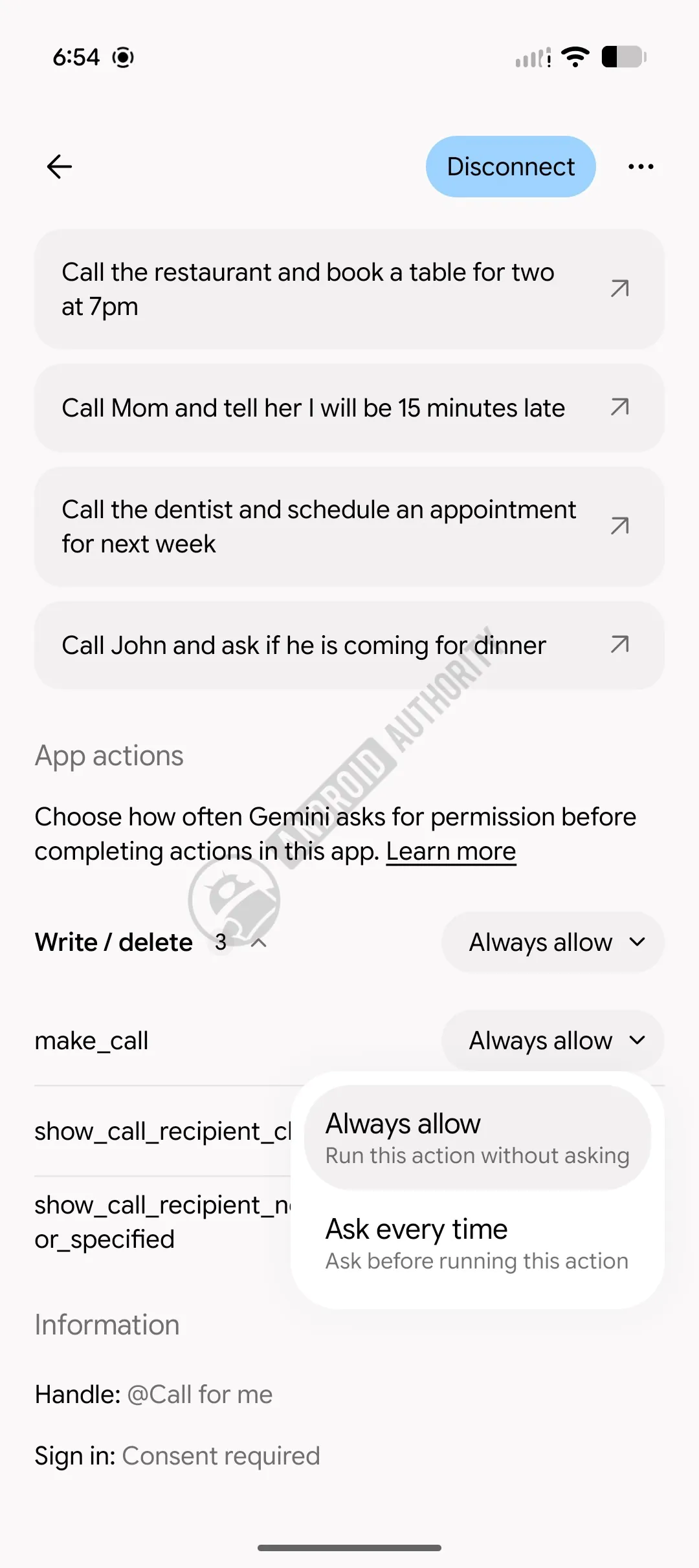
Currently, Gemini’s “Call for Me” function is mainly targeted at business scenarios. For example, users can ask Gemini to call a restaurant to reserve a seat, inquire about product inventory, check service prices, or modify reservations for them. The AI will be responsible for dialing, responding to the automatic voice menu, waiting for the human customer service to answer, and completing the entire call process with the other party.
The "Gemini Calling" discovered this time has significantly expanded the scope of use. Judging from the introductory page in the application, Google has prepared personal contacts such as "Mom" and "John" as examples, and demonstrated usage scenarios such as "calling my mom to tell me I will be late for 15 minutes" and "calling John to ask if he is coming for dinner."
This means that Gemini may no longer be limited to handling those annoying customer service calls for users in the future, but can become a middleman between users and real-world contacts.
Judging from the interfaces and examples found so far, this feature does not allow Gemini to replace users for complete and continuous chats with relatives and friends. It is more like converting short messages in traditional text messages or instant messaging into a phone call. The AI will verbally convey the information to the other party for the user, or ask a simple question for the user, and then feed back the answer to the user.
For example, if the user is driving, he or she can ask Gemini to call a family member and say that he or she will be 15 minutes late; if a friend rarely checks text messages, Gemini can also ask Gemini to call him or her to ask if they are attending dinner; for people who still mainly use landlines and do not often check mobile phone messages, this feature may also have some practical value.
From a technical perspective, this actually means that Gemini is further developing from "helping you operate your phone" to "communicating with the real world on your behalf."
Google has previously started allowing Gemini to use the phone's own phone function to make calls to contacts. The Android version of Gemini can now call contacts, companies and phone numbers in the address book based on the user's natural language instructions, such as directly saying "Call my sister" or "Call so-and-so". However, there are obvious differences between ordinary contact dialing and the "Gemini Calling" being tested this time. The focus of the latter is to let AI actually complete the call content on behalf of the user.
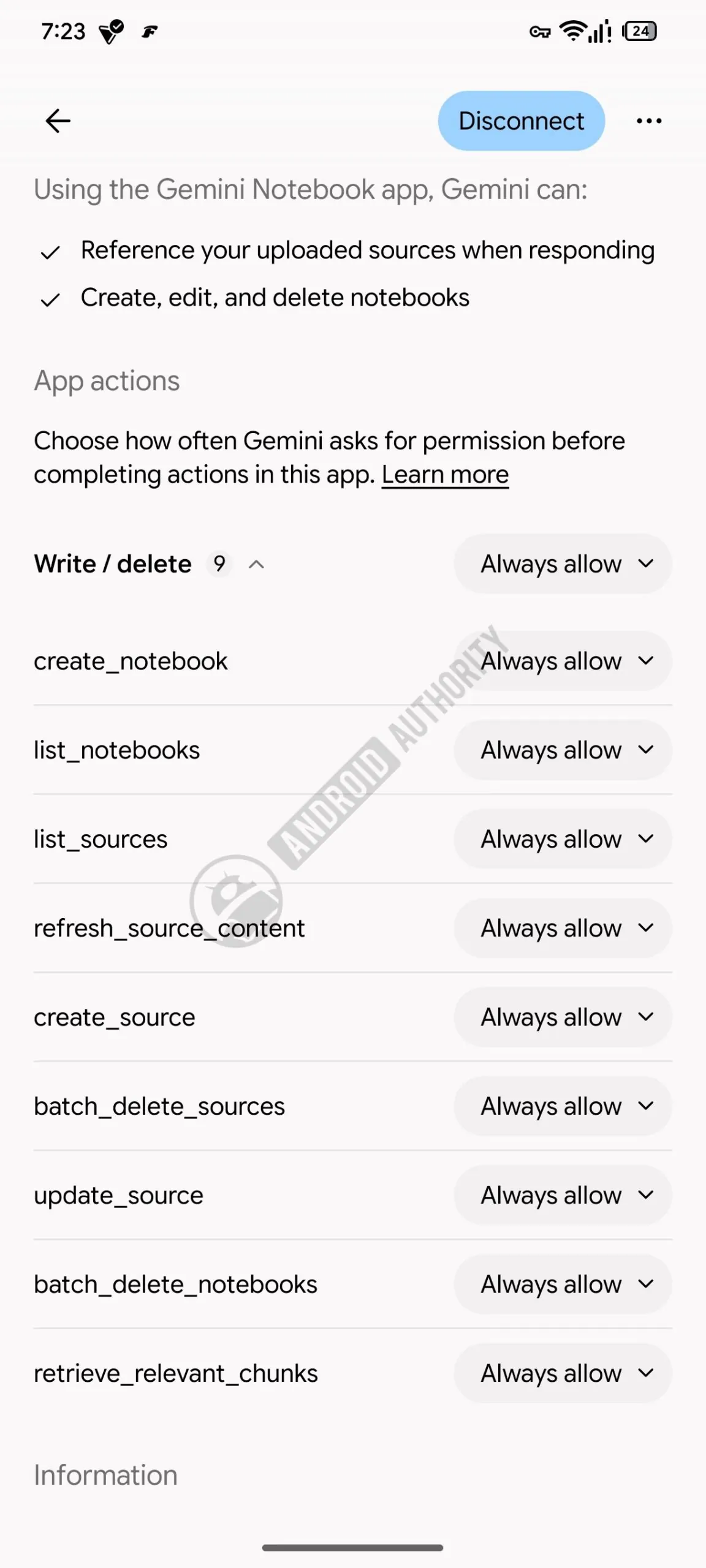
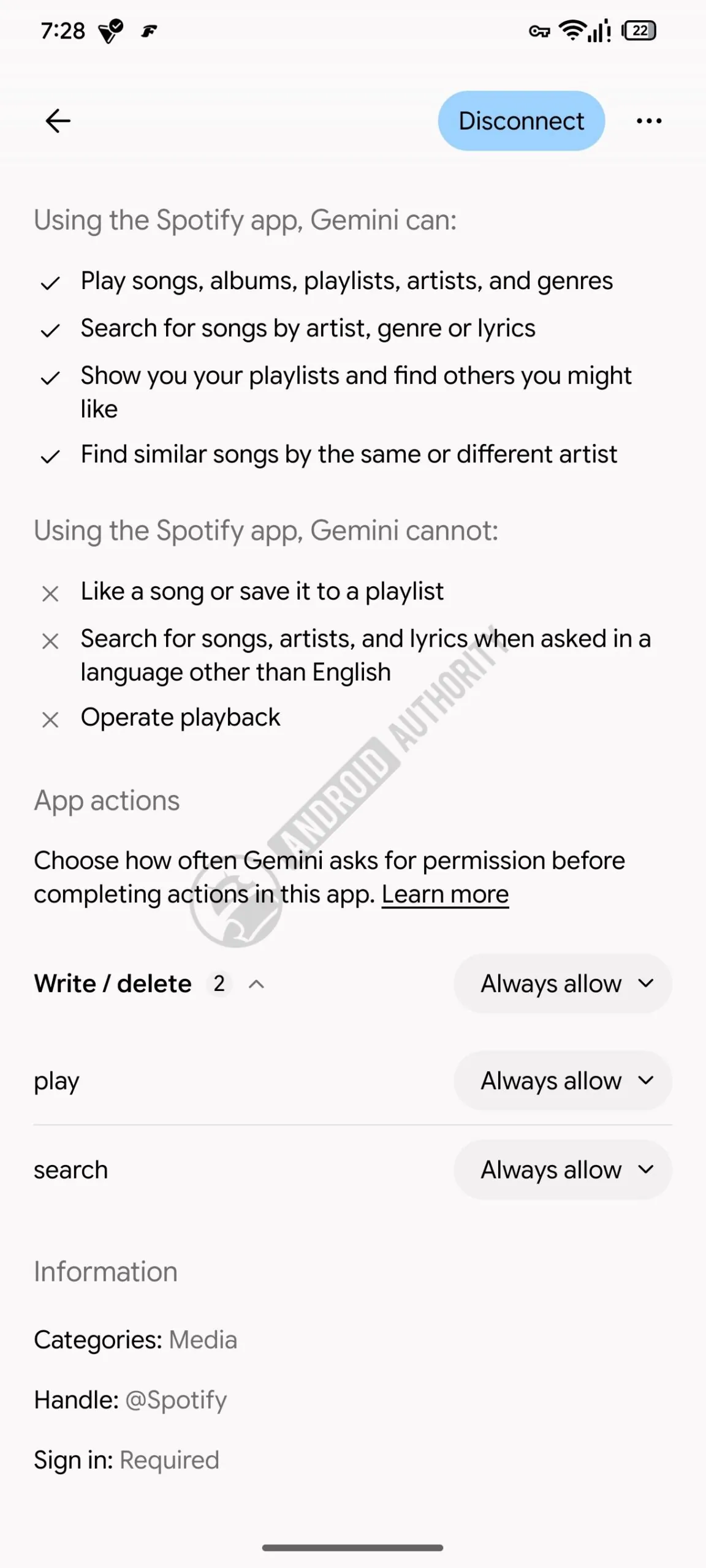
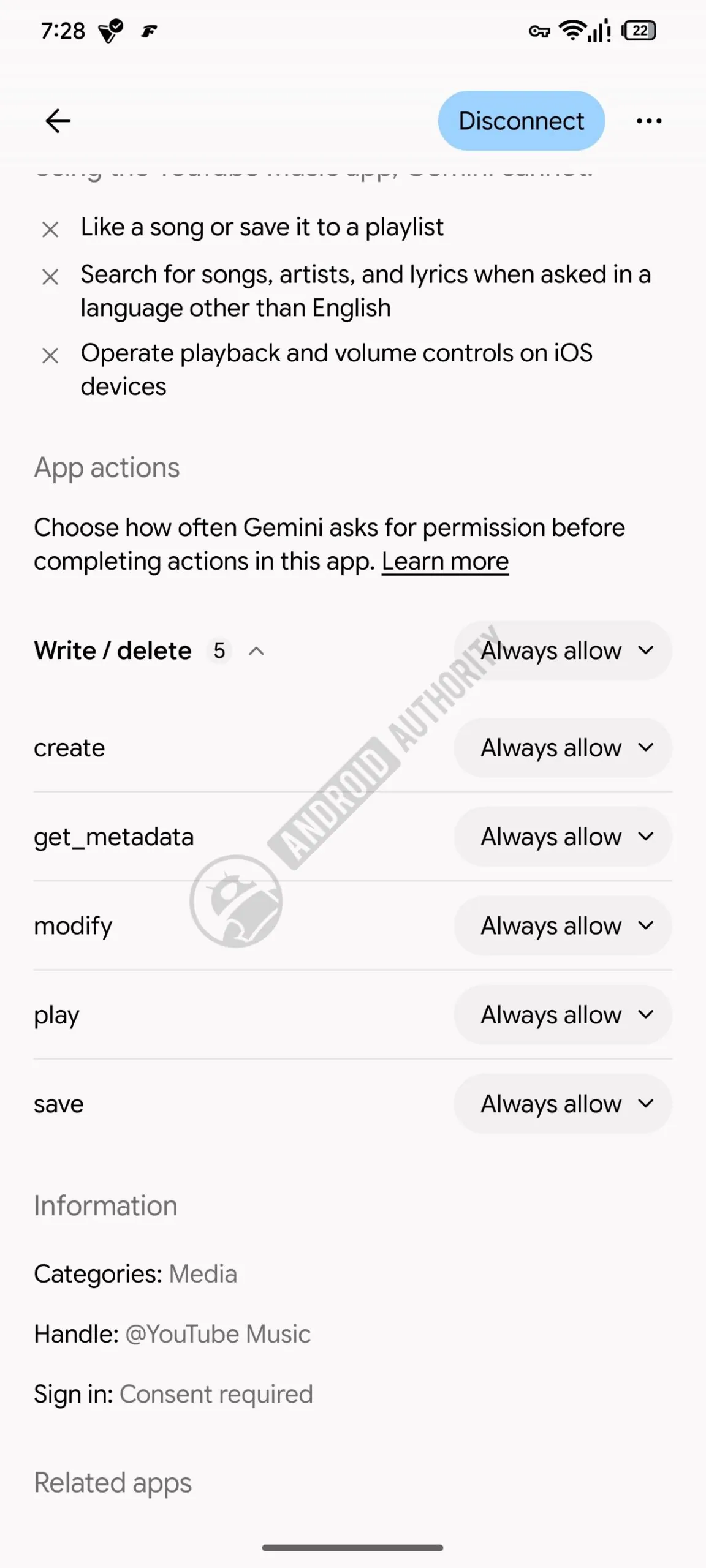
Google has currently established a permission mechanism for Gemini's phone function. Users can decide whether Gemini can use phone, contact and other application data. This APK disassembly also revealed more detailed application operation permission settings. In the future, users may be able to control which operations Gemini can perform for different applications.
This means that Google is trying to solve a very important issue in the development of AI agents: how much autonomy AI should have.
If AI can only dial numbers for users, then the risk is relatively limited. But if AI can speak on behalf of the user, ask for information, make decisions and even deliver information of practical significance to others, then the scope of AI's authority will be significantly expanded.
At the same time, Google seems to be aware of another problem, that is, "AI calling people" may cause trouble to the recipient. The relevant interface discovered by Android Authority shows that Google may provide the option to refuse to receive such automated calls. Google has now added a similar mechanism to its official calling feature, allowing users to choose to reject automated AI calls from other Gemini users.
This is especially important because if AI can automatically make private calls on a large scale, then "nuisance calls" in the traditional sense may take on a whole new form. In the past, a person could only proactively make a limited number of calls a day, but AI can handle a large number of call requests at the same time. If there is a lack of restriction mechanism, it is easy for AI to call each other, automatically promote, or send a large amount of meaningless information.
Google has currently set usage restrictions on "Call for Me" and explicitly prohibits its use in scenarios such as emergency calls, financial transactions, transmitting sensitive personal information, and telemarketing. At this stage, this capability is mainly for the US market and requires specific Pixel devices, Google AI subscriptions and related beta applications.
However, the personal contact calling feature discovered by Android Authority is still in the development stage. APK disassembly can only prove that Google is testing the relevant code within the application, but it does not prove that the feature will be officially released, nor can it determine the final name, specific functional scope, and official launch time.
If Google eventually launches this feature, Gemini's positioning will change further. It is no longer just an AI assistant that answers questions, nor is it just an intelligent agent that can operate mobile applications, but has begun to become an "agent" for users to communicate with the real world.
From letting AI make restaurant reservations for users, to letting AI handle customer service for users, to letting AI directly contact family and friends, Google is gradually turning Gemini from a "chat robot that answers questions" into a personal intelligent agent that can complete real-world tasks for users. As AI gains more and more permissions to operate calls, contacts, and applications, how to ensure that users know what the AI is doing on their behalf, and how to avoid AI from causing misunderstandings or harassment without full confirmation, will also become issues that must be resolved before such functions are officially popularized.
Comments