
Abstract:
Google said on Monday that it had discovered a hacking tool that can autonomously identify and exploit software vulnerabilities without human assistance, highlighting the risks posed by artificial intelligence (AI) agents. Google Threat Intelligence Group (GTIG) detailed the findings in its third quarter report. The tool was located on a pre-release server that was exposed to the internet, the report said. Attackers often use such servers to store and prepare attack tools. Google named this tool "exploit_agent."
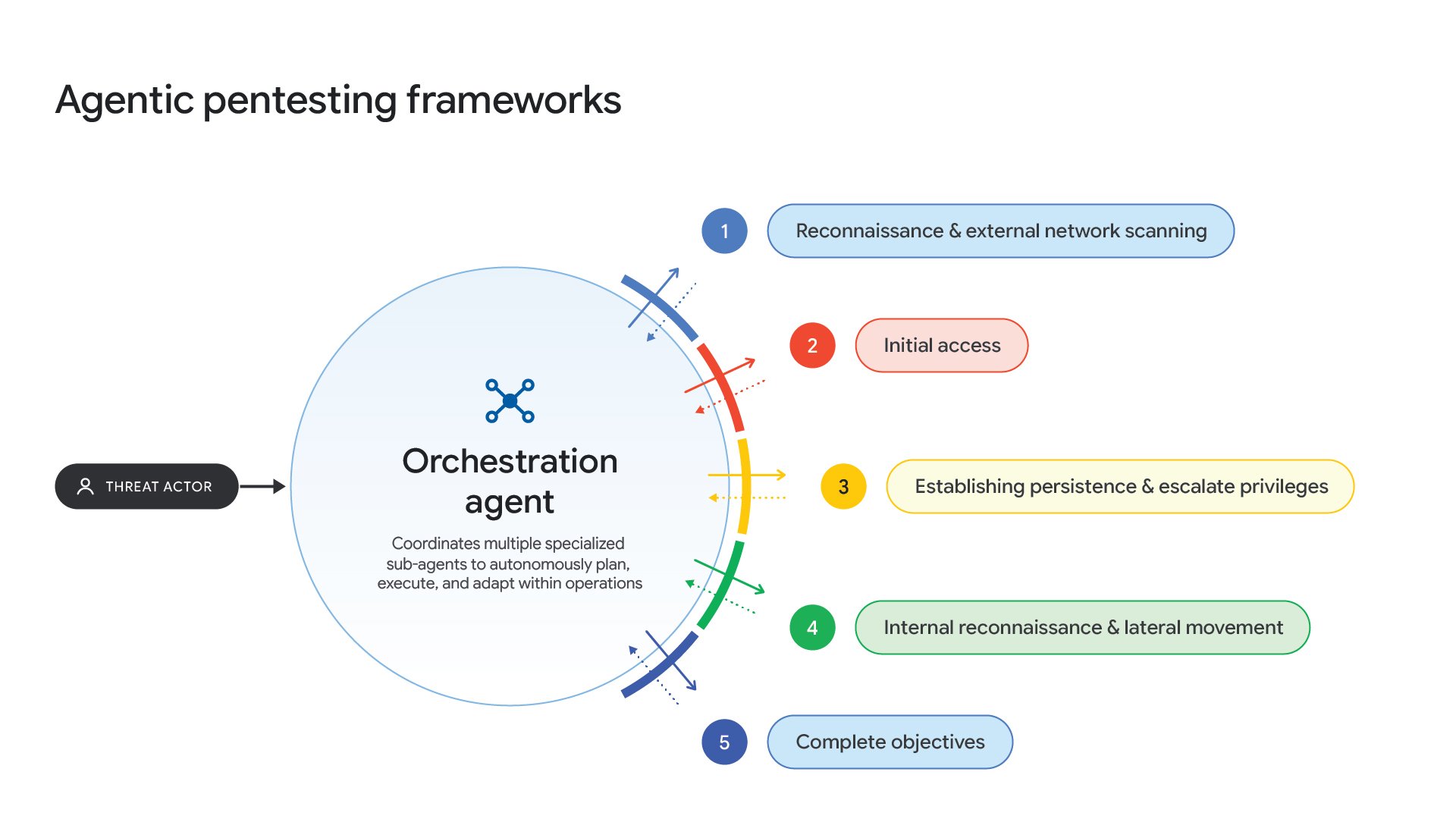
The tool taps into multiple Large Language Models (LLMs), the artificial intelligence technology behind chatbots, including leading business models as well as what Google calls "native" models.
The tool then monitors popular web software for patch updates, updates released by software developers to fix vulnerabilities.
Once a new patch is released, the tool compares the program code before and after the fix to determine where the vulnerability lies. This is similar to comparing two versions of a document to see what editors changed, and those changes could reveal the problem.
The tool will then automatically write attack code to exploit the vulnerability and execute it automatically.
Google said this was the first time the company had seen attackers carrying out an attack in this way.
The report states: “For the first time in the past quarter, Google’s Threat Intelligence Team discovered that threat actors leveraged large language model frameworks to fully automate vulnerability discovery and exploitation without human involvement.”
This discovery further confirms the growing concerns that autonomous AI agents may threaten traditional systems.
Federal Reserve Governor Michael Barr said on Monday that autonomous AI agents could trigger a bank run within minutes.
In September this year, Torsten Slok, chief economist of Apollo Global Management, warned that if AI assistants automatically transfer household funds to accounts with higher yields, banks may lose a large number of low-cost deposits.
An image from the Google report shows that the tool is checking the access control mechanism of version 2.19.25 of the WordPress plugin Spectra (Ultimate Addons for Gutenberg).
Access control refers to the code that determines what operations different users can perform. The report did not indicate whether this vulnerability check ultimately led to an actual attack.
The pre-release server also stores other scripts that can map the internal network structure after an attacker breaks through network defenses, which Google calls "internal reconnaissance."
These scripts are also capable of so-called "brute force cracking" by repeatedly trying large numbers of passwords and planting WebShells, or hidden remote control programs, on websites that allow attackers to regain access to infected systems at a later date.
Google also discovered data stolen from victims on the same server. Relevant records show that the operator of this tool may have launched attacks against websites in the French media, entertainment and education industries.
API keys are similar to passwords and allow software to access artificial intelligence services.
Google's translation of the relevant Russian note reads: "LLM API key for automated exploits (exploit_agent pilot project)" and "Please enter the key yourself - right here, not in chat. Both lines are required."
This finding fits into a broader trend that Google has previously described.
The total number of vulnerability disclosures and exploits nearly doubled between January and August 2026.
Zero-day exploits, which are attacks targeting vulnerabilities not yet known to software developers, occurred on average from 8 per month in 2025, to an average of 11 per month in 2026, and to 22 in August.
Google also stated that it has discovered that open source AI attack tools named CAIRN and PentAGI have been used in actual network intrusion activities.
Comments