
Abstract:
Google's head of data center energy said this week that data centers in space could cost up to 100 times more than data centers on the ground. Google itself is testing AI server chips in orbit. This statement has poured cold water on the hot concept of space computing power.
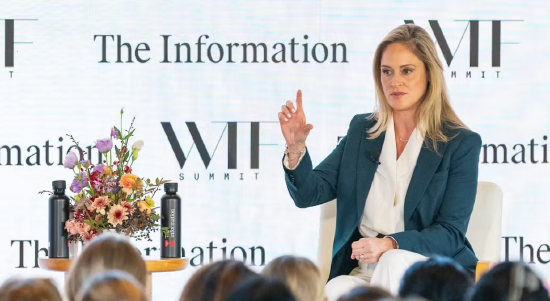
"Before heading into space, we should first explore all possible options on the ground." Amanda Peterson Corio said at the WTF Summit. The summit brings together senior female practitioners in the technology and finance industries. As she expressed her views, SpaceX's orbital data center plan is one of the important logics supporting its market value of approximately US$1.8 trillion.
Peterson Corio also mentioned that the current opposition to terrestrial data centers in American society is gradually rising, and a large part of the responsibility lies with a group of new companies with less experience. Such companies should accept higher regulatory standards. She said that before this round of AI computing power boom, companies that had been involved in data center construction for many years "had relatively standardized practices" and related projects rarely caused controversy.
The launch cost of putting computing hardware into orbit is "extremely high, up to 100 times the cost of ground construction," Peterson Corio said. In addition to costs, operators also need to solve the maintenance and upgrade problems of on-orbit equipment. On the ground, data center staff can replace servers, rewire and debug systems at any time.
Despite being cautious about space computing power, the Google research team officially announced this month that it will cooperate with satellite imaging company PlanetLabs to explore the feasibility of large-scale space data center clusters using satellites. Under the framework of a project called "Suncatcher", Google has launched a small space server prototype into space, equipped with an AI tensor processing unit (TPU) jointly customized with Broadcom.
Last fall, Google researchers participating in the light-harvesting project and the company's chief researcher James Manyica jointly published a paper: If the launch cost drops to US$200 per kilogram or less, the computing power cost corresponding to the unit power consumption in space is expected to be basically the same as the ground level. Google researchers believe that this threshold is expected to be reached around 2035, but the timing depends on the development progress of SpaceX starships and the increase in launch frequency.
But other companies are more optimistic. SpaceX CEO Elon Musk said the company could build a space data center as soon as next year; Jeff Bezos, founder of Amazon and head of SpaceX competitor Blue Origin, predicted that space data centers with a power consumption of 1 gigawatt would appear within ten years. There are also reports that Google and SpaceX have discussed the possibility of cooperating to build an on-orbit data center.
Peterson Corio did not completely reject the idea of space computing power. She called this direction "very interesting"; the reason why Google continues to deploy such high-risk cutting-edge projects is because companies are accustomed to "thinking ahead of time 10, 20, and 30 years later." But the implementation of this technology is “by no means imminent.” OpenAI CEO Sam Altman was more direct. He believed that under current conditions, the idea of moving data centers to space was "very unrealistic" and questioned the aggressive timetable given by Musk.
The real bottleneck: licensing, not electricity
In response to the view raised by Musk and others that the U.S. power supply is insufficient to support the expansion of AI computing power, Peterson Corio put forward a different view.
"Is the electricity enough? Of course it is," she said. The real bottleneck is the approval process and lengthy evaluation studies required for project grid connection. X Labs, a subsidiary of Alphabet, has launched the Tapestry project and is working with PJM, the largest power grid operator on the East Coast of the United States, to use AI to accelerate related assessment processes.
In Texas, the state power regulator has slowed down the approval of some data center projects and strengthened supervision to prevent new computing facilities from burdening the power grid and driving up electricity prices.
Other industry executives also noted that utilization of the grid itself is far from ideal. Brian Janos, co-founder of Cloverleaf Infrastructure, a data center land and power service provider, mentioned in a recent interview that on average about 45% of the capacity of the power grid has been idle for a long time in order to cope with peak power consumption. At most times of the day, the power grid has excess capacity to meet the power demand of the data center.
It is worth mentioning that Google has an advantage over its cloud business peers in terms of the Power Utilization Efficiency (PUE) indicator. This indicator measures the computing power carrying efficiency of the data center and represents the ability to squeeze more computing power from the same amount of electricity.
Regarding the rising anti-data center wave in the United States, Peterson Corio attributed the reason to "a large number of new players who lack industry accumulation and mature experience when acquiring land and building computing power projects," but she did not name specific companies.
In recent years, a large number of novice developers have flooded into the AI data center track, but not only new players, projects of well-known companies such as Oracle have also encountered resistance from local residents.
Higher industry standards
In any case, she supports the introduction of regulatory rules and higher standards for the industry. She did not put forward specific terms, but gave an example that Google is increasing investment in communities where projects are located and setting up plans to avoid risks caused by unfinished projects.
This includes a commitment to continue to bear the cost of power grid upgrades within 15 to 20 years to avoid local communities being "forced to foot the bill" after the project is suspended. This type of cooperation model, which pre-commits to bear the cost of power grid infrastructure, has been implemented in more than nine states in the United States and is “expanding extremely fast.”
Supporting standards also include: Google pays electricity bills and property taxes in full; pays a deposit, which will be used for land restoration if the project is abandoned; and cancels the confidentiality agreement signed with the local government.
The background of her speech is that investors are re-examining the valuation and viability of a group of emerging AI cloud vendors: most of these companies are heavily supported by NVIDIA, rely on large amounts of borrowing, and are frantically launching data centers without a long-term operating record.
The companies that Peterson Corio said need to tighten their standards most likely include this type of manufacturer. At the same time, Google also revealed that its own computing power needs will increasingly rely on third-party computing resources, but did not disclose specific partners. SpaceX is one of them. Google needs external computing power because the speed of its own data centers cannot keep up with demand.
Comments