
Abstract:
On the same day that Anthropic officially submitted its IPO prospectus, OpenAI released a new model GPT-6.1 Terra. This is the first update of the Terra series in more than three months, and 27 days have passed since the release of GPT-6.1 Sol on September 29. OpenAI emphasizes in its official promotion: "Providing fast and powerful computer operation capabilities at a lower price."
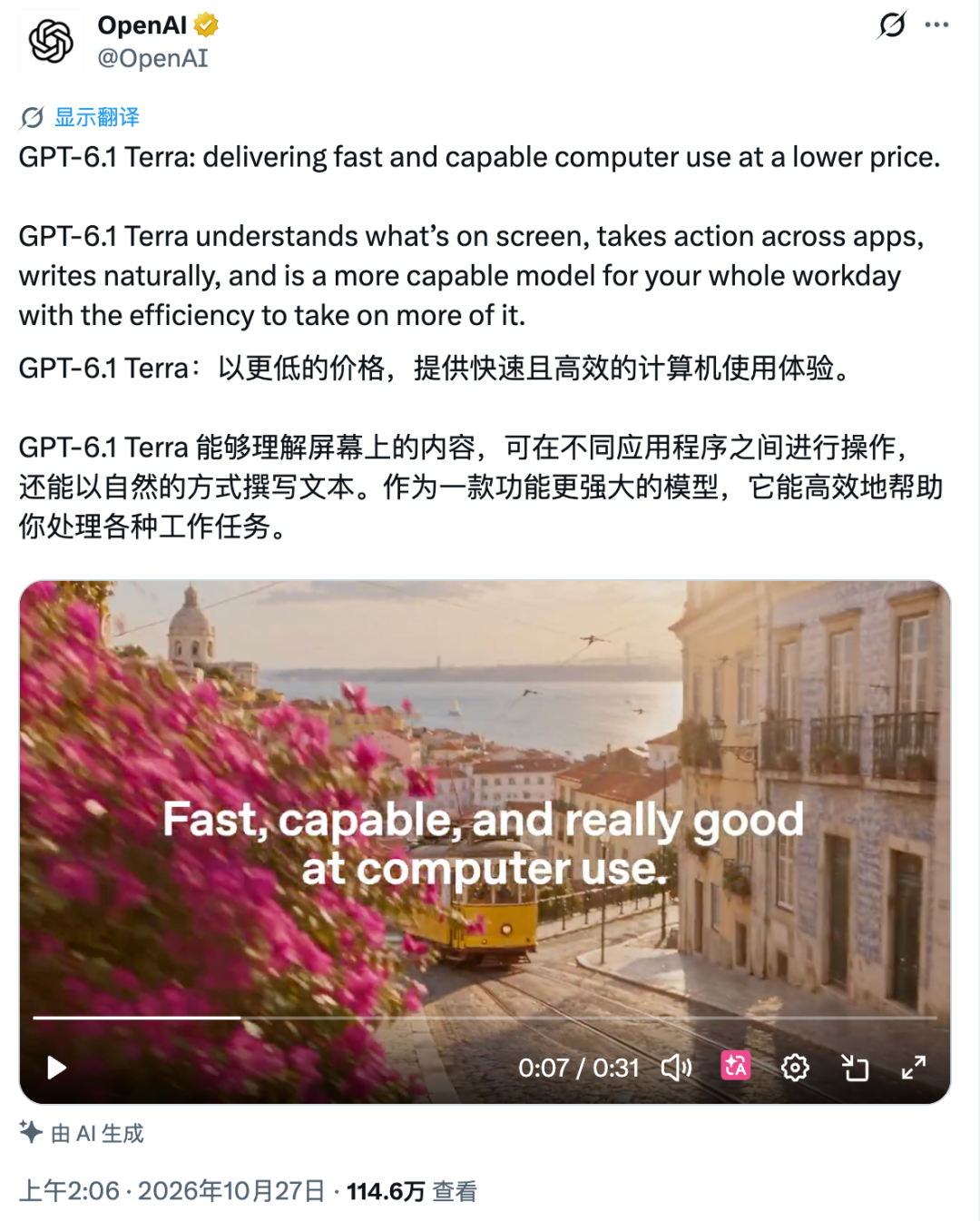
But netizens don’t seem to buy it.
"Man, we need a better model than the Opus 5.5. No one cares if it's faster or cheaper."
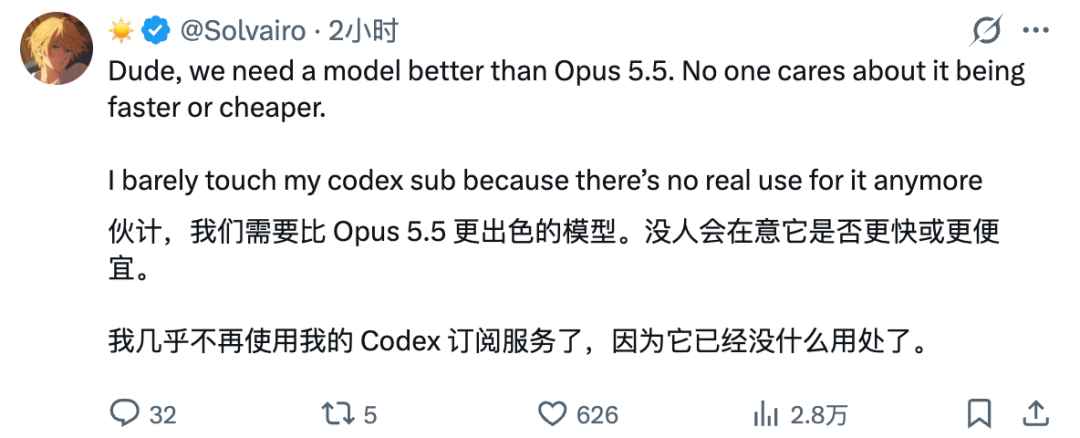
This netizen said unceremoniously that he almost no longer uses the Codex subscription service because it is really of no use.
In the past period of time, Anthropic has gained a lot of attention in programming and other fields with Claude Opus 5.5. Many users were expecting OpenAI to come up with a model that was powerful enough for head-to-head competition, but what they were waiting for was a mid-range model that focused on cost-effectiveness.
All I can say is, it’s hard not to be disappointed.

"Medium"
The API price of GPT-6.1 Terra is US$1 per million input tokens, US$0.05 for cached input tokens, and US$5 for output tokens, which are 50% and approximately 58% lower than the input and output prices of the previous generation, respectively, and are only half of GPT-6.1 Sol.
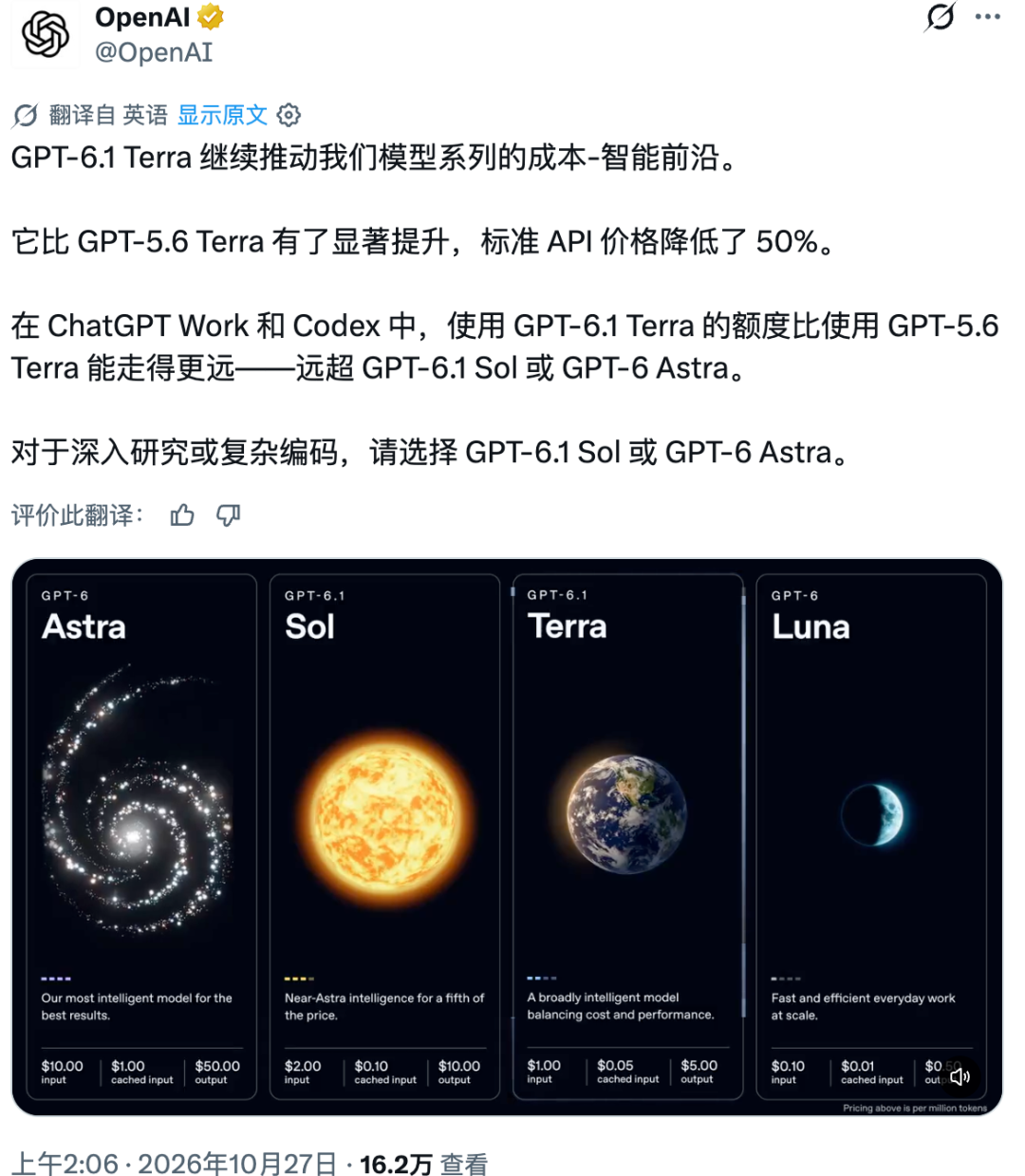
According to data released by OpenAI, Terra has significantly improved compared to the previous generation in terms of programming, visual understanding, and computer operation.
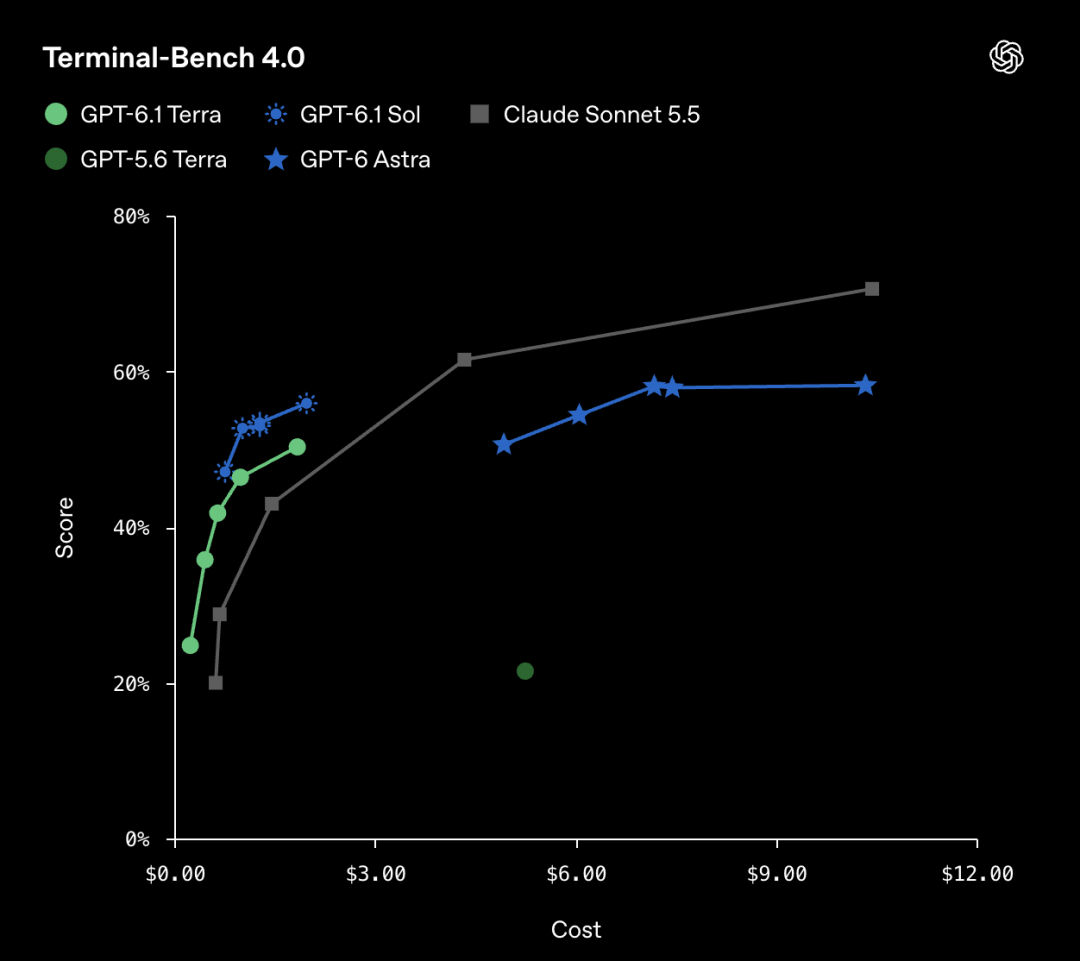
In the Terminal-Bench 4.0 test, which measures the ability of AI programming agents, Terra's task completion rate increased from 21.5% in the previous generation to 50.3%.
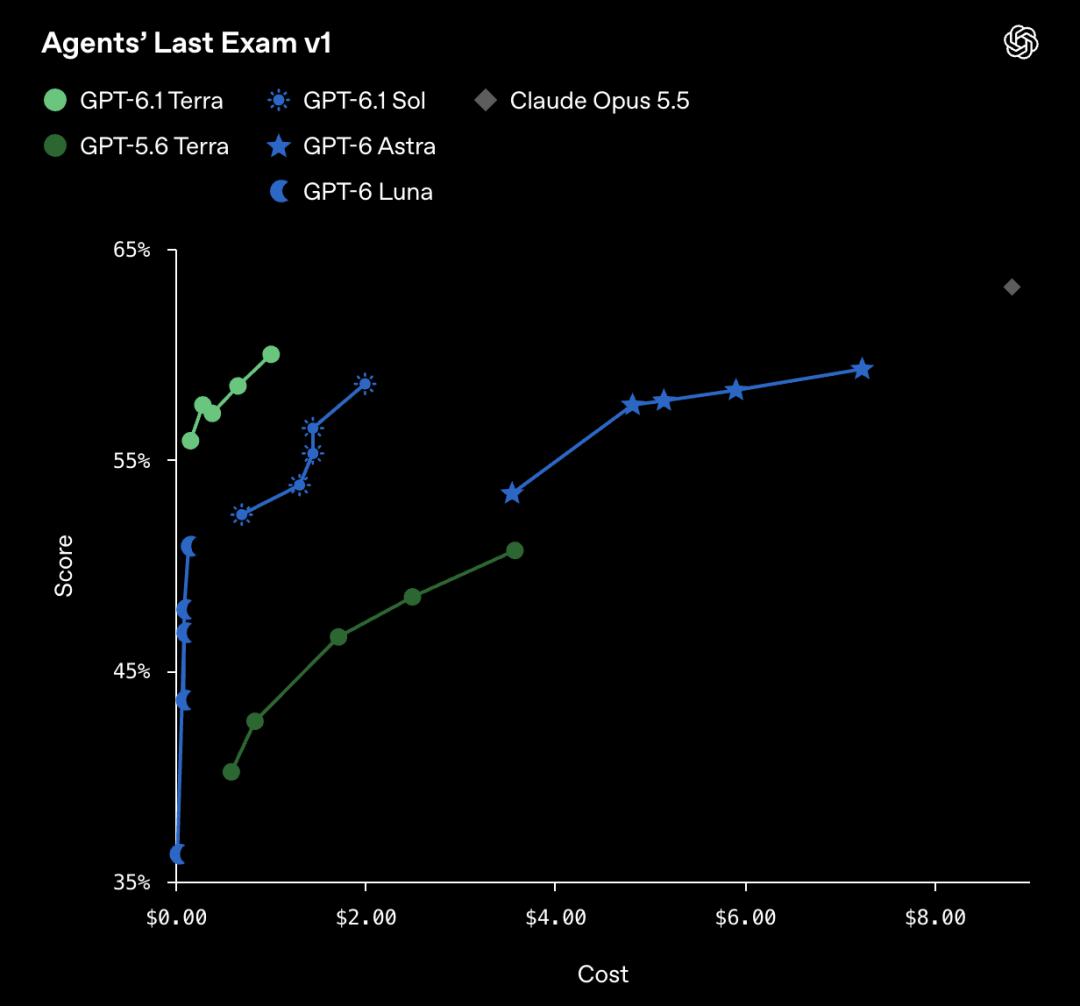
In the Agents' Last Exam test, Terra achieved a score of 60.0%, close to Claude Opus 5.5's 63.2%.
OpenAI particularly emphasized that at the highest inference level of this computer operation test, Terra was able to achieve close results at about one-ninth the task cost of Opus 5.5.
But in third-party reviews, the performance of 6.1 Terra is not outstanding.
According to tests by Artificial Analysis, an independent AI evaluation agency, at the highest inference gear, Terra’s intelligence index is 48 points, 6 points higher than the previous generation, but still lower than the 52 points of GPT-6.1 Sol, and not as good as the 58 points of Claude Opus 5.5.
Relatively speaking, the improvement in cost efficiency is more obvious.
Artificial Analysis found that in its comprehensive intelligence review, the average cost of completing a single task on Terra dropped from $1.40 to $0.40, a drop of more than 70%.
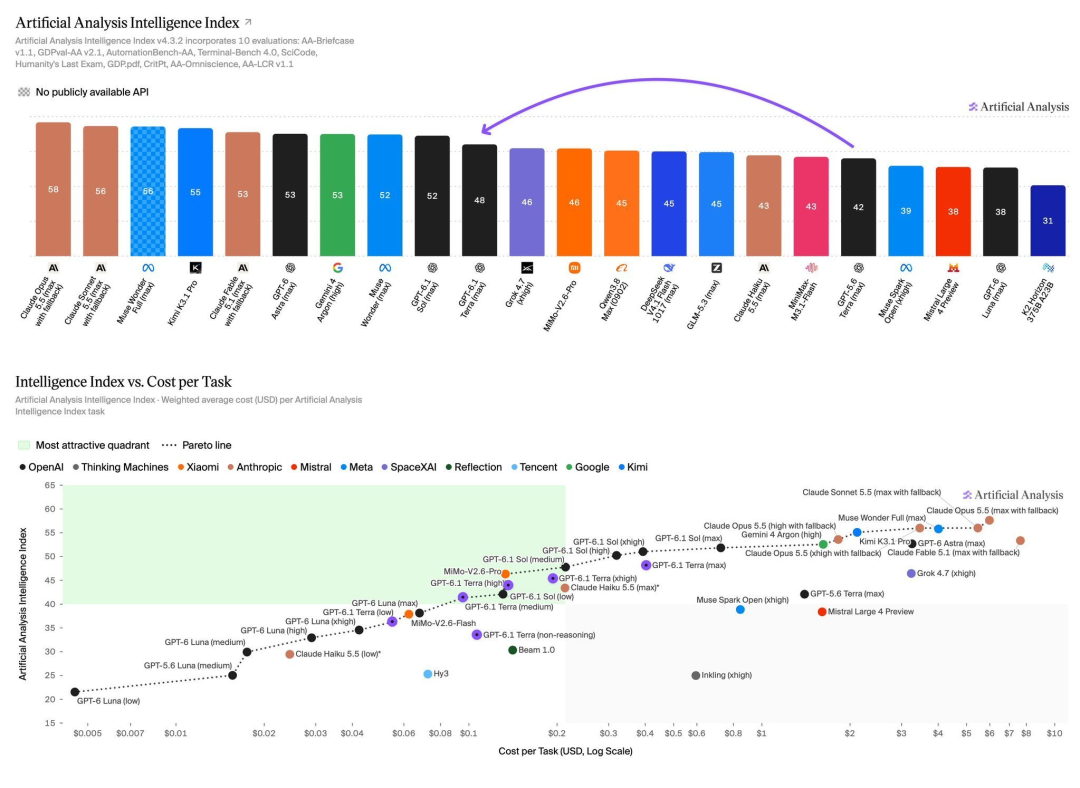
To put it bluntly, the 6.1 Terra is probably a "hit or miss" model. The price is neither high nor low, and the capabilities are not bad but not bad. It is indeed an improvement compared to the previous generation. But it doesn’t even surpass OpenAI’s own Sol, let alone tie Opus 5.5.
This may be good news for developers who need low-cost calling models.
But for those users who are waiting for OpenAI to come up with the next most powerful model, I am afraid they can only get one evaluation: That’s it?
Currently, Terra is open through API, and Plus, Pro, Enterprise and Edu users can also use it in ChatGPT Work and Codex. But it cannot be called in ordinary Chat conversations for the time being.

Beyond running scores
GPT-6.1 Terra is also included in OpenAI’s 28-day continuous update plan, becoming the first new model released during this period.
Tibo said that this is the first model from OpenAI that has made significant progress in writing, model personality and detailed understanding of user needs.
He also emphasized that the new model has good performance in all aspects, especially computer operations. In API and subscription services, it can provide twice the usage compared to GPT-6.1 Sol.
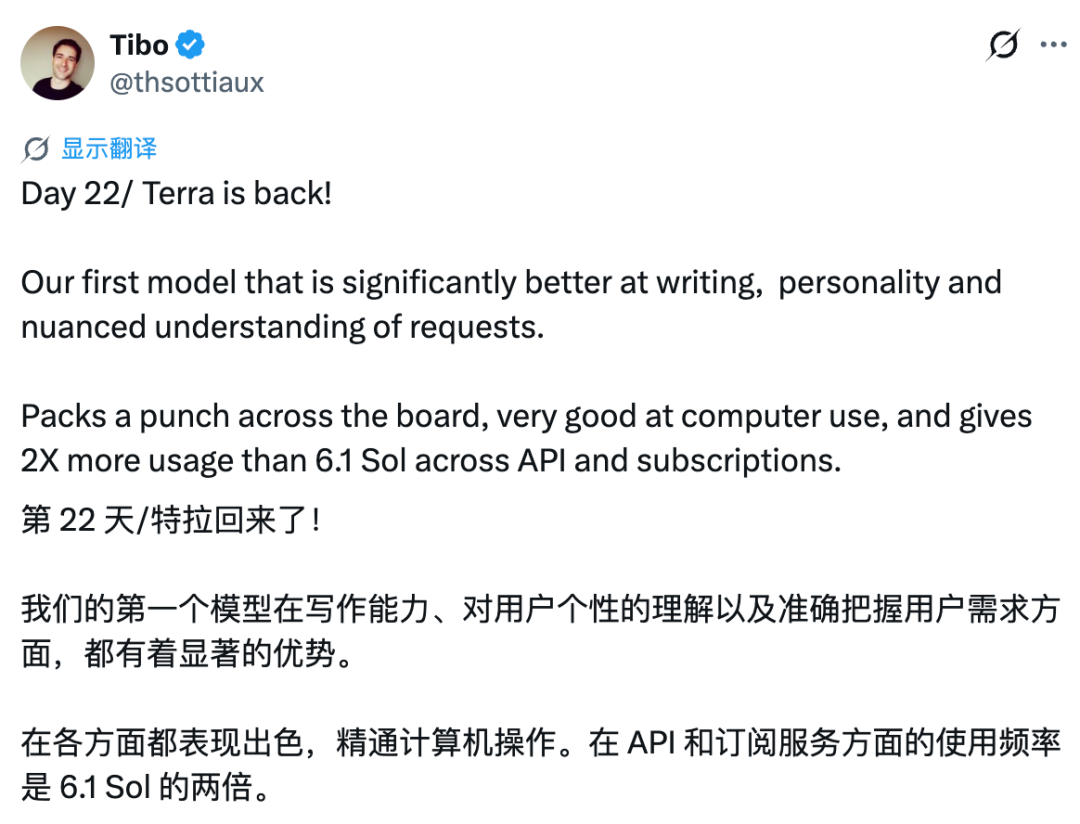
However, there is currently a lack of sufficient public evidence for Tibo's special emphasis on writing, personality and delicate understanding.
OpenAI’s official release does claim that Terra can generate clearer and more natural text, but it does not provide a special comparative test for the above three abilities, nor does it show evaluation results that are sufficient to prove its significant progress.
Whether it is really better at writing and understanding users better, I am afraid we have to wait for feedback after actual use.

The improvements in computer operation are relatively intuitive. In the promotional video, OpenAI demonstrated Terra's ability to create 3D models based on pictures.
However, a promotional video is a promotional video after all.
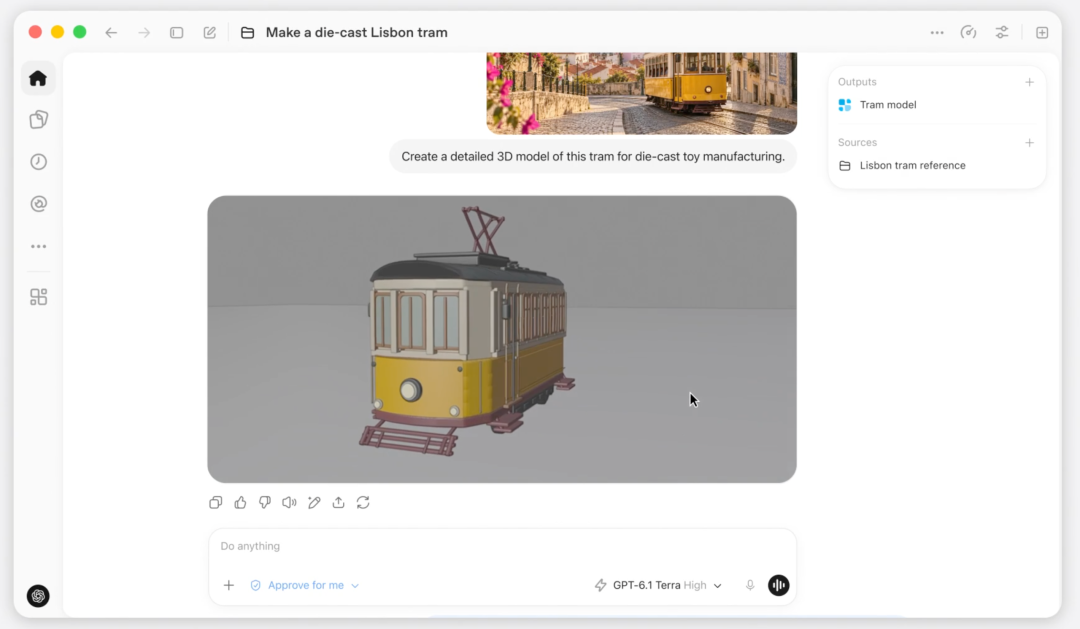
OpenAI also mentioned in the official release that the benchmark tests that Terra participated in included tasks such as creating 3D models based on architectural drawings, checking animations frame by frame, and organizing time codes. According to the official product positioning, it is also suitable for daily tasks such as filling out forms and matching product photos with catalog entries.
Ultraman said on X: "GPT-6.1 Terra is here! It is good at many things, but we are especially looking forward to this new era of computer operation."

In addition to task execution, OpenAI also emphasized improvements in model reliability.
In the officially designed high-difficulty factual test, Terra’s factual error rate dropped to 16.7% from 53.6% in the previous generation at the low reasoning level; at the highest reasoning level, the error rate further dropped to 4.3%.
Of course, these numbers come from OpenAI’s internal testing.

Netizen: I can’t understand
Compared with the official excitement of OpenAI, the attitude of netizens is not so polite.
"Is there any reason to choose this over Opus 5.5?"
Some netizens directly questioned OpenAI and said that what they really need is a cutting-edge model that is stronger than GPT-6 Astra.
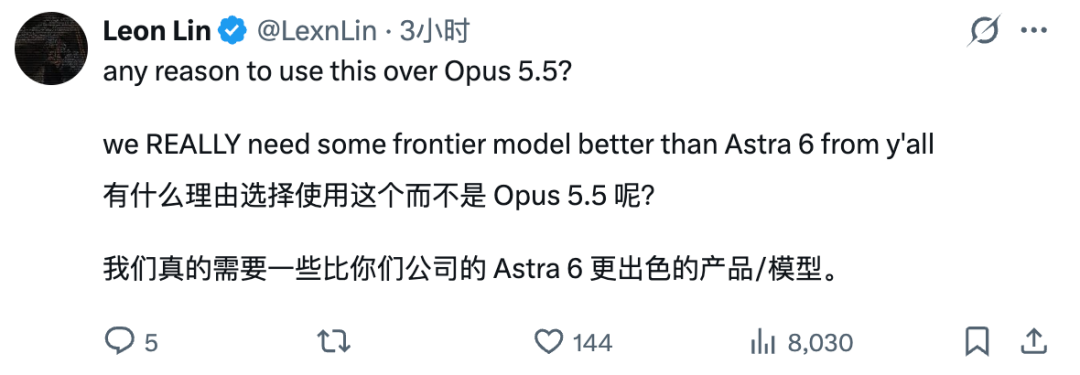
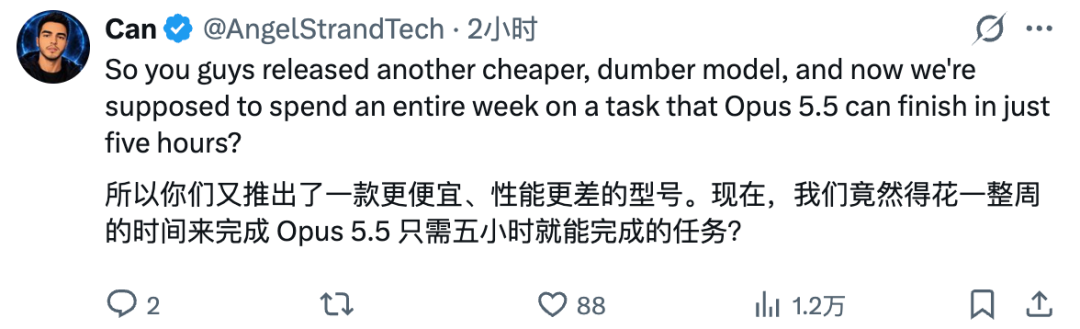
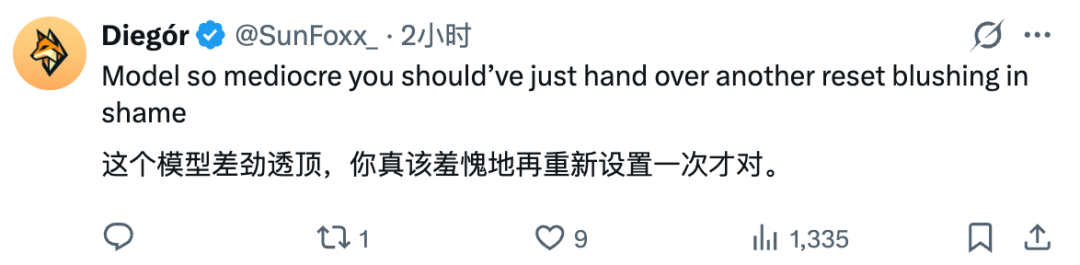
Some netizens questioned why the official did not provide more benchmarks. In the past, they just dumped a table.

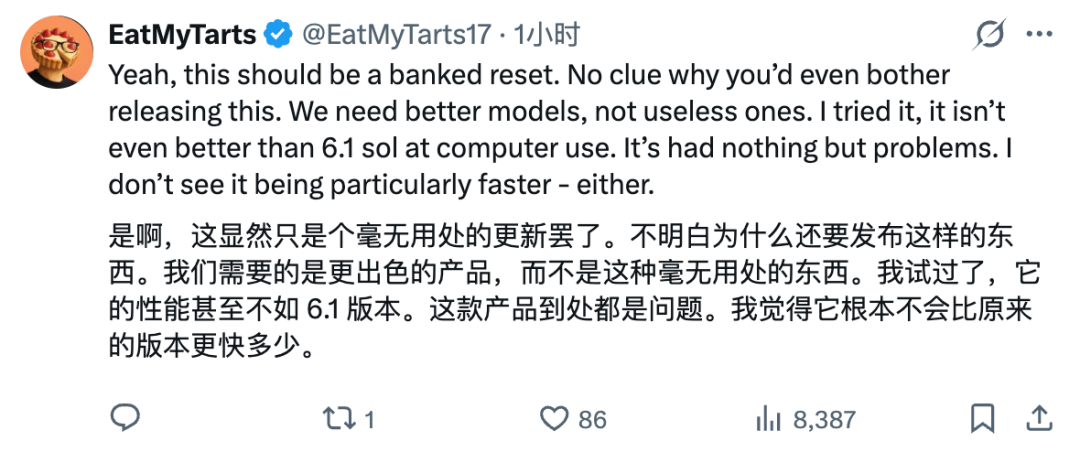
In addition, some netizens said that they have experienced the new model, and the computer operation capabilities are not even as good as 6.1 Sol, and the speed is not as fast as advertised.
"What we need is a better product, not this useless thing."
Similar dissatisfaction also appeared in the Reddit community.
On r/codex, a netizen posted directly, describing the release as "almost an advertisement for Claude."
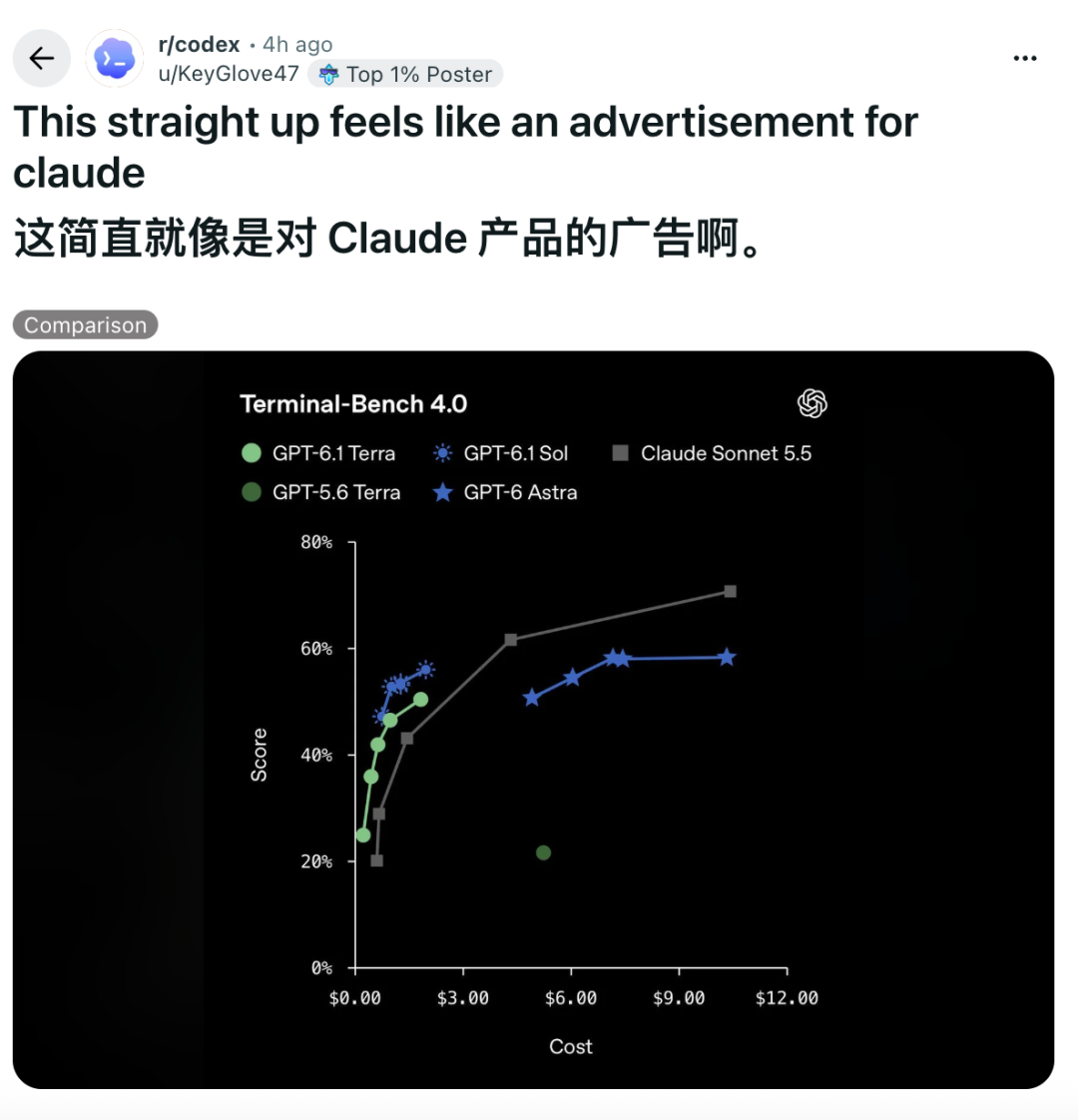
Some people think that Terra’s awkwardness lies in its positioning. One netizen pointed out that Terra’s API price is 10 times that of Luna.
If you are pursuing the lowest cost, you can use Luna; if you need a stronger model, it seems more reasonable to choose Sol.
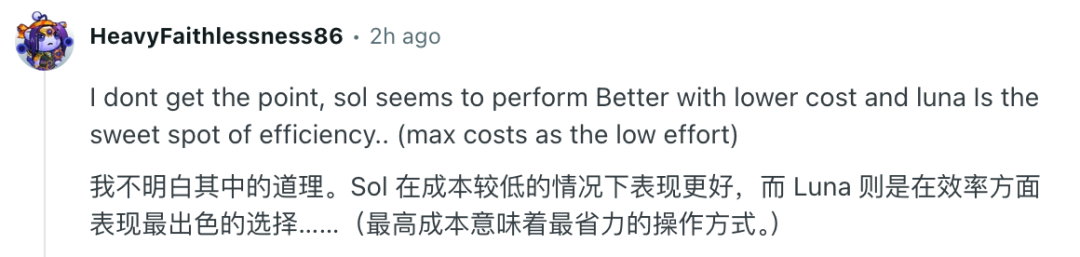
Even OpenAI’s naming method has been criticized. Since the release time of each model is not uniform, and the performance of different models on some tasks will overlap, some users have been confused about how to choose between Terra, Sol and Astra.
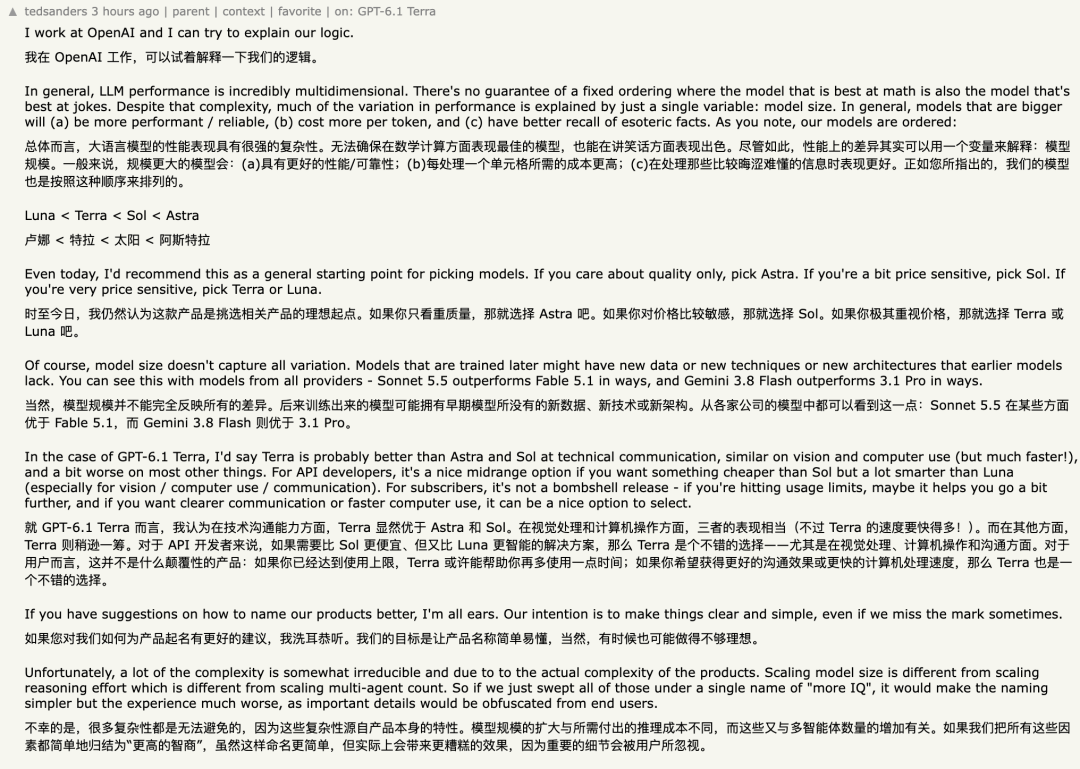
Faced with these doubts, OpenAI researcher Ted Sanders also gave an explanation on Hacker News. He said that Terra may be better than Sol and Astra in technical communication, similar in visual understanding and computer operation, and faster, but slightly inferior in most other tasks.
For subscribers, he also admitted: "This is not a big release."
Of course, there are also users in the community who affirm Terra’s cost efficiency and believe that being able to complete tasks close to the flagship model level at a much lower cost is valuable in itself.
It’s just that compared to this “impeccable” Terra, many people are already waiting for the next Astra... and the rival Fable 5.5.
Comments