
Abstract:
According to Bloomberg, Harvey is an American legal technology startup valued at US$15.6 billion. The core of its business is to train AI models like OpenAI GPT-4 to complete professional work for lawyers. However, the recent soaring costs of AI are prompting the company to reconsider its reliance on these AI giants.
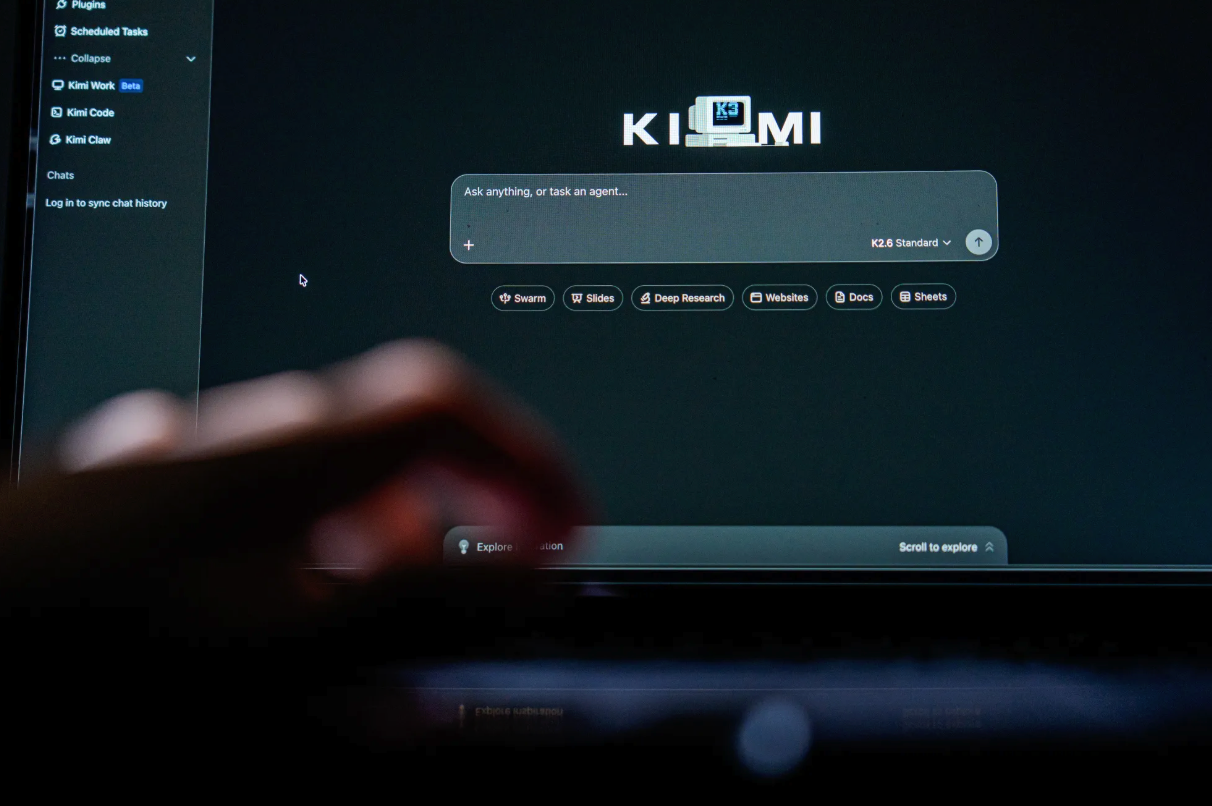
Harvey uses Kimi K3 to build his own model
According to a person familiar with the matter, after updating its AI agent in March, Harvey's customer usage surged, but its gross profit margin fell sharply, from about 50% at the beginning of the year to -50% in June.
Today, the startup joins a growing number of software companies adopting open-weighted models, including increasingly capable alternatives from China. These models are often cheaper than proprietary technology from U.S. AI developers and allow companies like Harvey to create custom models using their own data.
Investment institutions such as Sequoia Capital and General Catalyst are supporting this trend. Not only does this save one of the biggest costs for companies, it also gives them more control over their own technology, rather than outsourcing it to OpenAI and Anthropic.
The move could eat into the AI giant's revenue as both OpenAI and Anthropic prepare for highly anticipated IPOs. At the same time, as the debate around the need to slow down the development of cutting-edge AI continues to heat up, for some startups, adopting open weight models is also a way to prepare for a rainy day in case the development of the most advanced AI models may be slowed down or restricted in the future.
Open model
Harvey launched its own model in August, powered by China's Dark Side of the Moon-owned Kimi K3. The Kimi K3 performs close to Anthropic's most advanced models, but costs significantly less. The model release, along with other adjustments Harvey has made to how it uses AI, has turned the company's gross profit margin back into positive territory, people familiar with the matter said. Harvey declined to comment on specific financial figures for this article.
Similarly, health technology startup Abridge recently announced that it is training a customized base model for clinical scenarios based on NVIDIA's open model. Decagon, an AI customer service startup, said that 80% of its inquiries are currently handled through its own model. In the fintech space, startups including Ramp and Rogo are exploring training their own models for the first time. Among programming companies, Cursor, which is now part of SpaceX, and Cognition, which is valued at US$48 billion, were the first AI application companies to release customized models.
Ramp co-CEO Karim Atiyeh said that it was too expensive for Ramp to build a self-built model before, but after raising US$750 million in June, the company is considering doing so because the open weight system has made great progress. "It was absolutely meaningless to do this a year ago, and it is starting to make much more sense now."
Atiye said that as the cost of computing power rises, "it is completely irresponsible not to consider this matter and optimize for it." His company is currently negotiating to bring in more capital.
However, not all investors agree with this trend. Matt Kraning, a partner at Menlo Ventures, an investor in Anthropic, believes that not every company is suitable for developing customized models because it requires specialized talent and has higher upfront costs. For some companies, it's nothing more than a marketing ploy, he said.
"Do you have your own model? This question itself is the wrong question. In most cases, this is often just a pretense." Kranin said.
Comments