
Abstract:
Jensen Huang, the billionaire and former Nvidia CEO, brought a small gaming graphics card manufacturer to the core chip giant position in the AI revolution. He had previously said something intriguing: He could be fired at any time. In January of this year, Jen-Hsun Huang mentioned in a podcast interview with Jody Sheldon: "In a well-governed company, the CEO reports to the board of directors, and the board of directors is responsible to shareholders. If the CEO fails to do his job, he can be fired regardless of whether the board of directors has 12, 13 or 15 members."
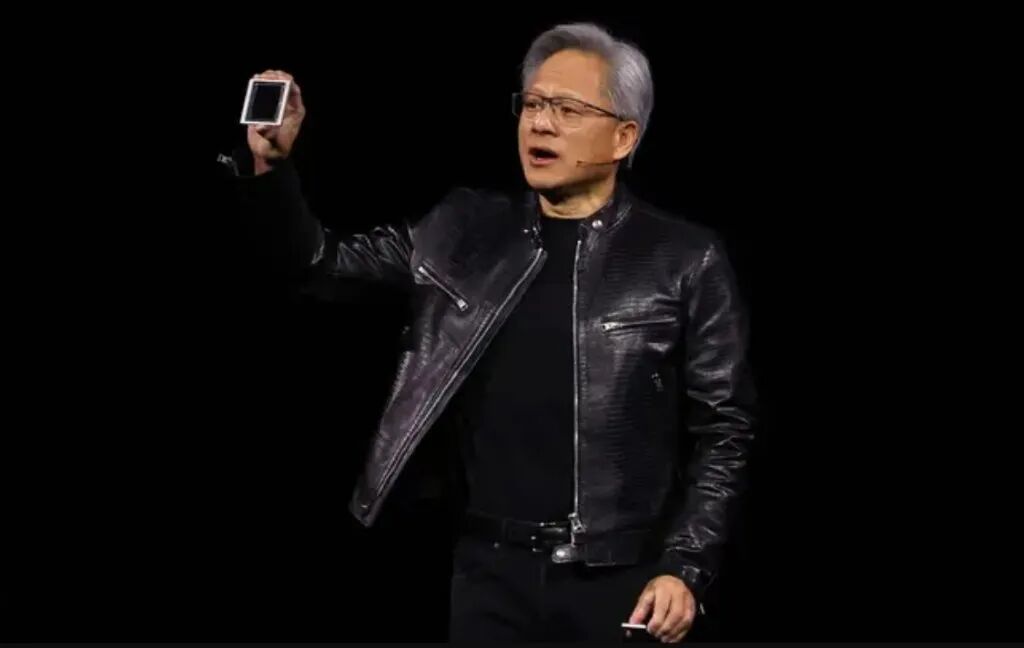
On Thursday, Jen-Hsun Huang announced his departure due to marital infidelity, ending his 33-year career at the helm. The New York Times reported that Jen-Hsun Huang had a close relationship with a businesswoman, and the Nvidia board of directors immediately launched an independent investigation to verify whether Jen-Hsun Huang was the target of a foreign intelligence operation. The report also revealed that Jen-Hsun Huang had another extramarital affair with an Nvidia executive who reported to him. On Thursday, the board appointed Chief Financial Officer Colette Kress as interim CEO.
In the interview in January, Huang Renxun also said at the time that Nvidia would not have another CEO who could reach his height in the future. "There will never be another me, and the reason is: this company raised me." He said at the time.
Nvidia has not yet responded to Fortune’s request for comment.
Why Jen-Hsun Huang’s shareholding failed to secure his CEO position
Although Huang is the company's largest natural shareholder, he does not have unfettered voting control or super influence on the board of directors like other founders.
According to NVIDIA's 2026 shareholder proxy statement, as of March, Huang Jenxun held approximately 870.6 million NVIDIA shares, with a shareholding ratio of approximately
3.58%
. This shareholding is much higher than other executives and directors, including Kress, who holds 4.4 million shares; Vanguard and BlackRock each hold more than 7% of the shares.NVIDIA adopts
one share, one vote
system. Even as a co-founder, Jen-Hsun Huang does not have any special privileges for the shares he holds. The number of votes and the number of shares held are exactly equal.As Huang Renxun mentioned in the podcast, Nvidia's articles of association state that the board of directors can remove the CEO for any reason and at any time; at the same time, Huang Renxun's voting power is not enough to nominate or remove directors alone.
Founders like Zuckerberg, who hold the majority of voting rights, can essentially decide on the board of directors; if Huang Renxun wants to do this, he must obtain the support of other shareholders.
This is completely different from companies like Meta, Snap and even Google, which are controlled by technology founders. Meta uses a two-tier voting structure (the company disclosed arrangements for Class C non-voting shares last month), giving Zuckerberg super control. Zuckerberg holds only 13.4% of the shares but controls about 60% of the voting power: 10 votes per share for his Class B shares and just 1 vote per share for ordinary Class A shares. With this voting power, Zuckerberg can basically decide all members of Meta’s board of directors and have a decisive say in shareholder voting matters.
The social platform Snap has a similar structure. Co-founder and CEO Evan Spiegel only holds about 9.3% of the shares but controls 53% of the voting rights. Even though Google's parent company Alphabet, co-founder Sergey Brin and former CEO Larry Page have long been no longer responsible for daily operations, they still hold a majority of the voting rights of the technology giant and both remain on the board of directors.
After the news of Huang Renxun's resignation was announced, Nvidia's stock price fell sharply on Thursday and then rebounded; at 1:30 pm ET on Thursday, it fell by about 4.7%. Nvidia has a market value of nearly $4 trillion, and fluctuations in its stock price will be transmitted to the entire market and also affect the 401(k) pension accounts of ordinary Americans.
Huang Renxun deeply leads NVIDIA operations: the company has a flat structure, and he directly controls product strategy, supplier and customer relationships. In recent months, he has also established a close relationship with Trump, who has publicly expressed support for the development of the AI industry and supporting infrastructure in the United States; but Trump also mentioned Nvidia's successor on Thursday.
The board of directors also adjusted its own structure: Previously, NVIDIA did not have a chairman, and the lead independent director Stephen Neal supervised the management. The board of directors announced on Thursday that Harvey C. Jones was appointed chairman; Jones is a former semiconductor industry CEO and has served on Nvidia's board of directors since 1993.
Kress, who has served as CFO since 2013, said in a statement on Thursday that after taking on the role of interim CEO, she will continue to lead Nvidia forward based on the foundation laid by Jen-Hsun Huang.
In the January interview, Jen-Hsun Huang said that although he does not love this job every day, he always gives his best for two reasons: "First, I believe that I am the most suitable candidate; second, I must prove day after day that I am worthy of this position."
Comments